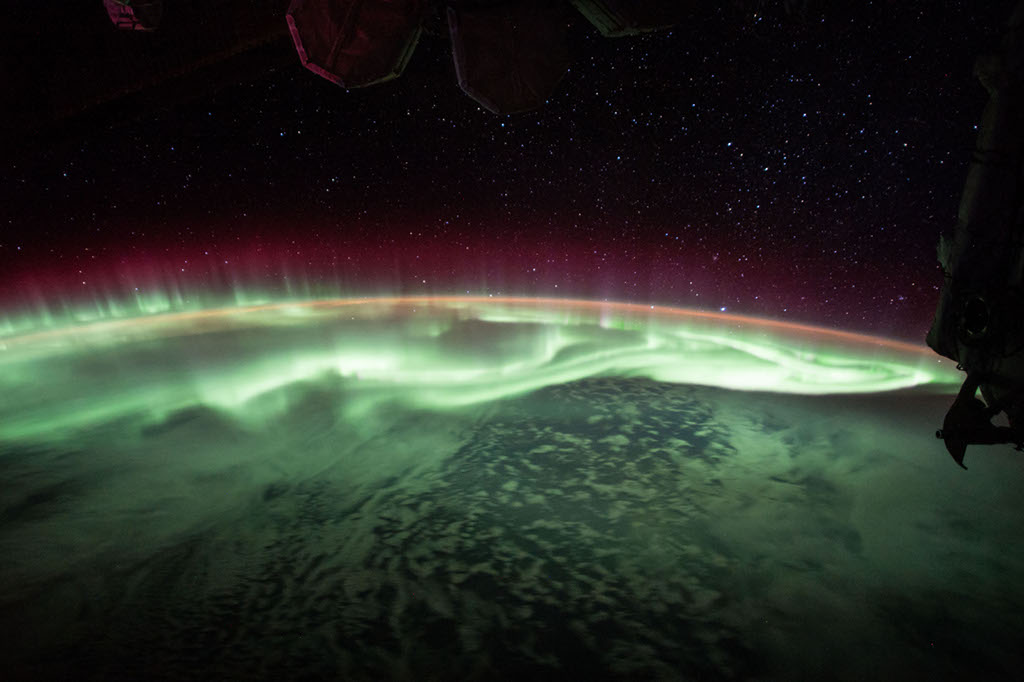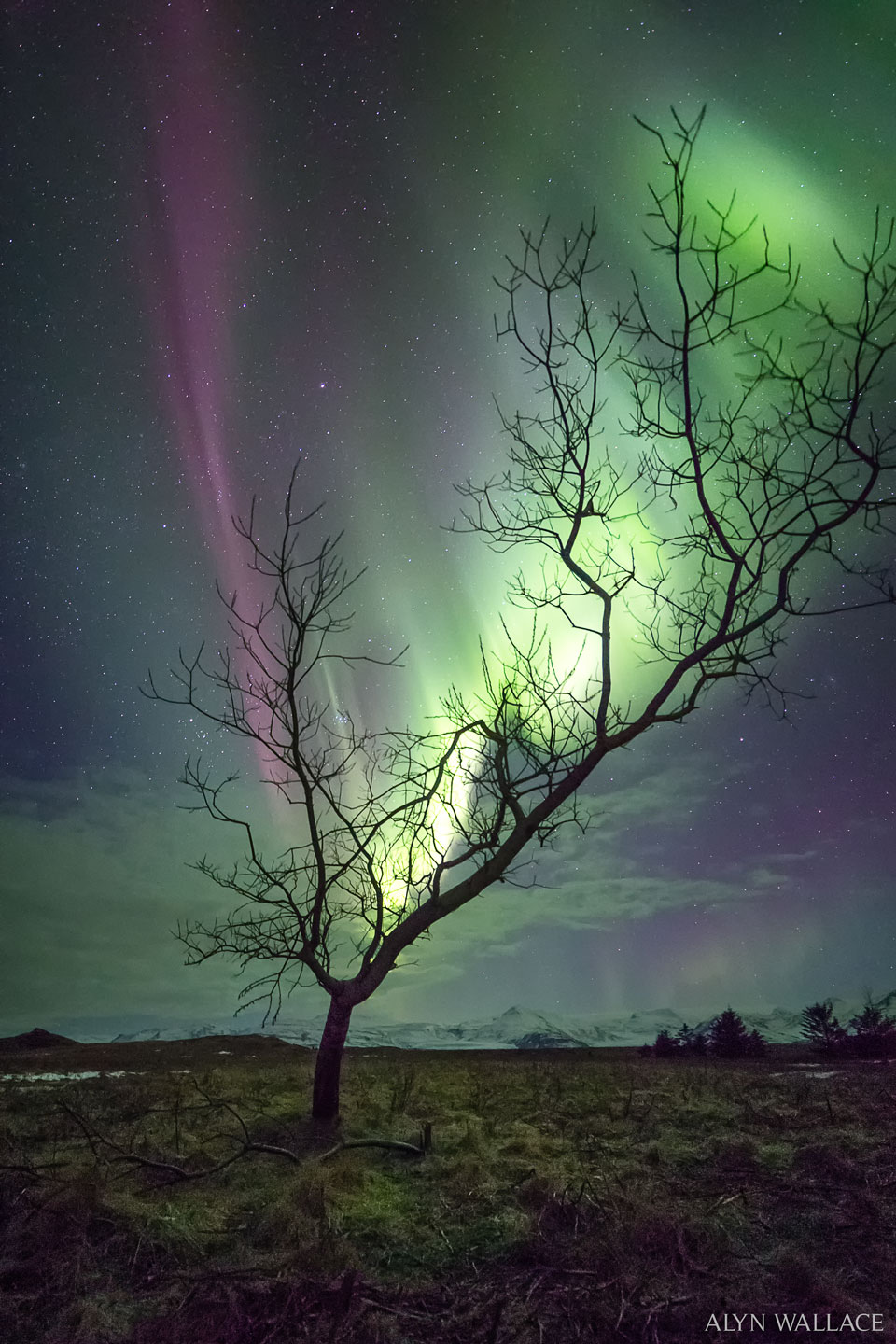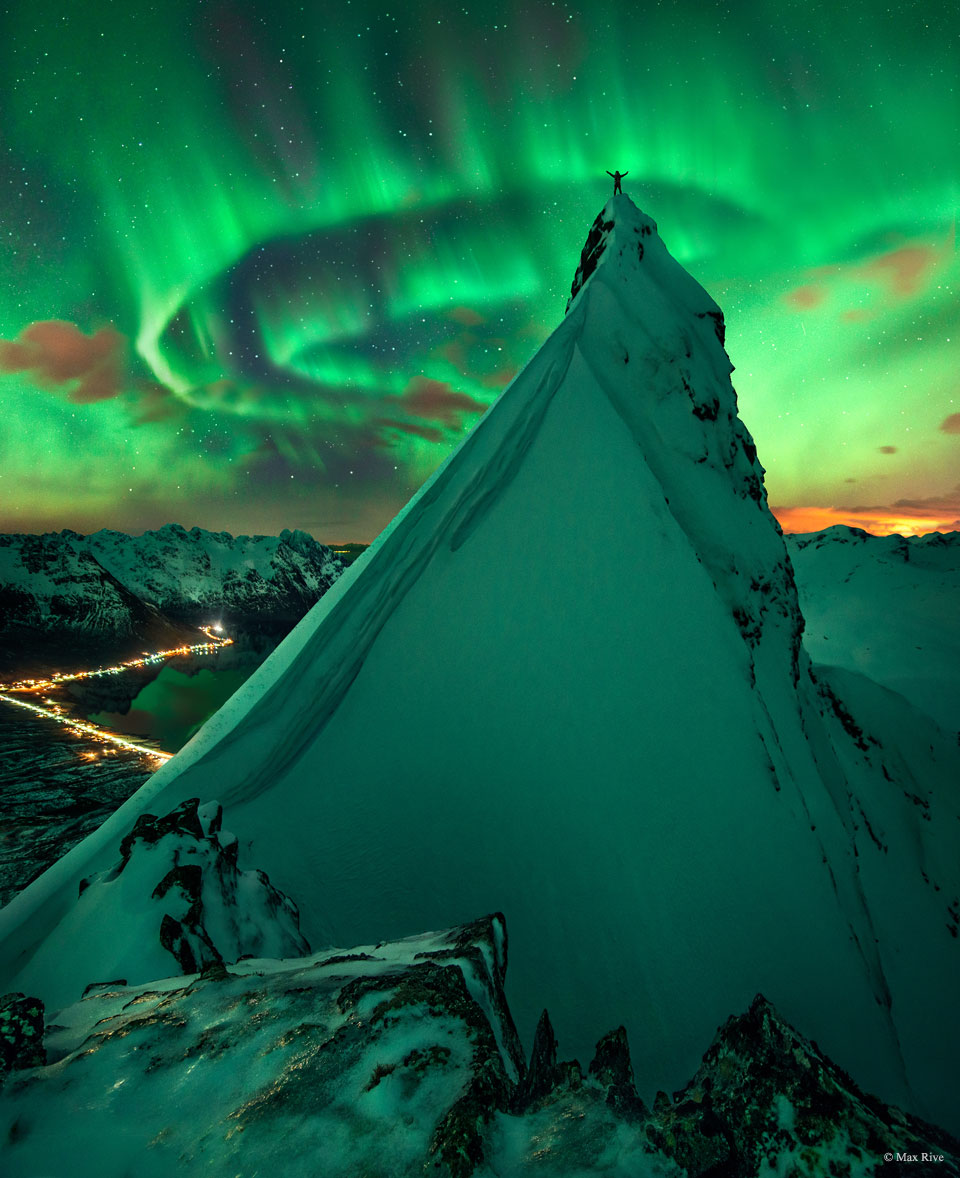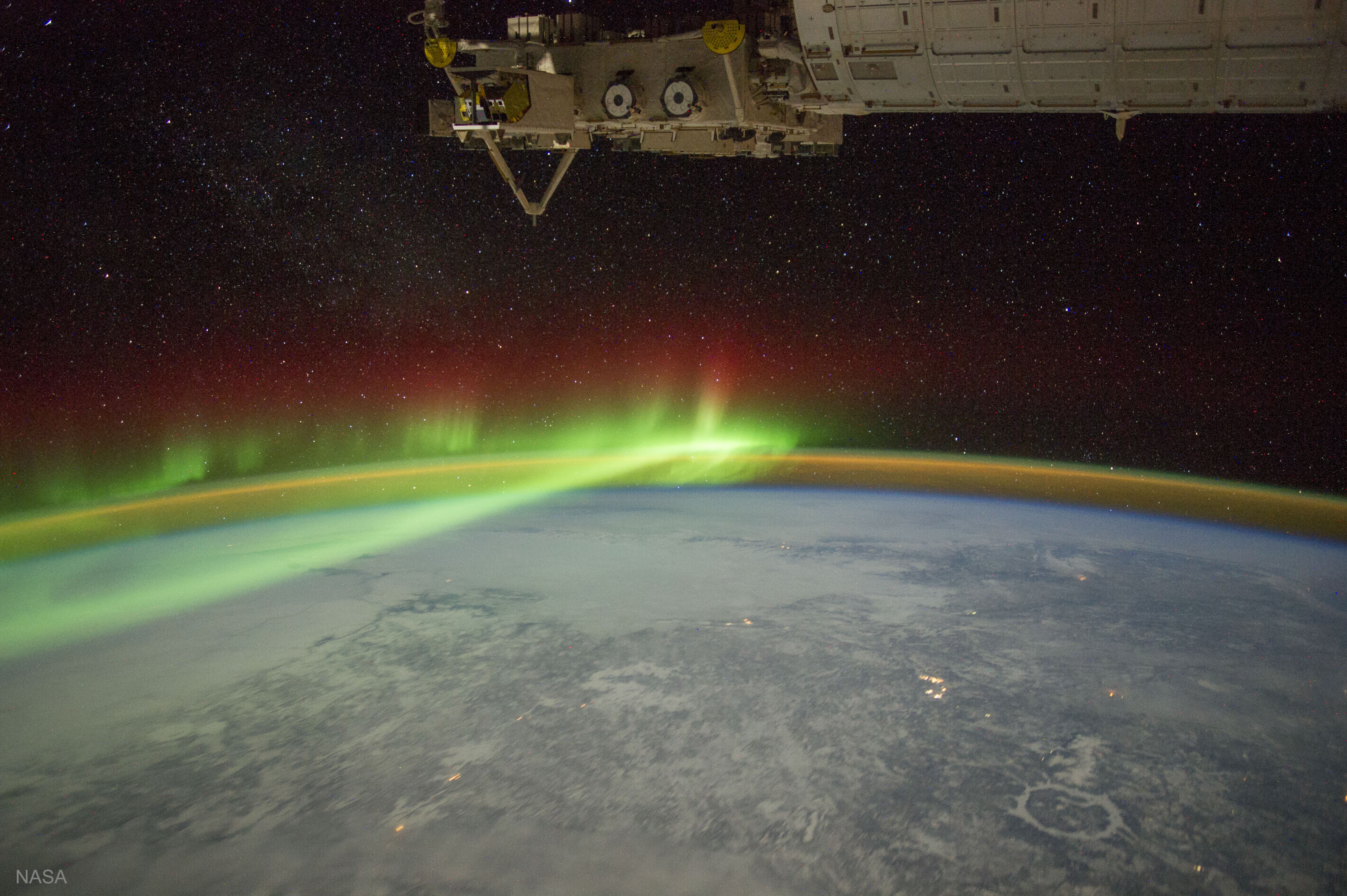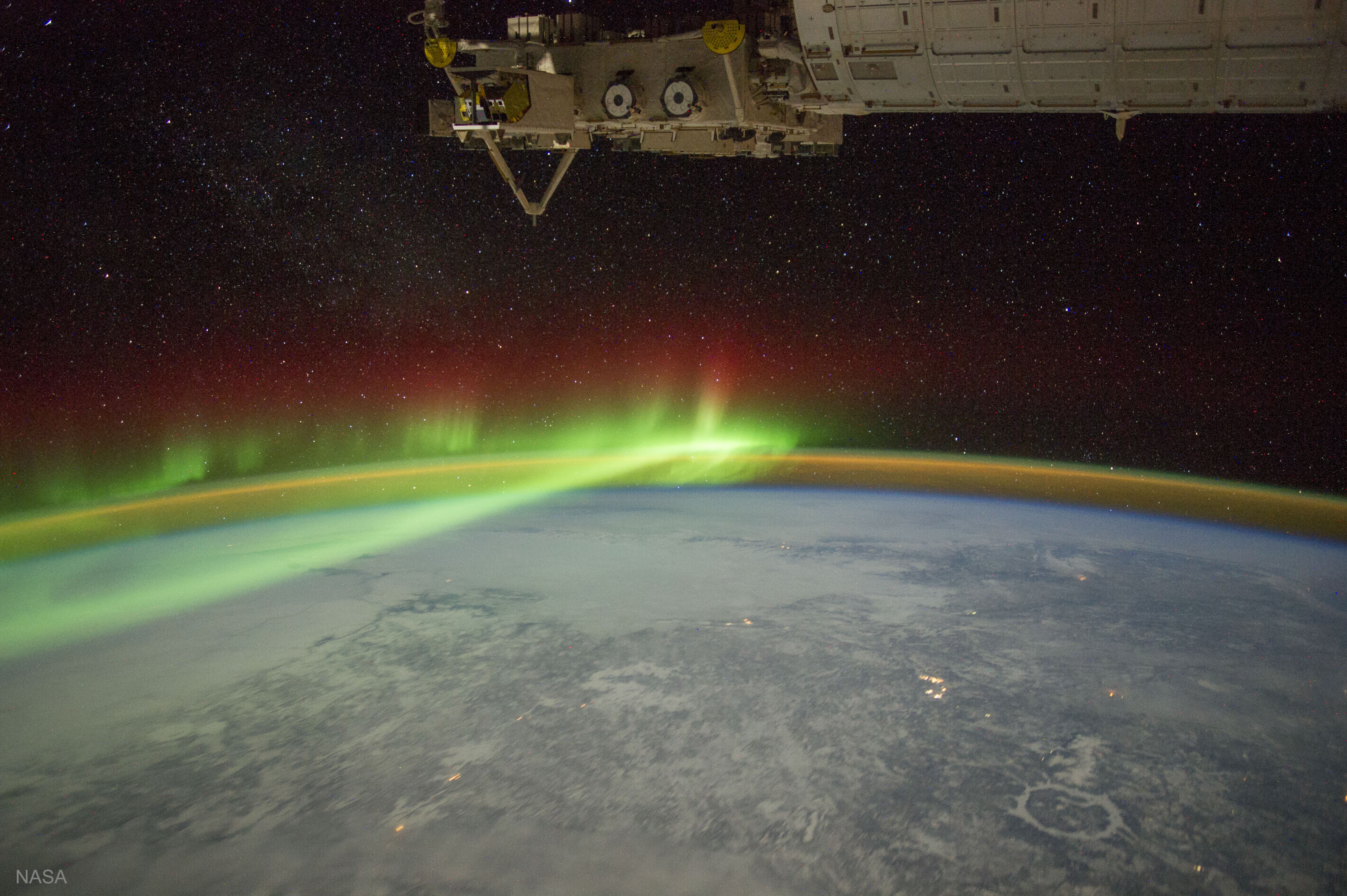
How many of these can you find in today's featured photograph: an aurora, airglow, one of the oldest impact craters on the Earth, snow and ice, stars, city lights, and part of the International Space Station? Most of these can be identified by their distinctive colors. The aurora here appears green at the bottom, red at the top, and is visible across the left of image. Airglow appears orange and can be seen hovering over the curve of the Earth. The circular Manicouagan Crater in Canada, about 100 kilometers across and 200 million years old, is visible toward the lower right and is covered in white snow and ice. Stars, light in color, dot the dark background of space. City lights appear a bright yellow and dot the landscape. Finally, across the top, part of the International Space Station (ISS) appears mostly tan. The featured image was taken from the ISS in 2012.
¿Cuántos de estos elementos puedes identificar en la fotografía destacada de hoy: una aurora, brillo atmosférico, uno de los cráteres de impacto más antiguos de la Tierra, nieve y hielo, estrellas, luces de las ciudades y parte de la Estación Espacial Internacional? La mayoría de estos elementos se pueden identificar por sus colores característicos. La aurora aquí aparece verde en la parte inferior, roja en la parte superior y es visible a lo largo de la izquierda de la imagen. El brillo atmosférico tiene un color naranja y se puede ver flotando sobre la curvatura de la Tierra. El cráter circular Manicouagan en Canadá, de unos 100 kilómetros de diámetro y 200 millones de años de antigüedad, es visible hacia la parte inferior derecha y está cubierto de nieve y hielo blancos. Las estrellas, de color claro, se distribuyen por el fondo oscuro del espacio. Las luces de las ciudades aparecen de color amarillo brillante y se dispersan por el paisaje. Finalmente, a lo largo de la parte superior, se ve parte de la Estación Espacial Internacional (ISS), principalmente de color marrón claro. La imagen destacada fue tomada desde la ISS en 2012.