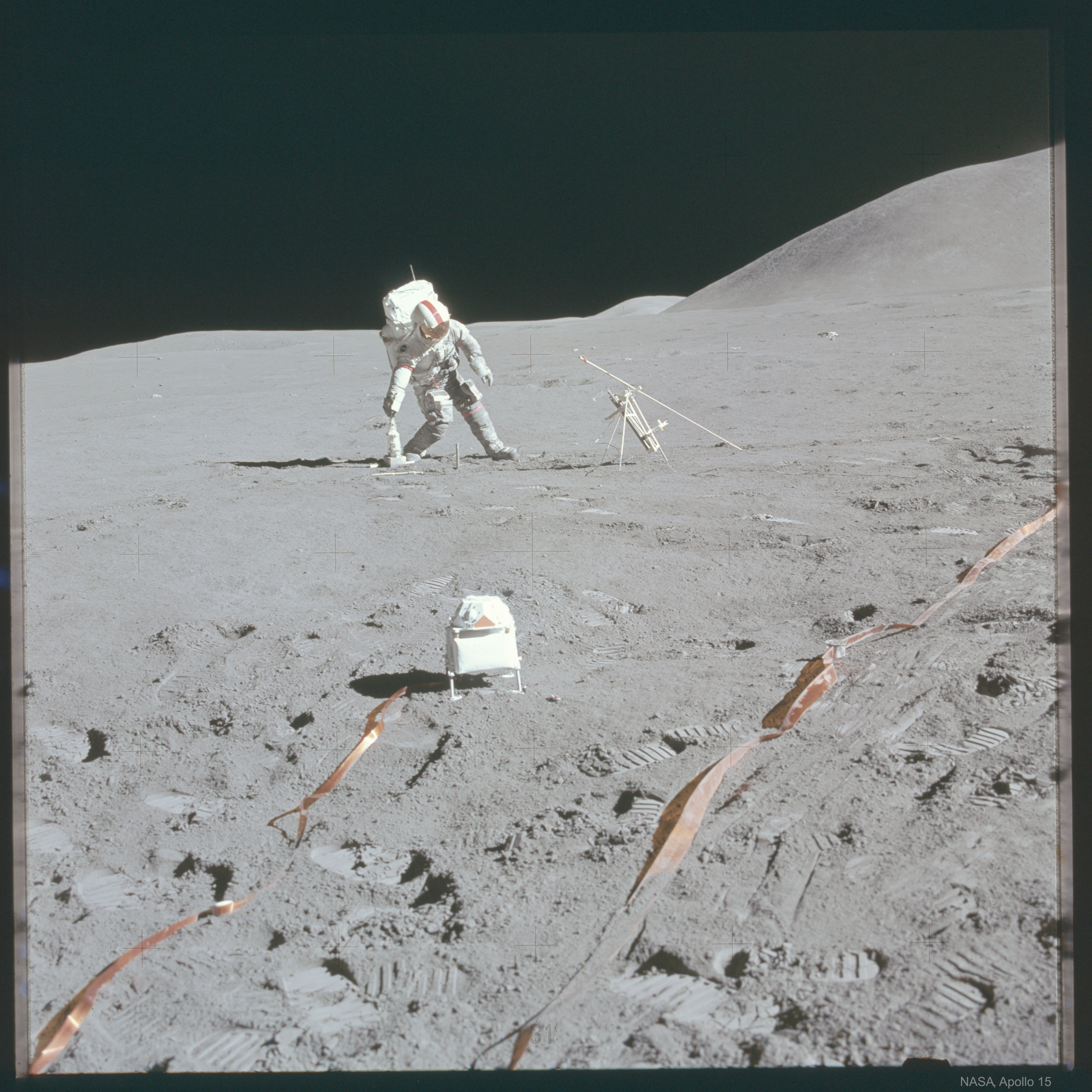
Score three points for NASA. With time running out late in Apollo 15's mission to the Moon in 1971, Astronaut David Scott prepared to split the uprights and bring about yet another dramatic end-of-the-mission victory for NASA. Scott used a special lunar football designed for the rugged games held on the Moon. R1-D1, a predecessor to R2-D2, cheered from the sideline. Happy April Fools' Day from the folks at APOD. In reality, Astronaut Scott placed a drill that measured how temperature changed with lunar depth. The foreground device actually detected high-energy particles that escaped from the Sun. No Joke: NASA Plans to Return to the Moon in the Next Five Years
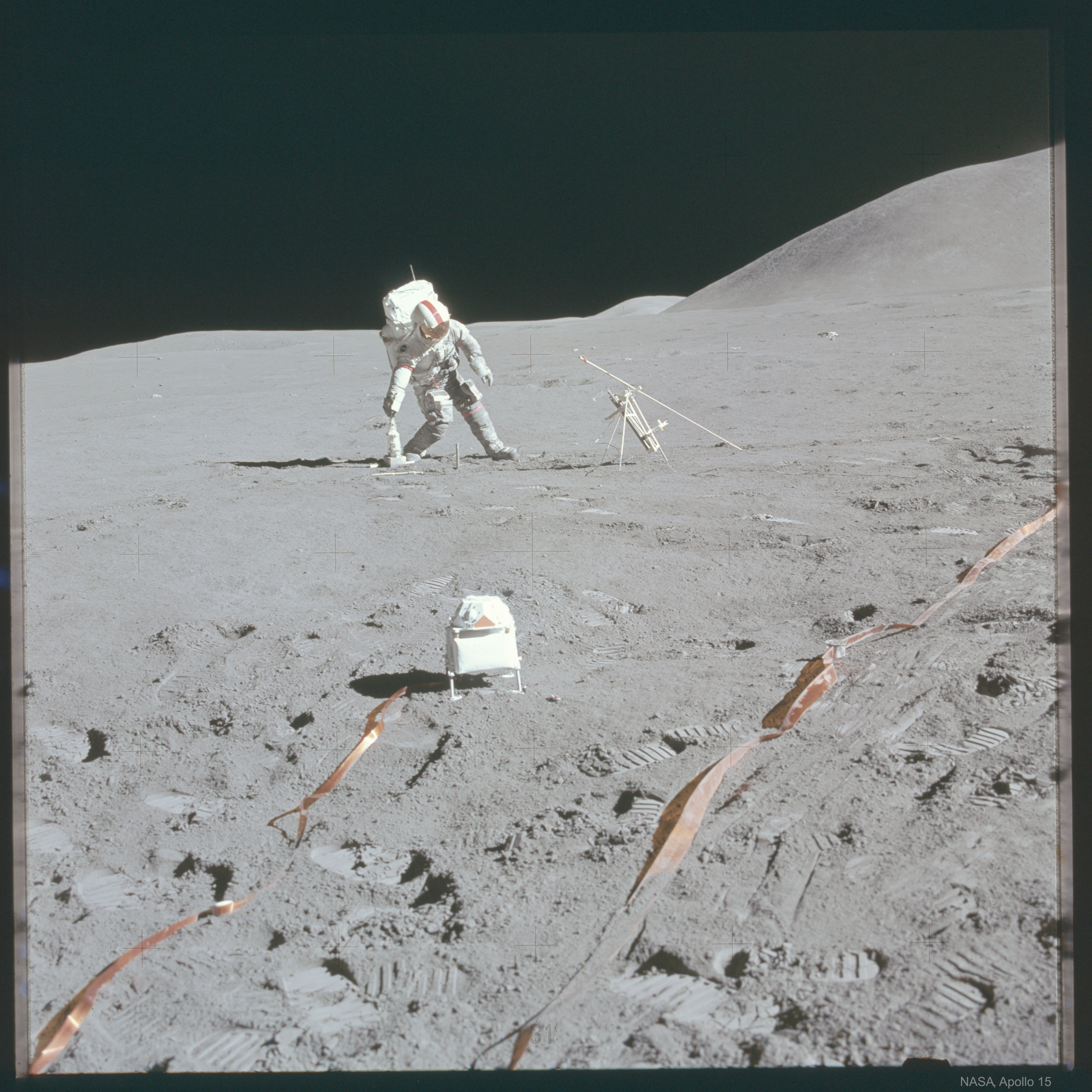
Crédito: NASA, APOD Anotar tres puntos para NASA. Con el tiempo agotándose al final de la misión Apolo 15 a la Luna en 1971, el astronauta David Scott se preparó para dividir los postes y lograr otro dramático triunfo al final de la misión para NASA. Scott utilizó un balón lunar especial diseñado para los juegos duros celebrados en la Luna. R1-D1, un predecesor de R2-D2, animaba desde la línea lateral. Feliz Día de los Inocentes desde el equipo de APOD. En realidad, el astronauta Scott colocó un taladro que midió cómo cambiaba la temperatura con la profundidad lunar. El dispositivo del primer plano detectó en realidad partículas de alta energía que escapaban del Sol. No es broma: NASA planea regresar a la Luna en los próximos cinco años.