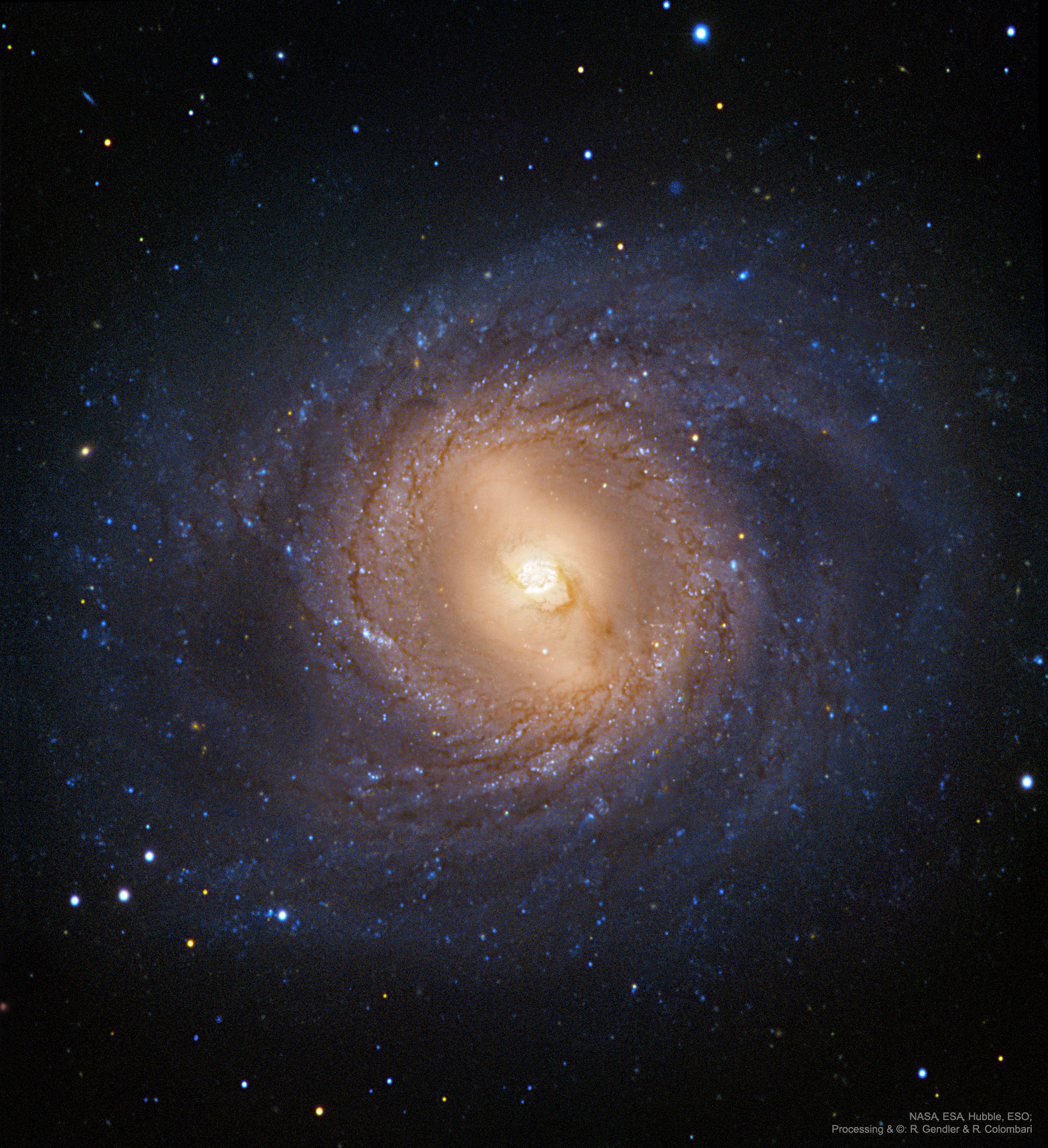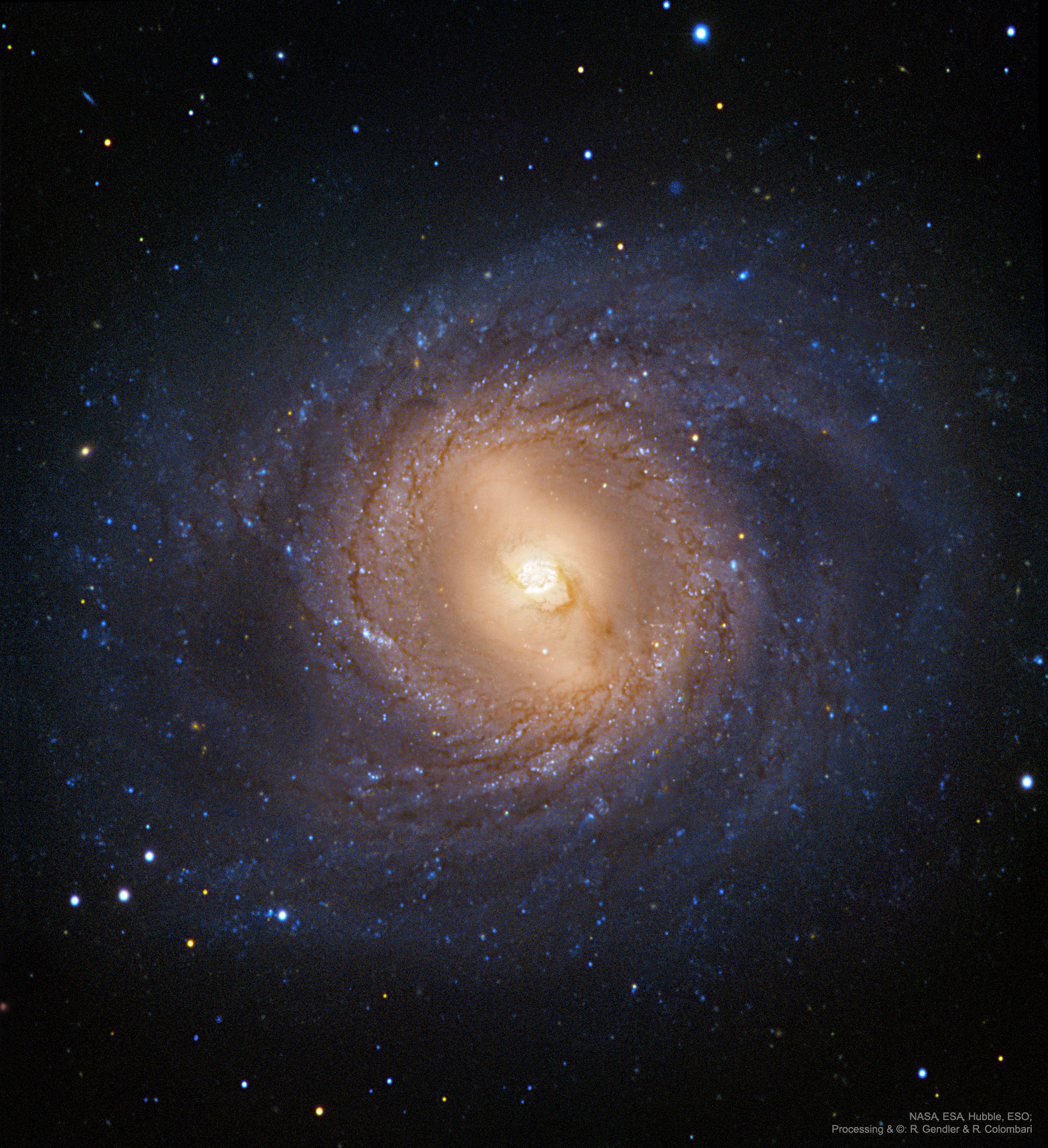
Why do some spiral galaxies have a ring around the center? First and foremost, M95 is one of the closer examples of a big and beautiful barred spiral galaxy. Visible in the featured combination of images from Hubble and several ground based telescopes are sprawling spiral arms delineated by open clusters of bright blue stars, lanes of dark dust, the diffuse glow of billions of faint stars, and a short bar across the galaxy center. What intrigues many astronomers, however, is the circumnuclear ring around the galaxy center visible just outside the central bar. Although the long term stability of this ring remains a topic of research, observations indicate its present brightness is at least enhanced by transient bursts of star formation. M95, also known as NGC 3351, spans about 50,000 light-years, lies about 30 million light years away, and can be seen with a small telescope toward the constellation of the Lion (Leo). Almost Hyperspace: Random APOD Generator
¿Por qué algunas galaxias espirales tienen un anillo alrededor del centro? En primer lugar, M95 es uno de los ejemplos más cercanos de una gran y hermosa galaxia espiral con barra. En las imágenes combinadas del Hubble y varios telescopios terrestres se ven brazos espirales extendidos delineados por grupos abiertos de estrellas azules brillantes, vías de polvo oscuro, el brillo difuso de miles de millones de estrellas tenues y una barra corta que cruza el centro galáctico. Sin embargo, lo que intriga a muchos astrónomos es el anillo circunuclear alrededor del centro galáctico, visible justo fuera de la barra central. Aunque la estabilidad a largo plazo de este anillo sigue siendo un tema de investigación, las observaciones indican que su brillo actual está al menos aumentado por brotes efímeros de formación estelar. M95, también conocida como NGC 3351, tiene un diámetro de aproximadamente 50 000 años luz, se encuentra a unos 30 millones de años luz de distancia y puede verse con un telescopio pequeño hacia la constelación del León (Leo).