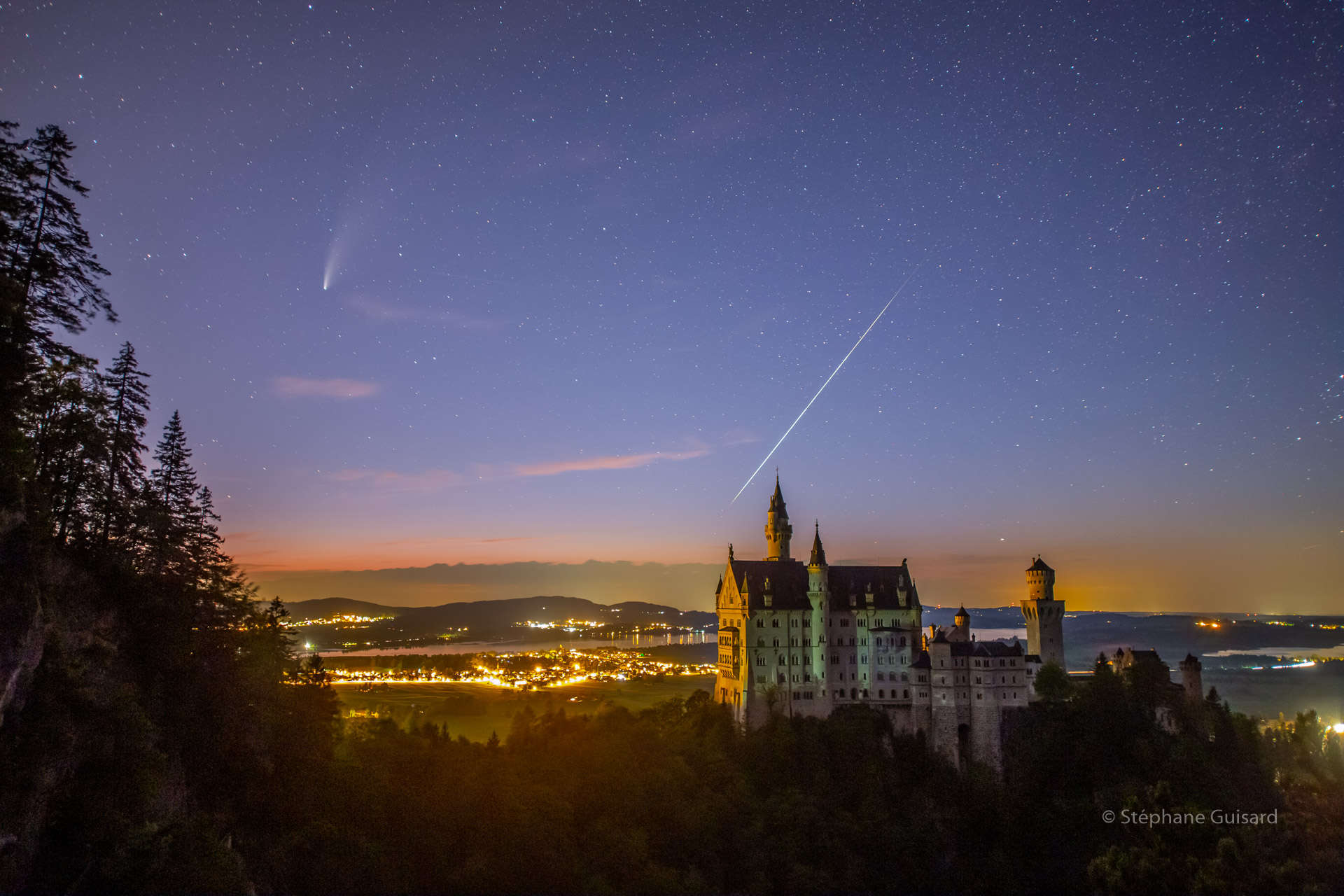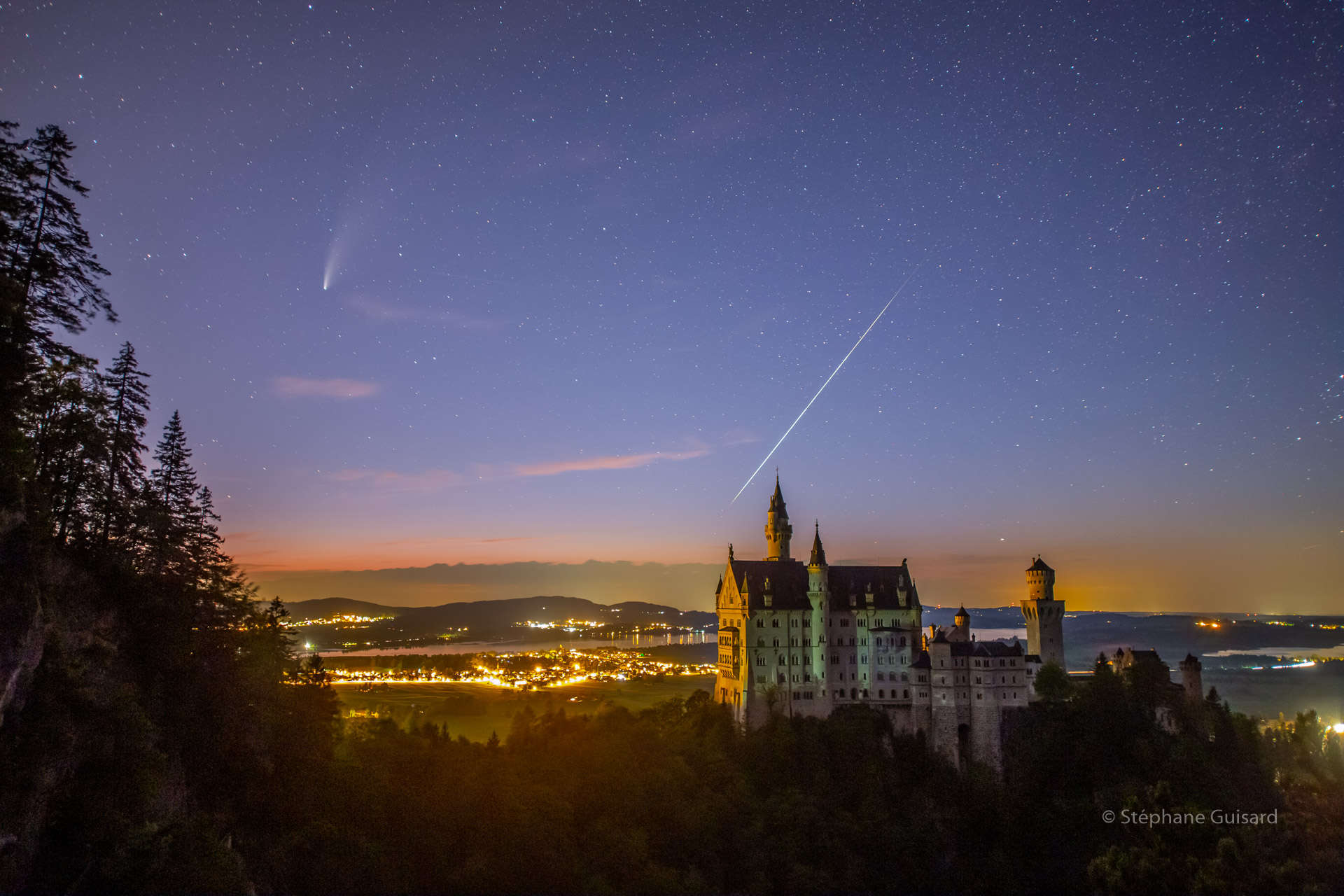
Comet dust falls through a twilight sky in this dream-like scene, but it's not part of a fairytale movie. Still, Castle Neuschwanstein, nestled in the Bavarian Alps, did inspire Disneyland's Sleeping Beauty Castle. Captured on July 20, the bright streak above the castle towers is likely a Perseid meteor. Though it peaks near mid-August, the annual summer meteor shower is active now. The meteor trail over the fairytale castle can be traced back to the shower's radiant in the heroic constellation Perseus off the top right of the frame. Perseid meteors are produced by dust from periodic Comet Swift-Tuttle. With its own broad dust tail now sweeping through northern skies the celestial apparition above the distant horizon is planet Earth's current darling, Comet NEOWISE. Comet NEOWISE Images: July 22 || 21 || 20 || 19 || 18 || 17 || 16 || 15 || 14 || 13 || 12 || 11 || 10 & earlier ||
Crédito: NASA, CGRO SSC El polvo de un cometa atraviesa un cielo crepuscular en esta escena onírica, pero no forma parte de una película de cuento de hadas. Sin embargo, el Castillo Neuschwanstein, ubicado en las Alpes bávaras, sí inspiró el Castillo de la Bella Durmiente de Disneyland. Capturada el 20 de julio, la brillante estela sobre las torres del castillo probablemente sea un meteoro de las Perseidas. Aunque alcanza su máximo cerca del 15 de agosto, la lluvia anual de meteoros de verano ya está activa. La estela del meteoro sobre el castillo de cuento de hadas puede rastrearse hasta el radiante de la lluvia en la constelación heroica de Perseo, ubicada en la parte superior derecha del marco. Los meteoros de las Perseidas son producidos por el polvo del cometa periódico Swift-Tuttle. Con su propia cola de polvo ancha ahora recorriendo los cielos del norte, la aparición celestial sobre el horizonte distante es el cometa actual favorito de la Tierra, el cometa NEOWISE.