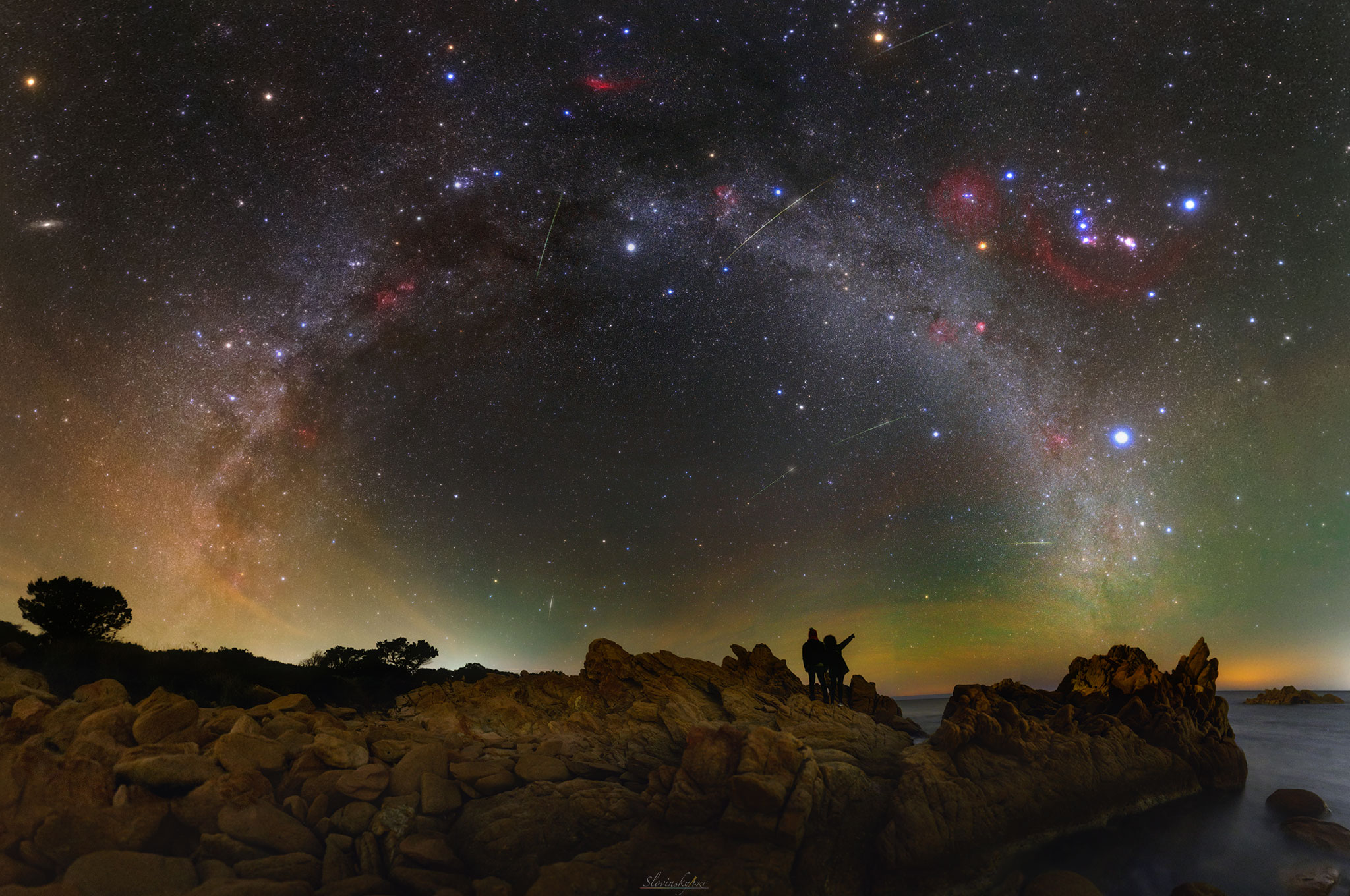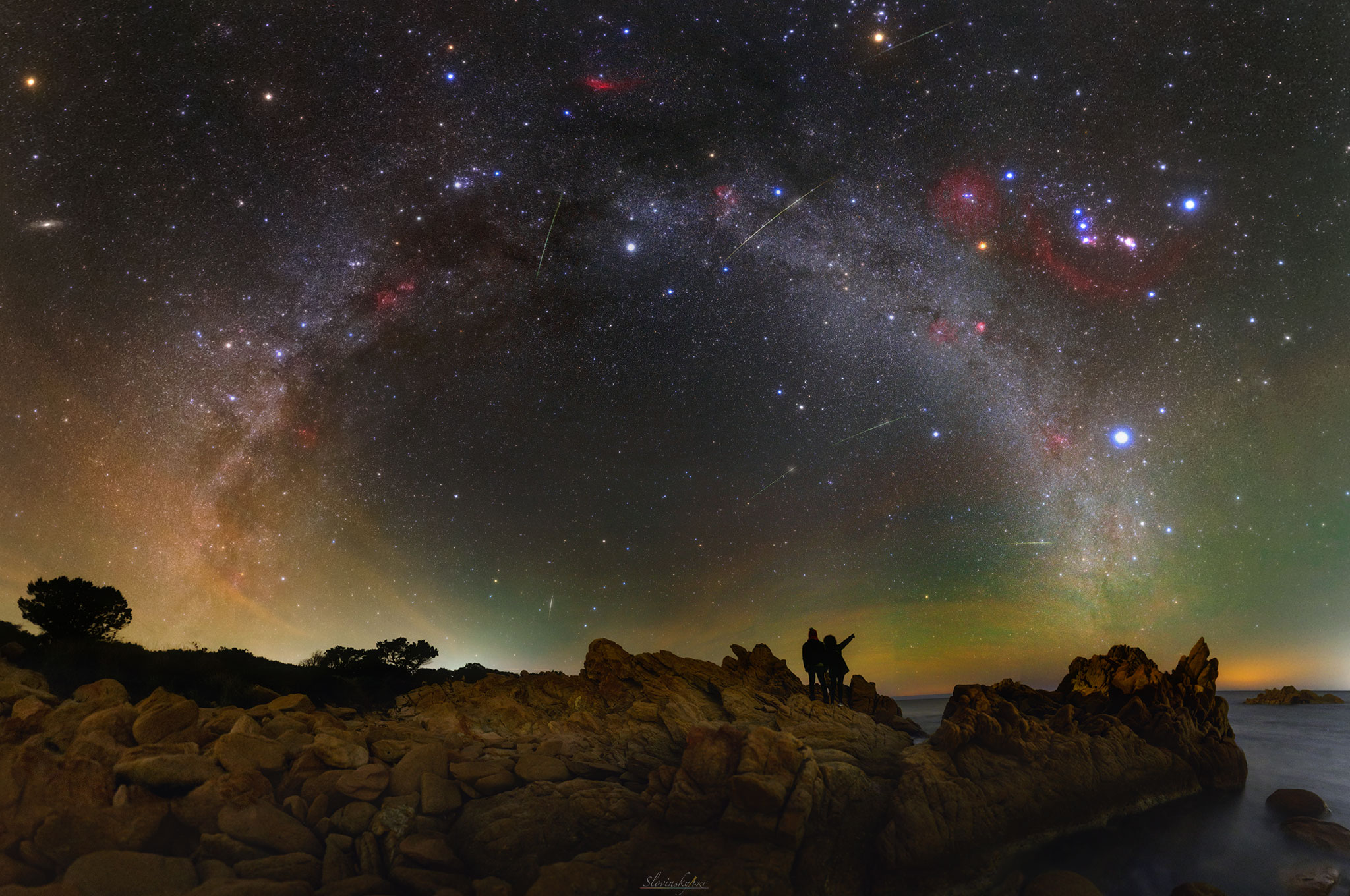
How many famous sky objects can you find in this image? The featured dark sky composite combines over 60 exposures spanning over 220 degrees to create a veritable menagerie of night sky wonders. Visible celestial icons include the Belt of Orion, the Orion Nebula, the Andromeda Galaxy, the California Nebula, and bright stars Sirius and Betelgeuse. You can verify that you found these, if you did, by checking an annotated version of the image. A bit harder, though, is finding Polaris and the Big Dipper. Also discernible are several meteors from the Quandrantids meteor shower, red and green airglow, and two friends of the astrophotographer. The picture was captured in January from Sardinia, Italy. You can see sky wonders in your own night sky tonight -- including more meteors than usual -- because tonight is near peak of the yearly Orionids meteor shower. News: NASA’s OSIRIS-REx Spacecraft Successfully Touches Asteroid
¿Cuántos objetos celebres del cielo puedes encontrar en esta imagen? La composición de cielo oscuro destacada combina más de 60 exposiciones que abarcan más de 220 grados para crear una auténtica colección de maravillas del cielo nocturno. Entre los iconos celestes visibles se encuentran la Cintura de Orión, la Nebulosa de Orión, la Galaxia de Andrómeda, la Nebulosa de California y las estrellas brillantes Sirio y Betelgeuse. Puedes verificar si encontraste estos objetos, si lo hiciste, revisando una versión anotada de la imagen. Un poco más difícil es encontrar a Polaris y la Osa Mayor. También se pueden distinguir varios meteoros de la lluvia de meteoros Quadrantids, una fluorescencia del aire roja y verde, y dos amigos del fotógrafo astronómico. La imagen fue capturada en enero desde Cerdeña, Italia. Puedes observar maravillas celestes en tu propio cielo nocturno esta noche, incluyendo más meteoros de lo habitual, ya que esta noche está cerca del pico anual de la lluvia de meteoros de los Orionidas.