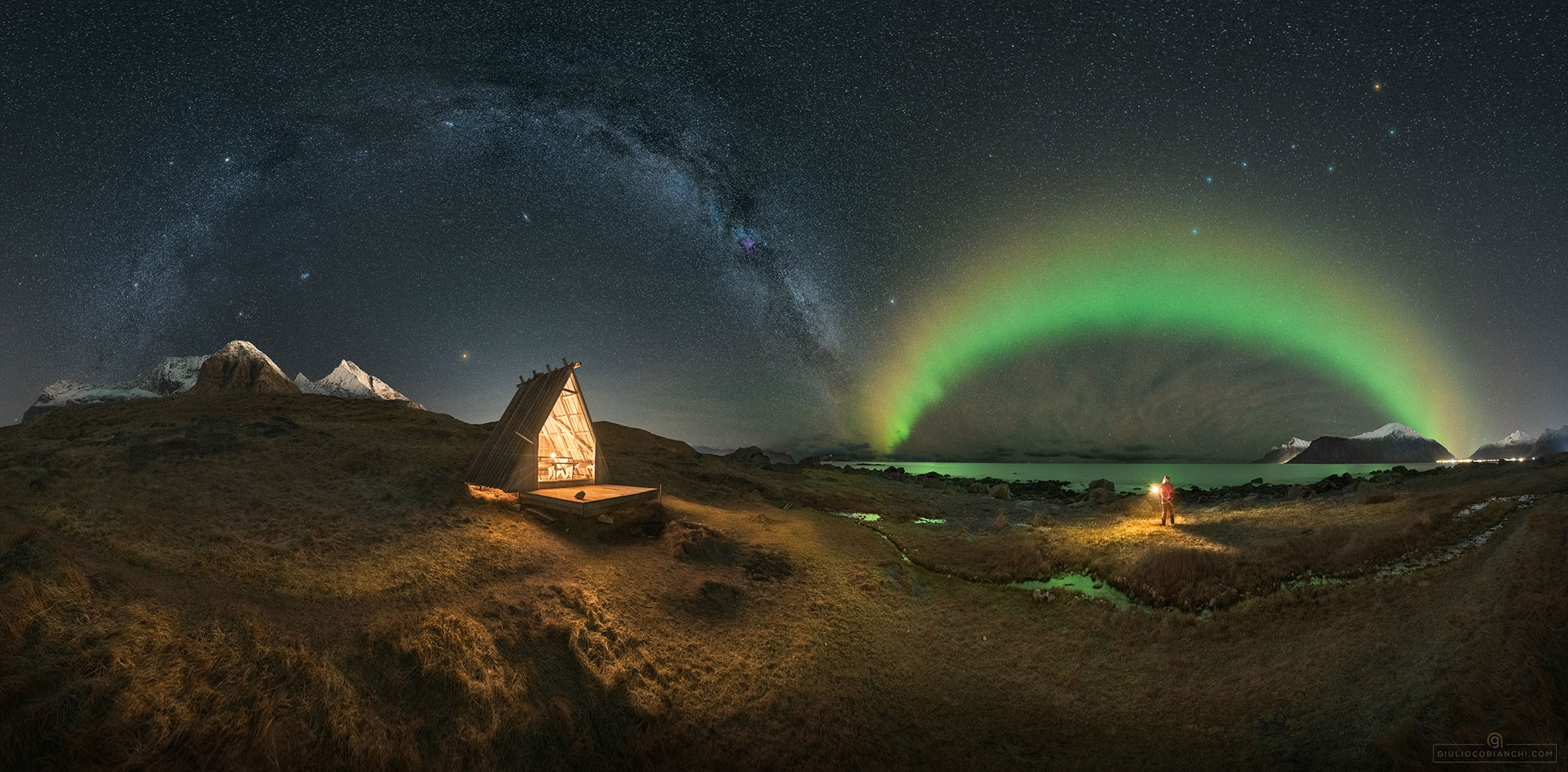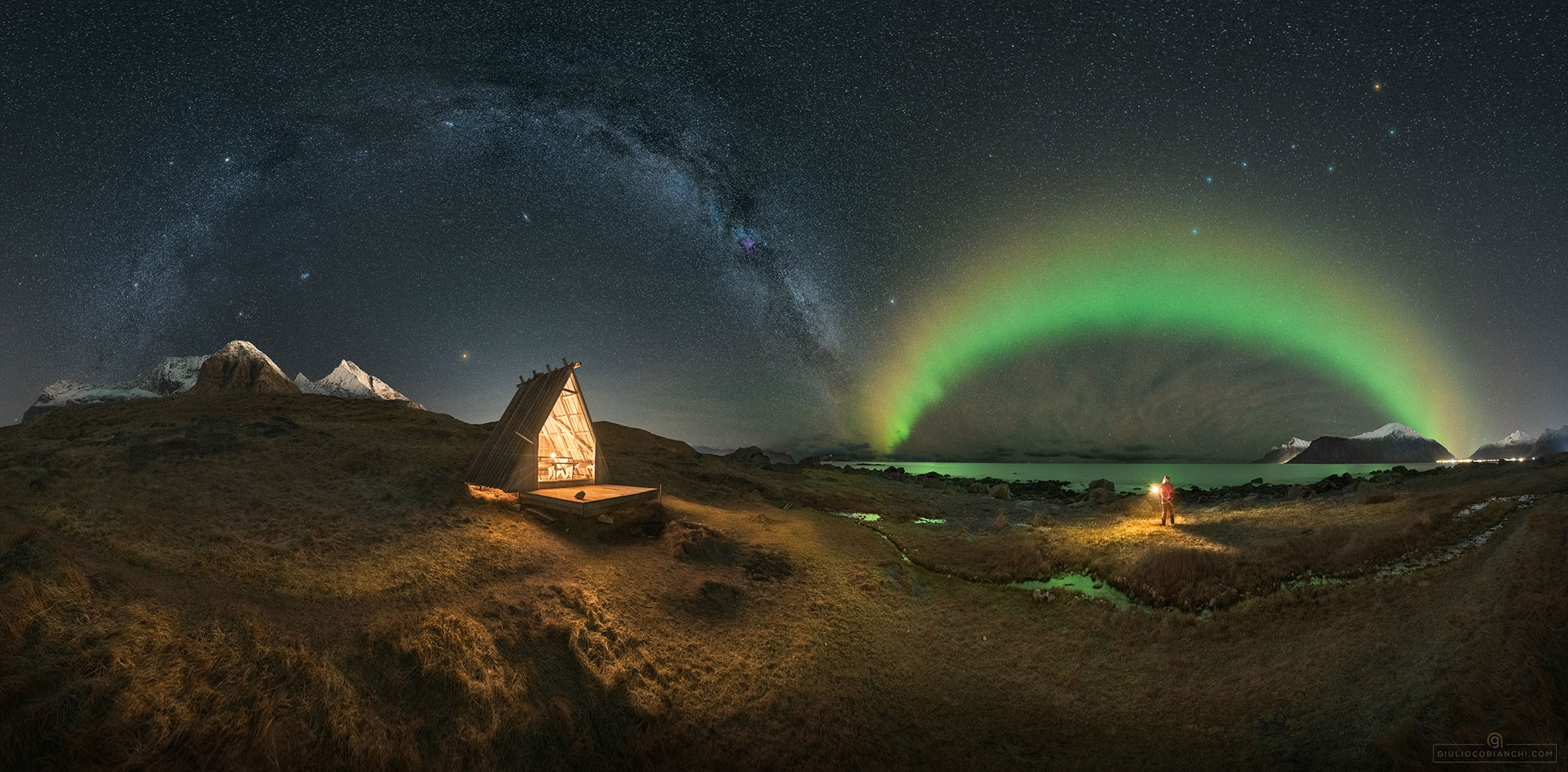
What are these two giant arches across the sky? Perhaps the more familiar one, on the left, is the central band of our Milky Way Galaxy. This grand disk of stars and nebulas here appears to encircle much of the southern sky. Visible below the stellar arch is the rusty-orange planet Mars and the extended Andromeda galaxy. For a few minutes during this cold arctic night, a second giant arch appeared to the right, encircling part of the northern sky: an aurora. Auroras are much closer than stars as they are composed of glowing air high in Earth's atmosphere. Visible outside the green auroral arch is the group of stars popularly known as the Big Dipper. The featured digital composite of 18 images was captured in mid-December over the Lofoten Islands in Norway. APOD Year in Review (2020): RJN's Night Sky Network Lecture
¿Qué son estos dos arcos gigantes que cruzan el cielo? Quizás el más familiar, a la izquierda, sea la banda central de nuestra Galaxia Vía Láctea. Este gran disco de estrellas y nebulosas aparece aquí como si rodeara gran parte del cielo sur. Debajo del arco estelar se ve el planeta Marte, de color rojizo-anaranjado, y la galaxia extendida de Andrómeda. Durante unos minutos en esta fría noche ártica, apareció un segundo arco gigante a la derecha, rodeando parte del cielo norte: una aurora. Las auroras están mucho más cerca que las estrellas, ya que están compuestas por aire brillante alto en la atmósfera terrestre. Fuera del arco auroral verde se ve el grupo de estrellas conocido popularmente como el Cazo Mayor. La imagen digital compuesta de 18 tomas fue capturada a mediados de diciembre sobre las islas Lofoten en Noruega.