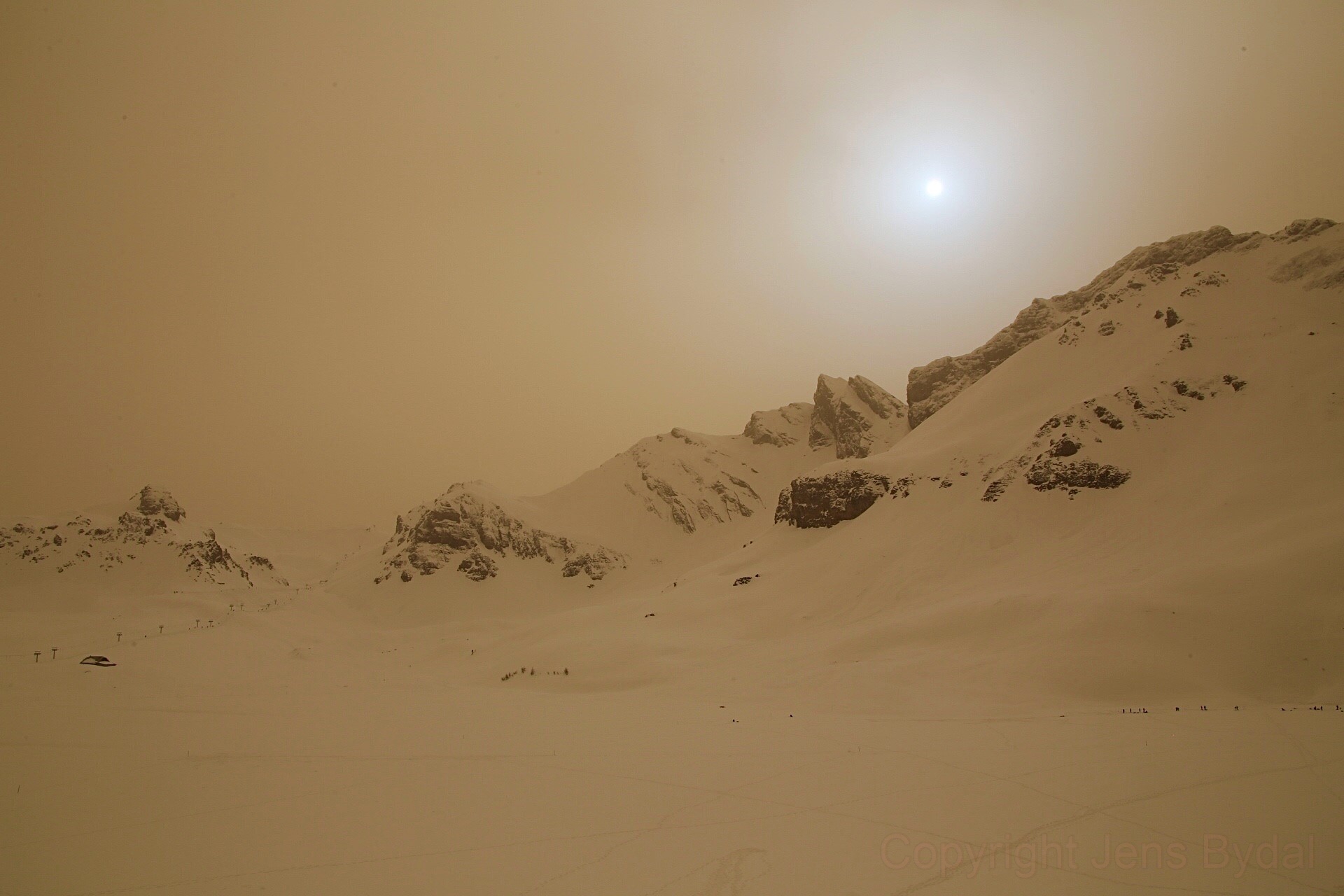
Taken on February 6, this snowy mountain and skyscape was captured near Melchsee-Frutt, central Switzerland, planet Earth. The reddish daylight and blue tinted glow around the afternoon Sun are colors of the Martian sky, though. Of course both worlds have the same Sun. From Mars, the Sun looks only about half as bright and 2/3 the size compared to its appearance from Earth. Lofted from the surface of Mars, fine dust particles suspended in the thin Martian atmosphere are rich in the iron oxides that make the Red Planet red. They tend to absorb blue sunlight giving a red tinge to the Martian sky, while forward scattering still makes the light appear relatively bluish near the smaller, fainter Martian Sun. Normally Earth's denser atmosphere strongly scatters blue light, making the terrestrial sky blue. But on February 6 a huge cloud of dust blown across the Mediterranean from the Sahara desert reached the Swiss Alps, dimming the Sun and lending that Alpine afternoon the colors of the Martian sky. By the next day, only the snow was left covered with reddish dust. News from Mars: NASA Perseverance Coverage
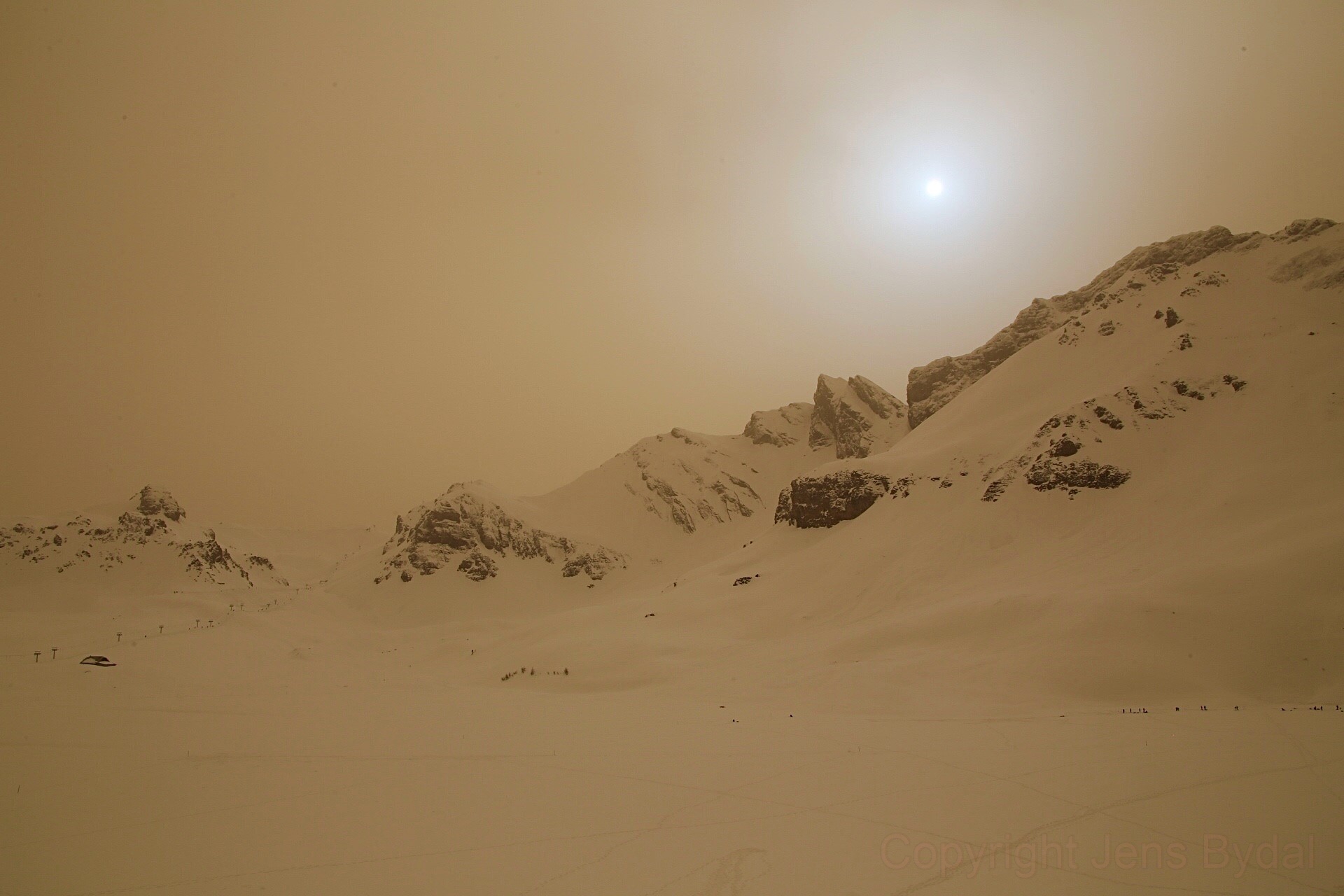
Tomada el 6 de febrero, esta escena de montañas nevadas y cielo fue capturada cerca de Melchsee-Frutt, en Suiza central, en el planeta Tierra. La luz rojiza del día y el brillo teñido de azul alrededor del Sol de la tarde son, sin embargo, colores del cielo marciano. Por supuesto, ambos mundos comparten el mismo Sol. Desde Marte, el Sol aparece aproximadamente la mitad de brillante y 2/3 del tamaño que desde la Tierra. Levantadas desde la superficie marciana, partículas finas de polvo suspendidas en la delgada atmósfera marciana contienen óxidos de hierro que le dan a Marte su color rojizo. Estas partículas tienden a absorber la luz azul, dándole al cielo marciano un tono rojizo, mientras que la dispersión hacia adelante hace que la luz cerca del Sol marciano más pequeño y tenue aparezca relativamente azul. Normalmente, la atmósfera más densa de la Tierra dispersa fuertemente la luz azul, haciendo que el cielo terrestre sea azul. Pero el 6 de febrero, una gran nube de polvo transportada desde el desierto del Sáhara a través del Mediterráneo llegó a los Alpes Suizos, atenuando la luz solar y otorgando a esa tarde alpina los colores del cielo marciano. Al día siguiente, solo la nieve quedó cubierta con polvo rojizo. Noticias de Marte: Cobertura de la NASA Perseverance