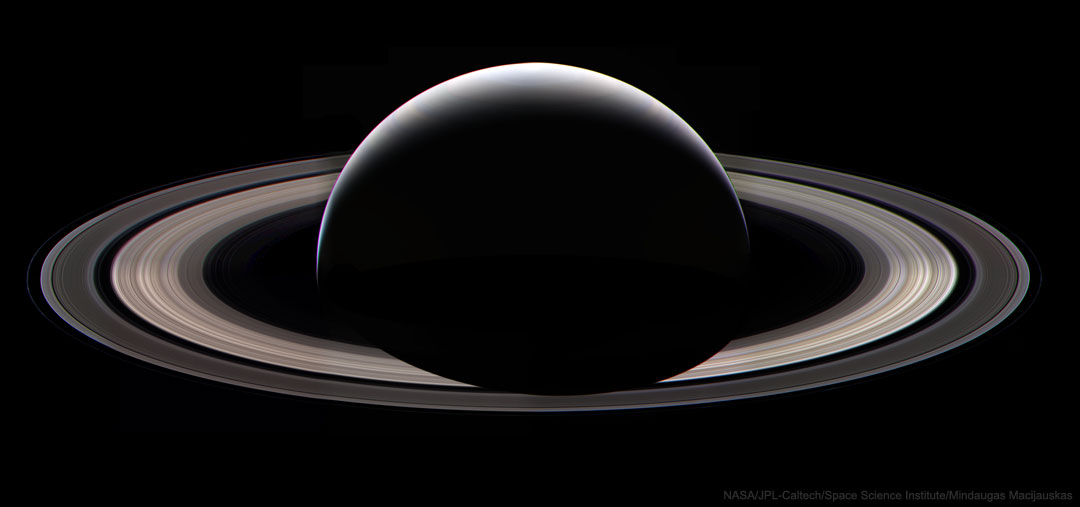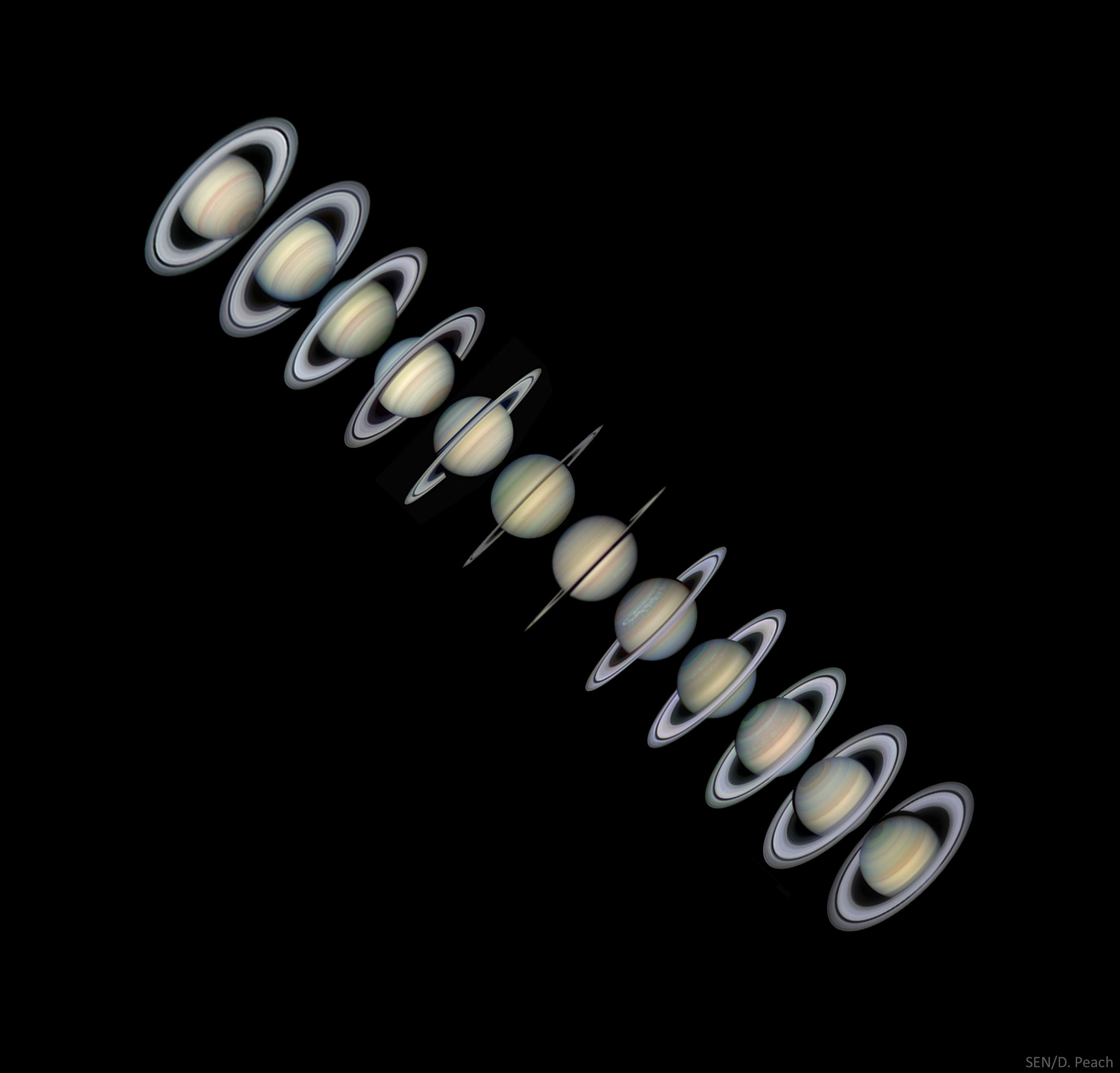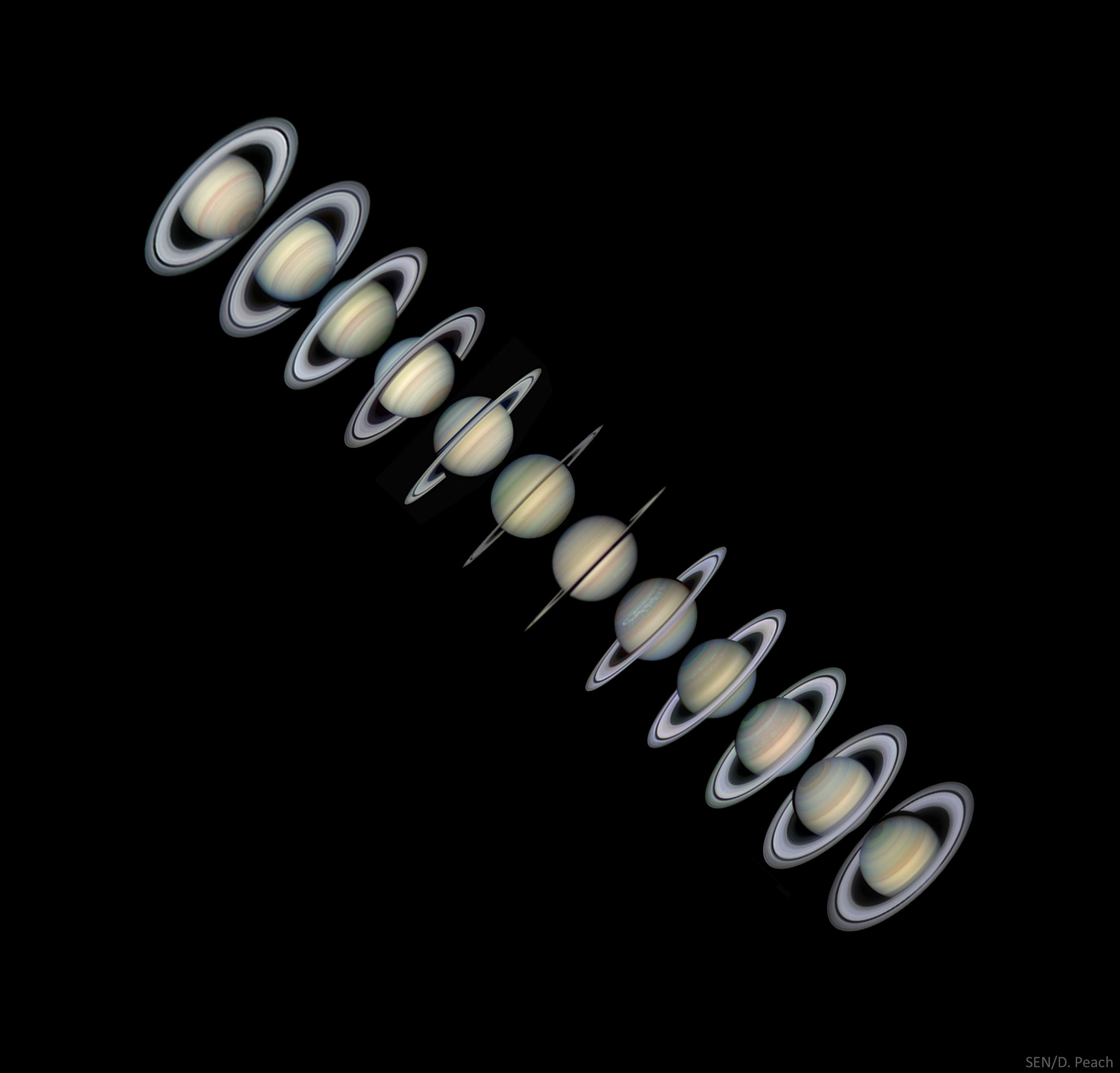
On Saturn, the rings tell you the season. On Earth, Wednesday marks an equinox, the time when the Earth's equator tilts directly toward the Sun. Since Saturn's grand rings orbit along the planet's equator, these rings appear most prominent -- from the direction of the Sun -- when the spin axis of Saturn points toward the Sun. Conversely, when Saturn's spin axis points to the side, an equinox occurs and the edge-on rings are hard to see from not only the Sun -- but Earth. In the featured montage, images of Saturn between the years of 2004 and 2015 have been superposed to show the giant planet passing from southern summer toward northern summer. Saturn was as close as it can get to planet Earth last month, and this month the ringed giant is still bright and visible throughout much of the night
En Saturno, los anillos te indican la estación. En la Tierra, el miércoles marca un equinoccio, el momento en que el ecuador terrestre se inclina directamente hacia el Sol. Dado que los grandes anillos de Saturno orbitan a lo largo del ecuador del planeta, estos anillos aparecen más prominentes — desde la dirección del Sol — cuando el eje de rotación de Saturno apunta hacia el Sol. Por el contrario, cuando el eje de rotación de Saturno apunta hacia el lado, ocurre un equinoccio y los anillos, vistos de perfil, son difíciles de observar no solo desde el Sol, sino también desde la Tierra. En la composición mostrada, imágenes de Saturno entre los años 2004 y 2015 han sido superpuestas para mostrar al gigante planeta pasando de un verano en el hemisferio sur hacia un verano en el hemisferio norte. Saturno estuvo tan cerca como puede estar de la Tierra el mes pasado, y este mes, el gigante anillado sigue siendo brillante y visible durante gran parte de la noche.