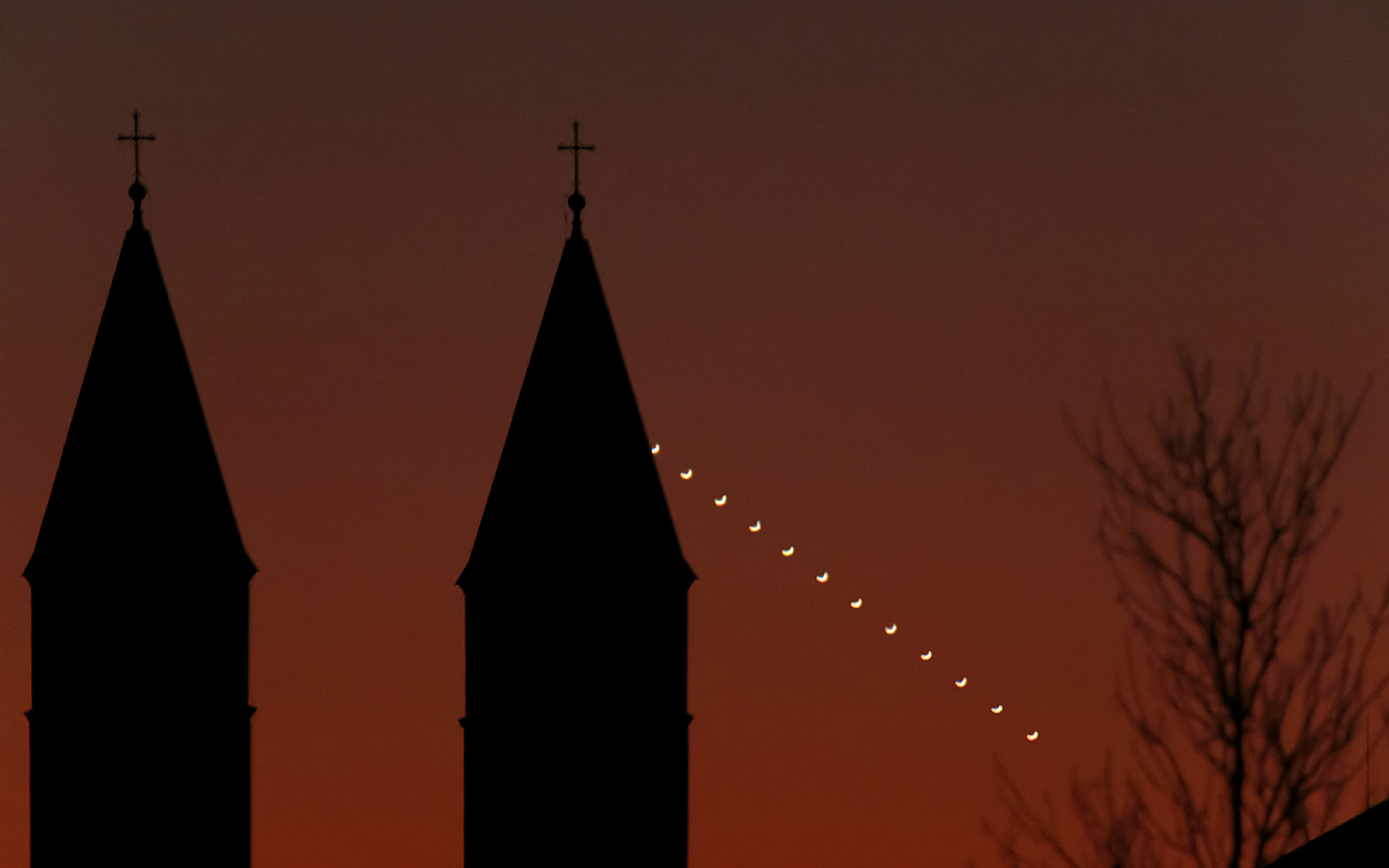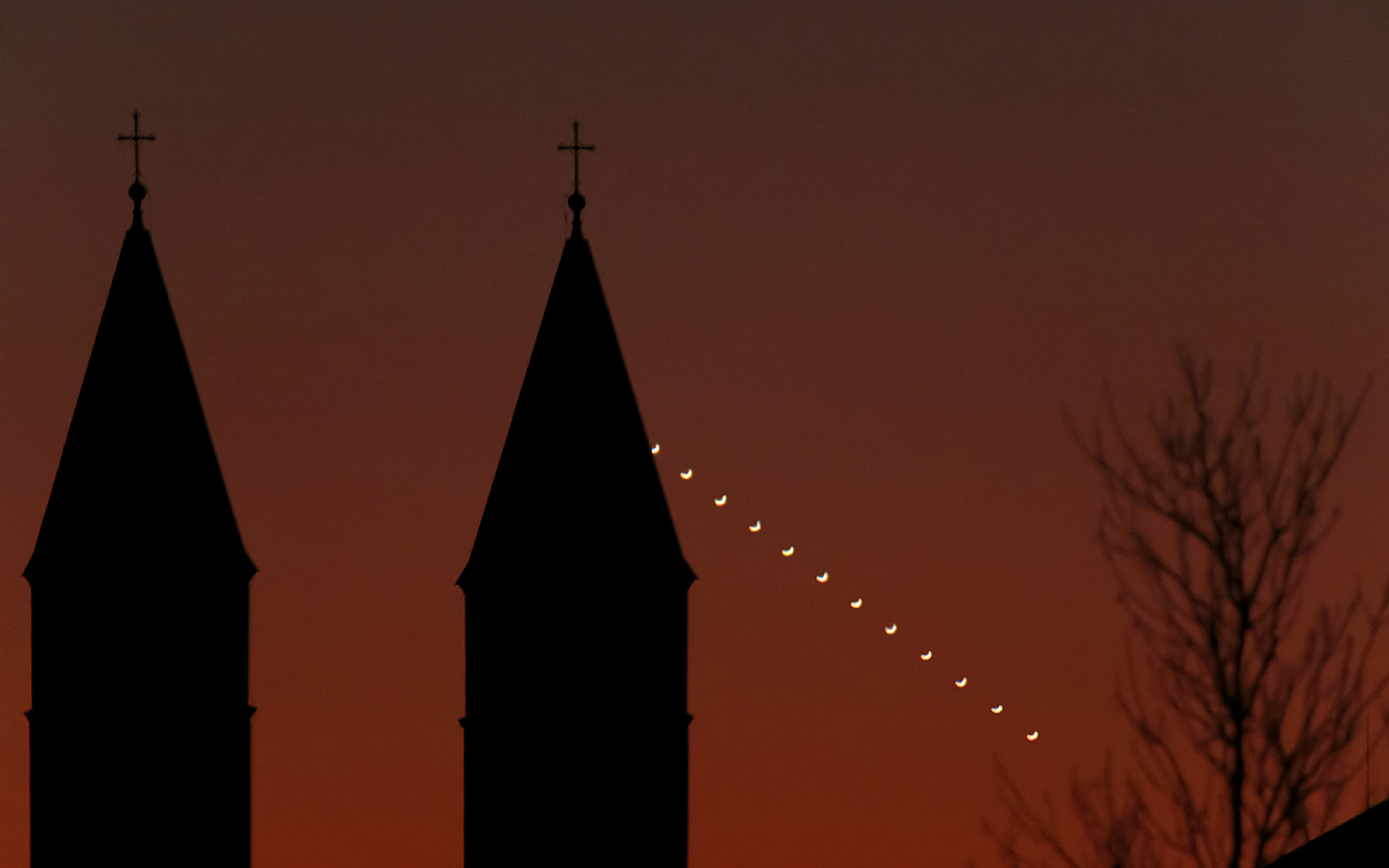
That's not a young crescent Moon posing behind cathedral towers after sunset. It's Venus in a crescent phase. About 40 million kilometers away and about 2 percent illuminated by sunlight, it was captured with camera and telephoto lens in this series of exposures as it set in western skies on January 1 from Veszprem, Hungary. The bright celestial beacon was languishing in the evening twilight, its days as the Evening Star coming to a close as 2022 began. But it was also growing larger in apparent size and becoming an ever thinner crescent in telescopic views. Heading toward a (non-judgemental) inferior conjunction, the inner planet will be positioned between Earth and Sun on January 9 and generally lost from view in the solar glare. A crescent Venus will soon reappear though. Rising in the east by mid-month just before the Sun as the brilliant Morning Star. Status Updates: Deploying the James Webb Space Telescope
Eso no es una luna creciente joven posando detrás de torres de catedral después del atardecer. Es Venus en una fase creciente. A unos 40 millones de kilómetros de distancia y con aproximadamente el 2 por ciento iluminado por la luz solar, fue capturado con cámara y lente teleobjetivo en esta serie de exposiciones mientras se ponía en los cielos occidentales el 1 de enero desde Veszprém, Hungría. La brillante guía celestial estaba languideciendo en la penumbra vespertina, llegando al final de sus días como la Estrella de la Tarde al comenzar 2022. Pero también estaba creciendo en tamaño aparente y convirtiéndose en un creciente cada vez más delgado en vistas telescópicas. Dirigiéndose hacia una conjunción inferior (no condenatoria), el planeta interior se posicionaría entre la Tierra y el Sol el 9 de enero y generalmente se perdería de vista en el resplandor solar. Sin embargo, pronto reaparecerá un Venus creciente. A mediados de mes, se elevará en el este justo antes del amanecer como la brillante Estrella de la Mañana.