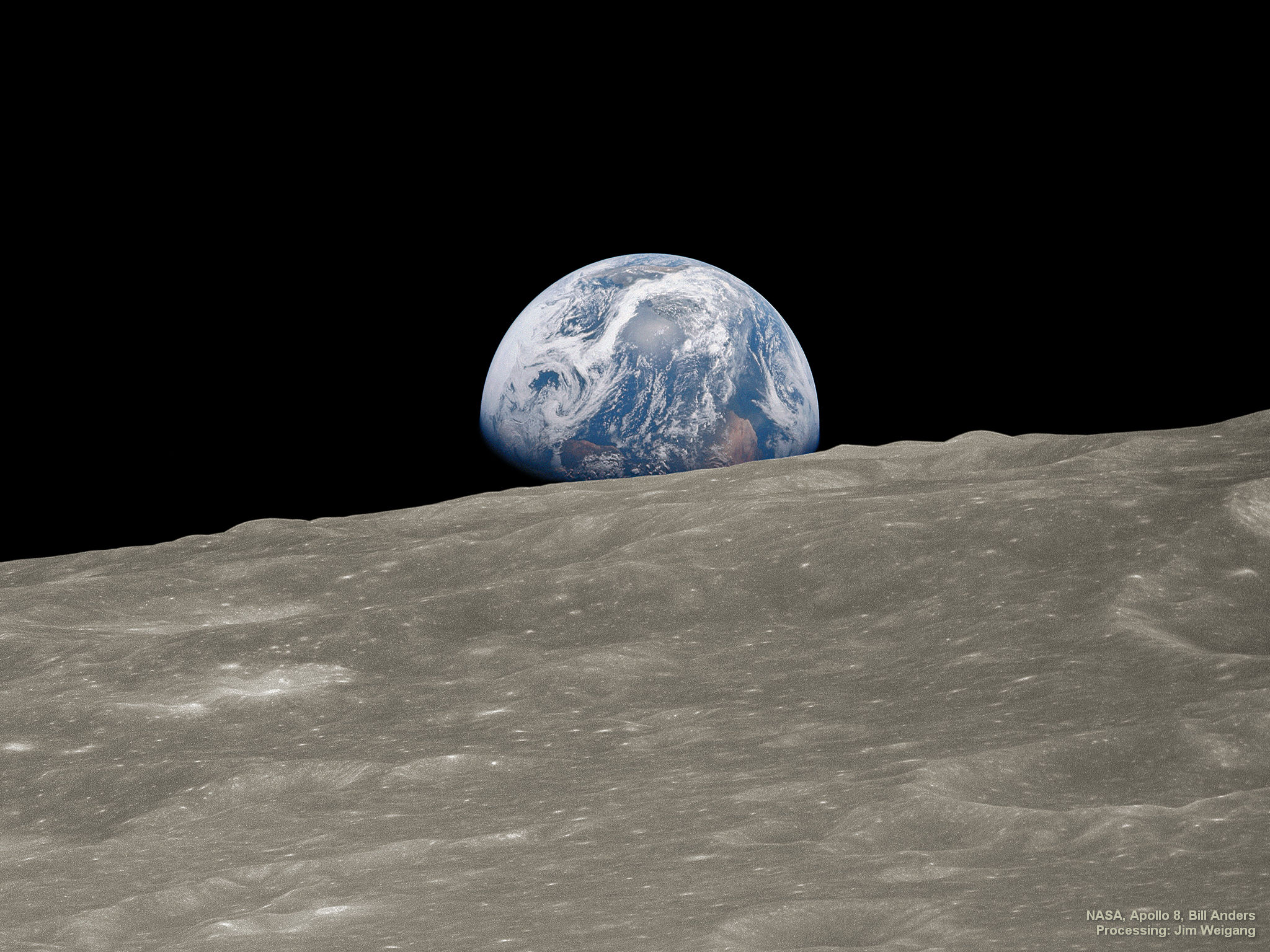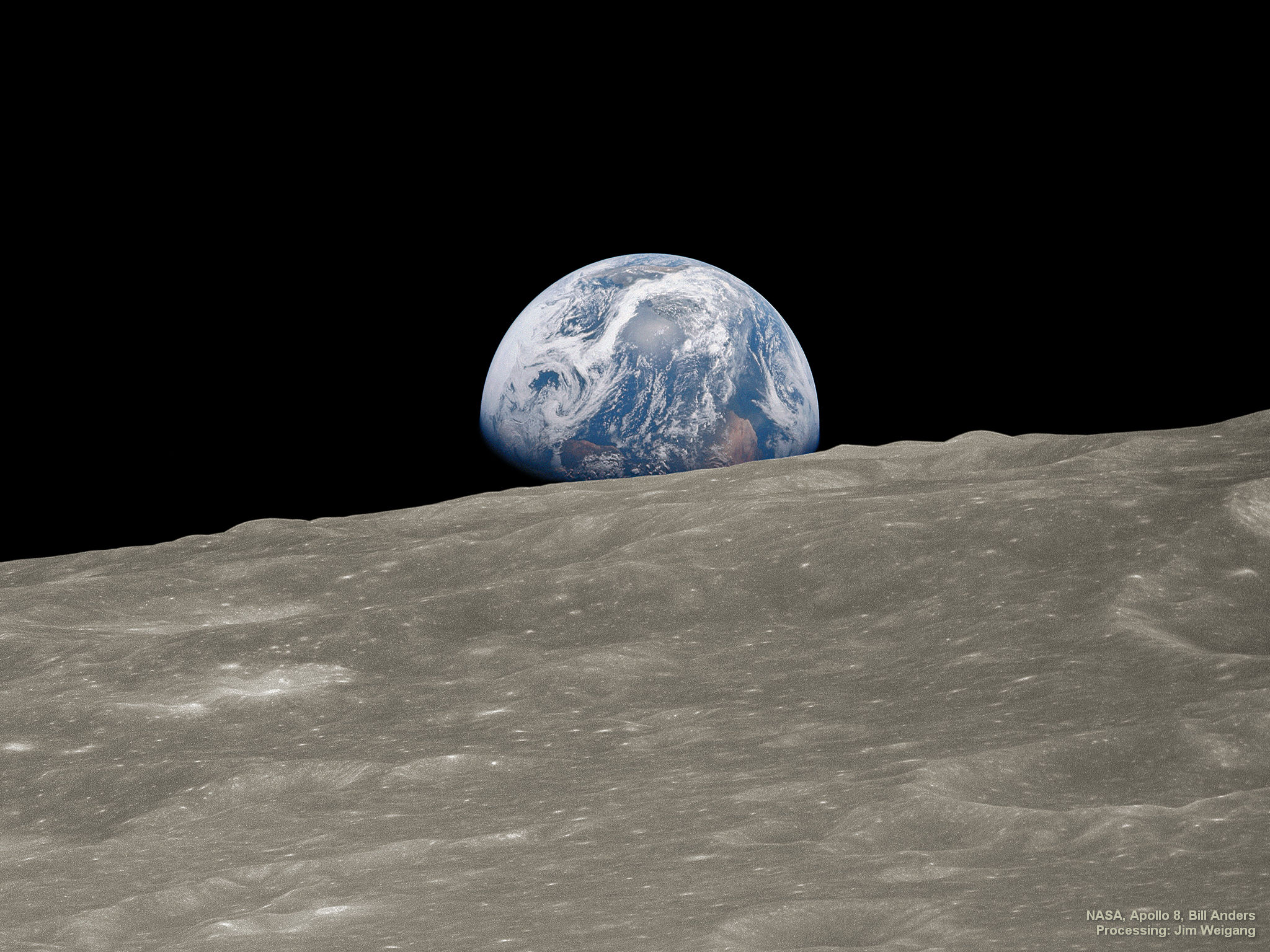
"Oh my God! Look at that picture over there! Here's the Earth coming up. Wow is that pretty!" Soon after that pronouncement, about 53 years ago, one of the most famous images ever taken was snapped from the orbit of the Moon. Now known as "Earthrise", the iconic image shows the Earth rising above the limb of the Moon, as taken by the crew of Apollo 8. But the well-known Earthrise image was actually the second image taken of the Earth rising above the lunar limb -- it was just the first in color. With modern digital technology, however, the real first Earthrise image -- originally in black and white -- has now been remastered to have the combined resolution and color of the first three images. Behold! The featured image is a close-up of the picture that Apollo 8 astronaut Bill Anders was talking about. Thanks to modern technology and human ingenuity, now we can all see it. (Historical note: A different historic black & white image of the Earth setting behind the lunar limb was taken by the robotic Lunar Orbiter 1 two years earlier.)
Crédito: NASA, Apollo 8 "¡Oh, Dios mío! Miren esa imagen allí. ¡Aquí está la Tierra apareciendo! ¡Wow, qué hermoso es eso!" Poco después de esa declaración, hace aproximadamente 53 años, se tomó una de las imágenes más famosas jamás capturadas desde la órbita de la Luna. Ahora conocida como "Amanecer terrestre", la icónica imagen muestra a la Tierra ascendiendo sobre el horizonte lunar, tomada por la tripulación de Apollo 8. Sin embargo, la conocida imagen de Amanecer terrestre fue en realidad la segunda imagen tomada del amanecer terrestre sobre el horizonte lunar — simplemente fue la primera en color. Gracias a la tecnología digital moderna, sin embargo, la primera imagen real de Amanecer terrestre — originalmente en blanco y negro — ha sido ahora remasterizada para combinar la resolución y el color de las tres primeras imágenes. ¡Miren! La imagen destacada es un acercamiento de la imagen que el astronauta de Apollo 8, Bill Anders, estaba describiendo. Gracias a la tecnología moderna y a la ingeniería humana, ahora todos podemos verla. (Nota histórica: Una imagen histórica en blanco y negro diferente de la Tierra desapareciendo detrás del horizonte lunar fue tomada por la nave robótica Lunar Orbiter 1 dos años antes.)