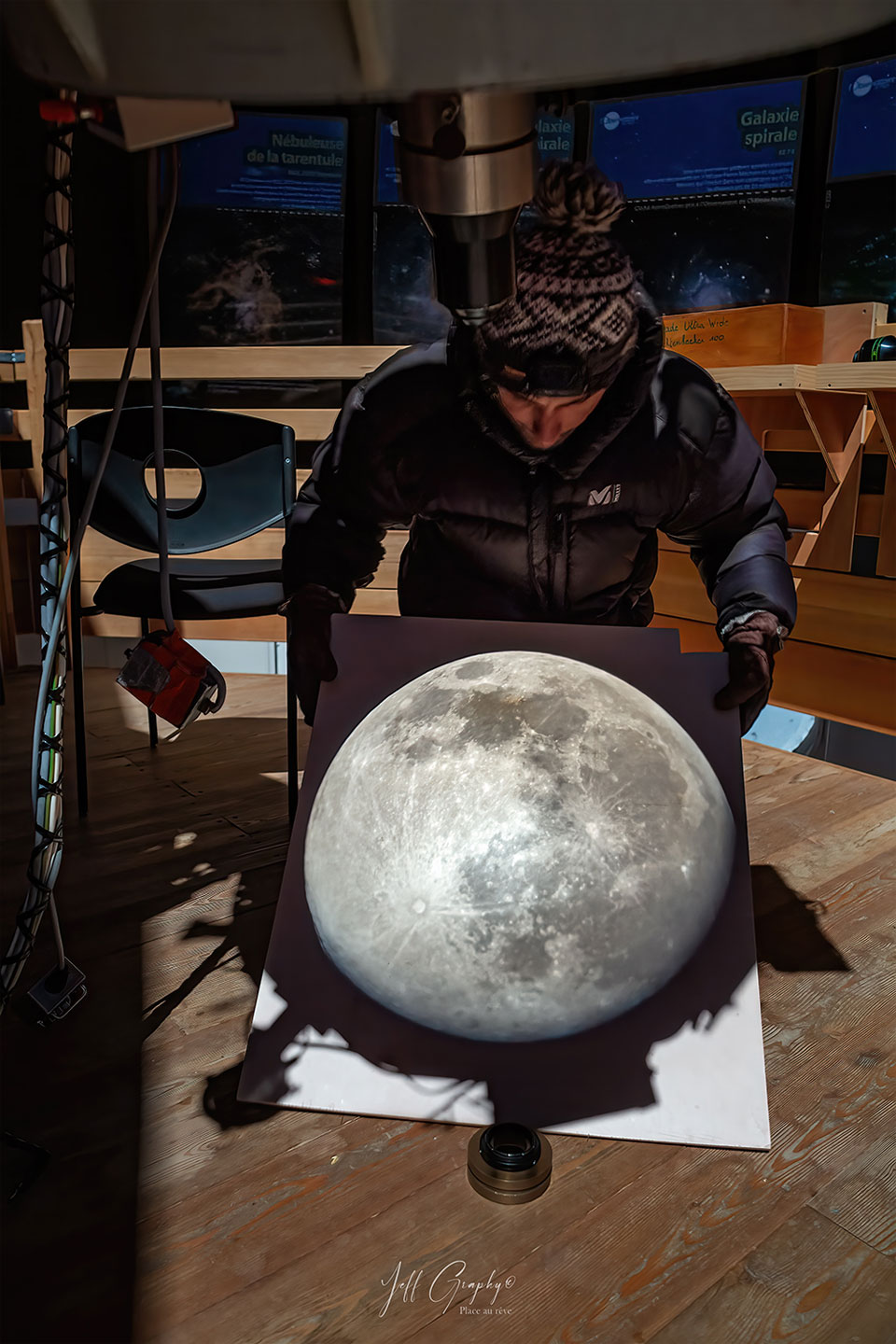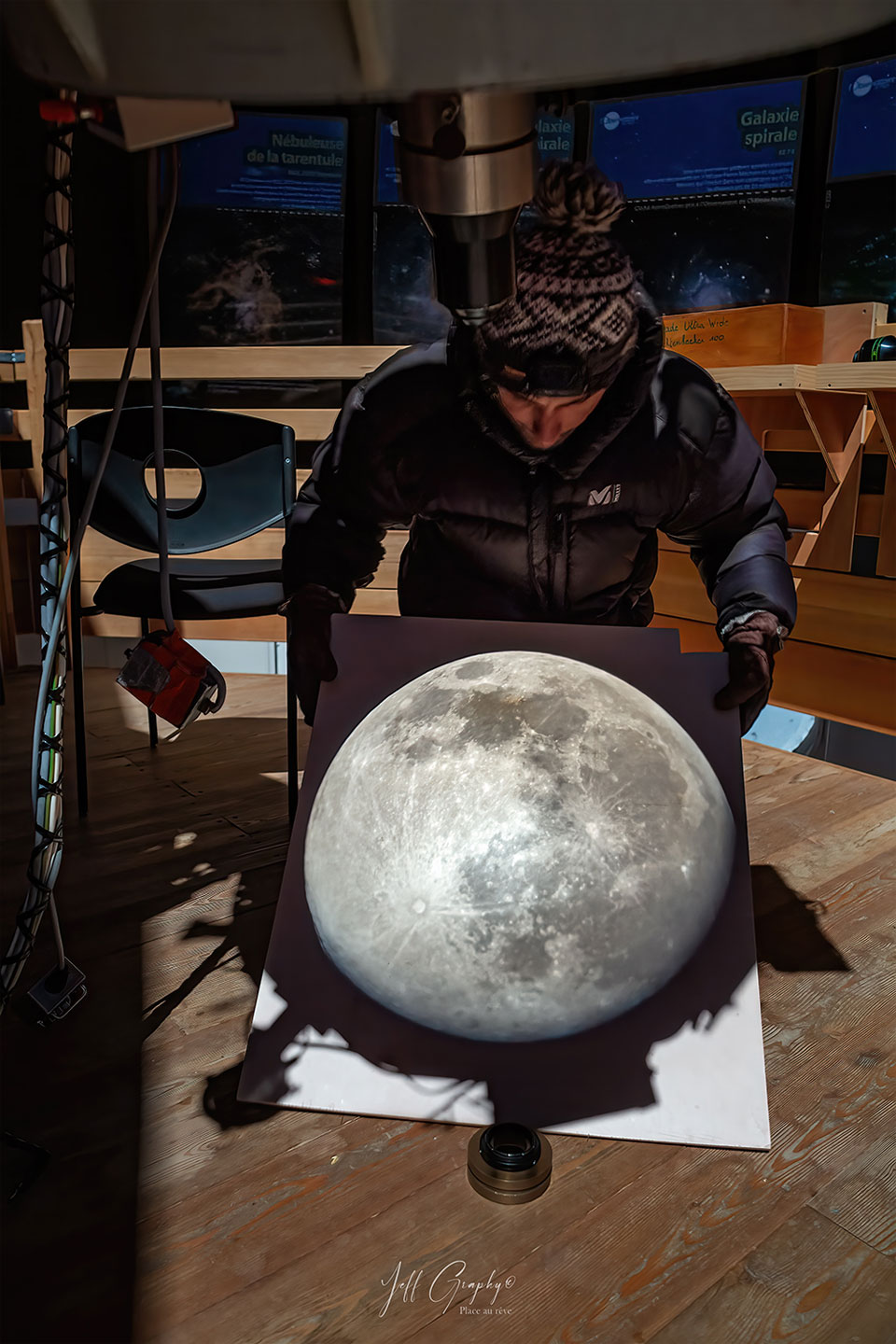
You don't have to look through a telescope to know where it's pointing. Allowing the telescope to project its image onto a large surface can be useful because it dilutes the intense brightness of very bright sources. Such dilution is useful for looking at the Sun, for example during a solar eclipse. In the featured single-exposure image, though, it is a too-bright full moon that is projected. This February full moon occurred two weeks ago and is called the Snow Moon by some northern cultures. The projecting instrument is the main 62-centimeter telescope at the Saint-Véran Observatory high in the French Alps. Seeing a full moon directly is easier because it is not too bright, although you won't see this level of detail. Your next chance will occur on March 17.
No necesitas mirar a través de un telescopio para saber hacia dónde apunta. Permitir que el telescopio proyecte su imagen sobre una superficie grande puede ser útil porque atenúa la intensa brillantez de fuentes muy brillantes. Esta atenuación es útil, por ejemplo, para observar al Sol durante un eclipse solar. En la imagen de exposición única que se muestra, sin embargo, es una Luna llena demasiado brillante la que se proyecta. Esta Luna llena de febrero ocurrió hace dos semanas y es llamada por algunas culturas del norte como la Luna de la Nieve. El instrumento que proyecta es el telescopio principal de 62 centímetros del Observatorio de Saint-Véran, ubicado alto en los Alpes franceses. Ver una Luna llena directamente es más fácil porque no es demasiado brillante, aunque no verás este nivel de detalle. Tu próxima oportunidad ocurrirá el 17 de marzo.