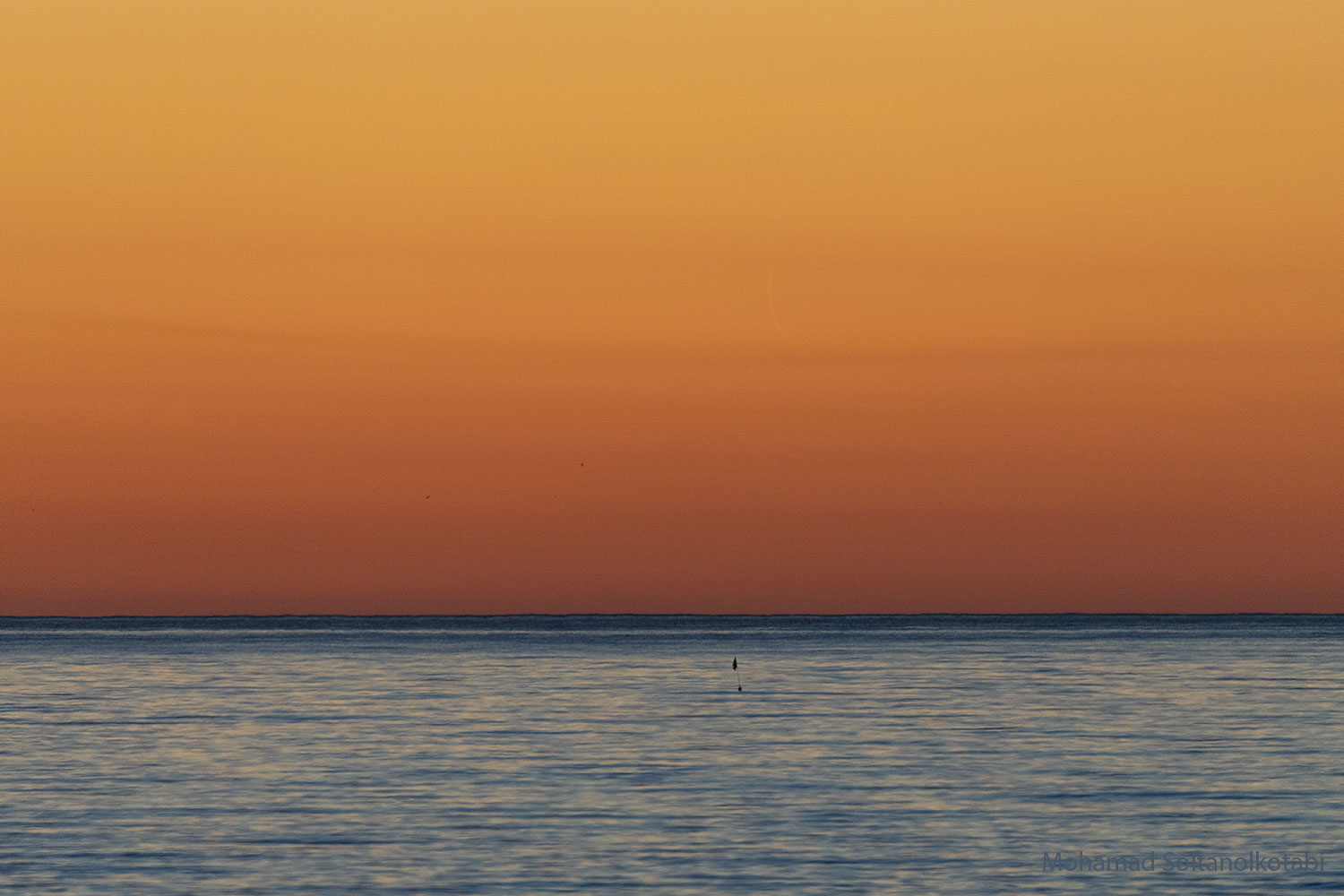
Can you find the Moon? This usually simple task can be quite difficult. Even though the Moon is above your horizon half of the time, its phase can be anything from crescent to full. The featured image was taken in late May from Sant Martí d'Empúries, Spain, over the Mediterranean Sea in the early morning. One reason you can't find this moon is because it is very near to its new phase, when very little of the half illuminated by the Sun is visible to the Earth. Another reason is because this moon is near the horizon and so seen through a long path of Earth's atmosphere -- a path which dims the already faint crescent. Any crescent moon is only visible near the direction the Sun, and so only locatable near sunrise or sunset. The Moon runs through all of its phases in a month (moon-th), and this month the thinnest sliver of a crescent -- a new moon -- will occur in three days.
¿Puedes encontrar la Luna? Esta tarea normalmente sencilla puede ser bastante difícil. Aunque la Luna está sobre tu horizonte la mitad del tiempo, su fase puede variar desde creciente hasta llena. La imagen destacada fue tomada a finales de mayo desde Sant Martí d'Empúries, España, sobre el mar Mediterráneo al amanecer. Una razón por la que no puedes encontrar esta luna es porque está muy cerca de su fase nueva, cuando muy poco de la mitad iluminada por el Sol es visible desde la Tierra. Otra razón es porque esta luna está cerca del horizonte y, por lo tanto, se ve a través de una larga trayectoria de la atmósfera terrestre — una trayectoria que atenúa aún más el delgado creciente ya tenue. Cualquier luna creciente solo es visible cerca de la dirección del Sol, y por lo tanto solo se puede localizar cerca del amanecer o del atardecer. La Luna pasa por todas sus fases en un mes (lunación), y este mes el más delgado de los crecientes — una luna nueva — ocurrirá en tres días.