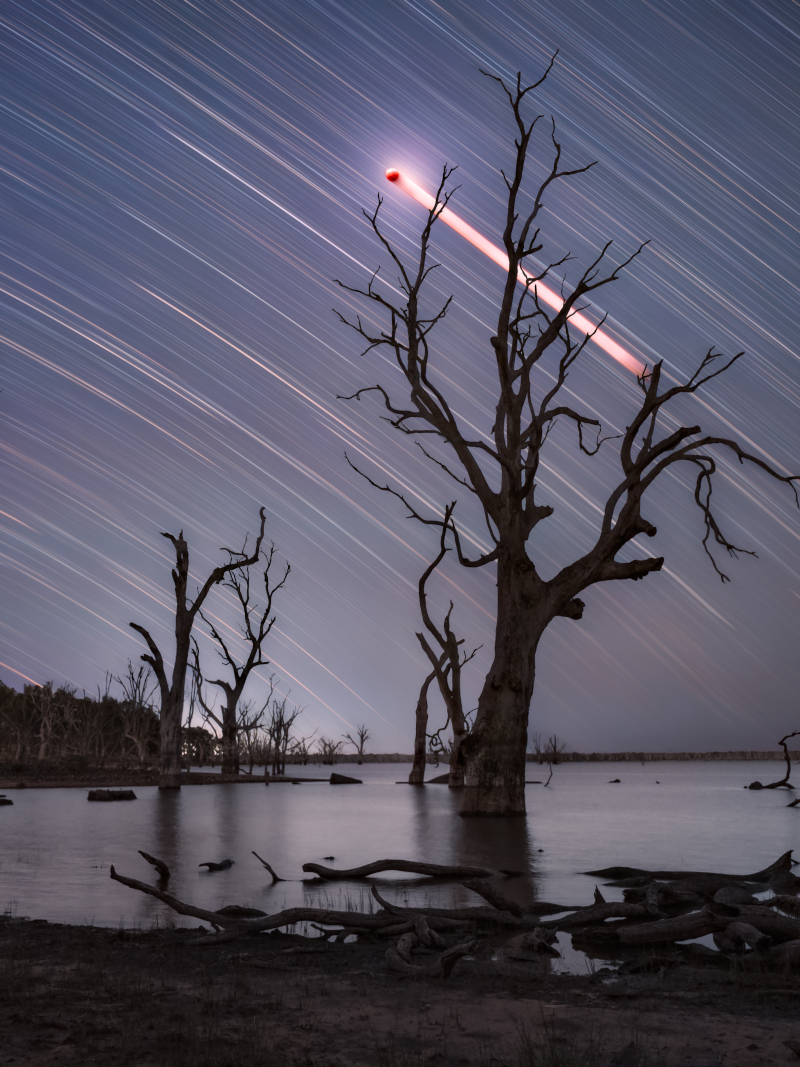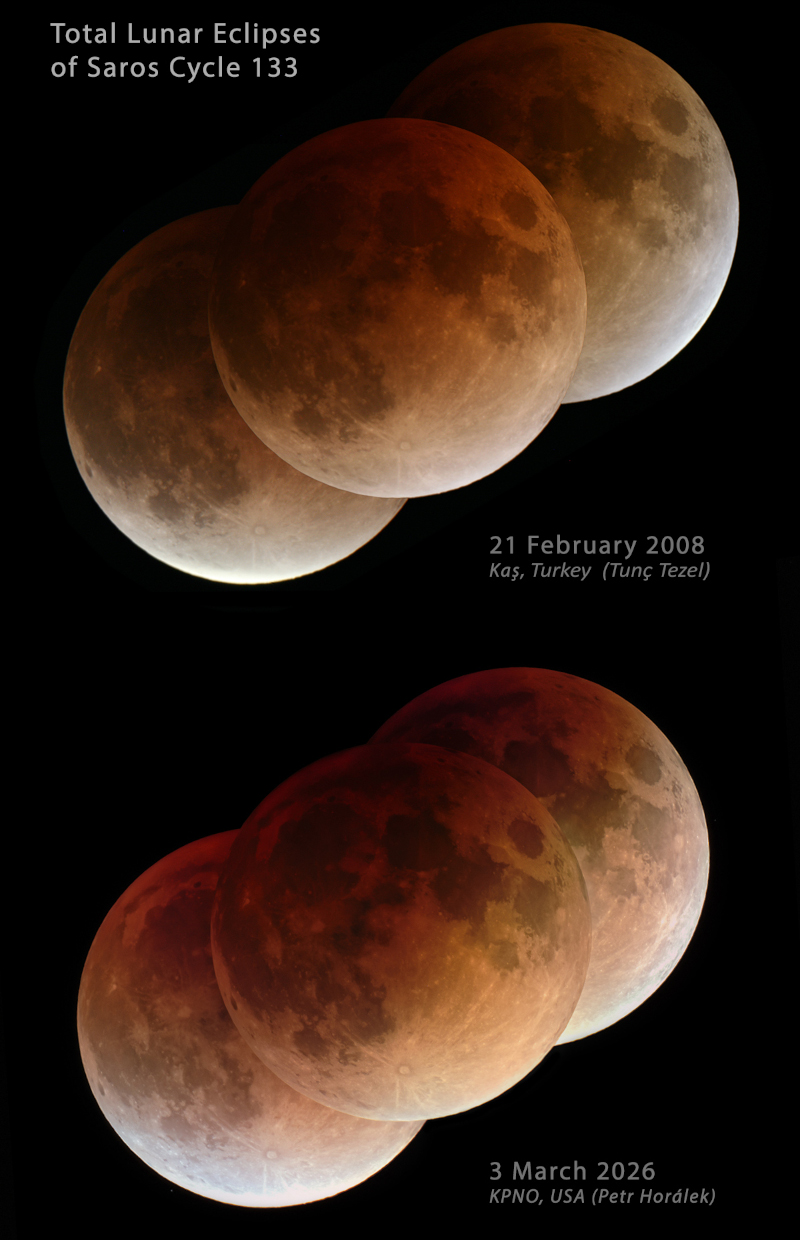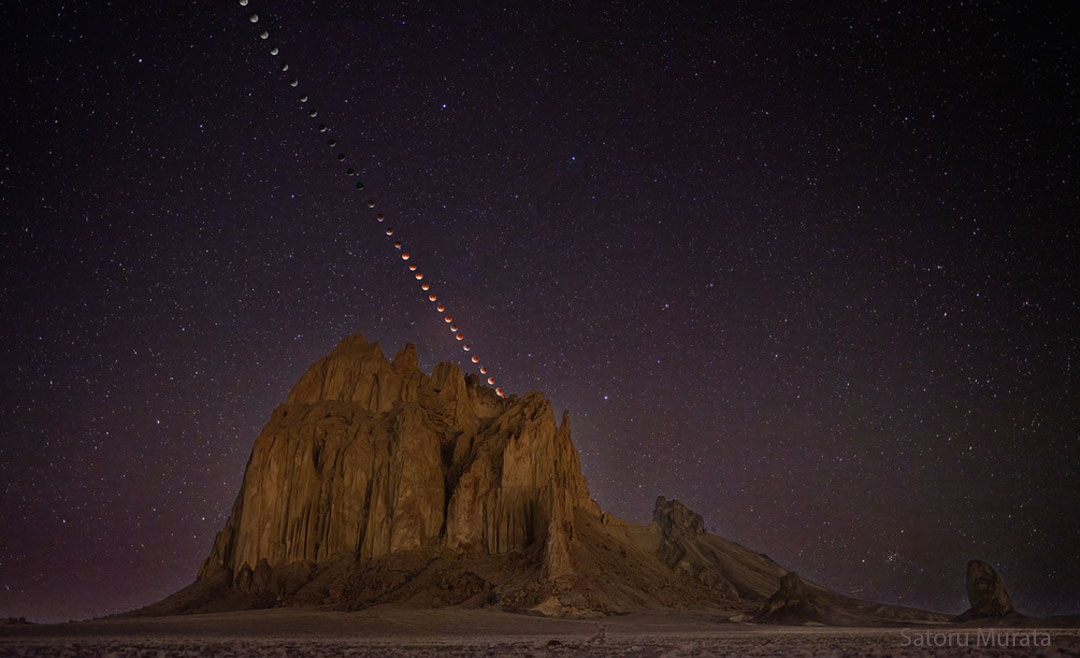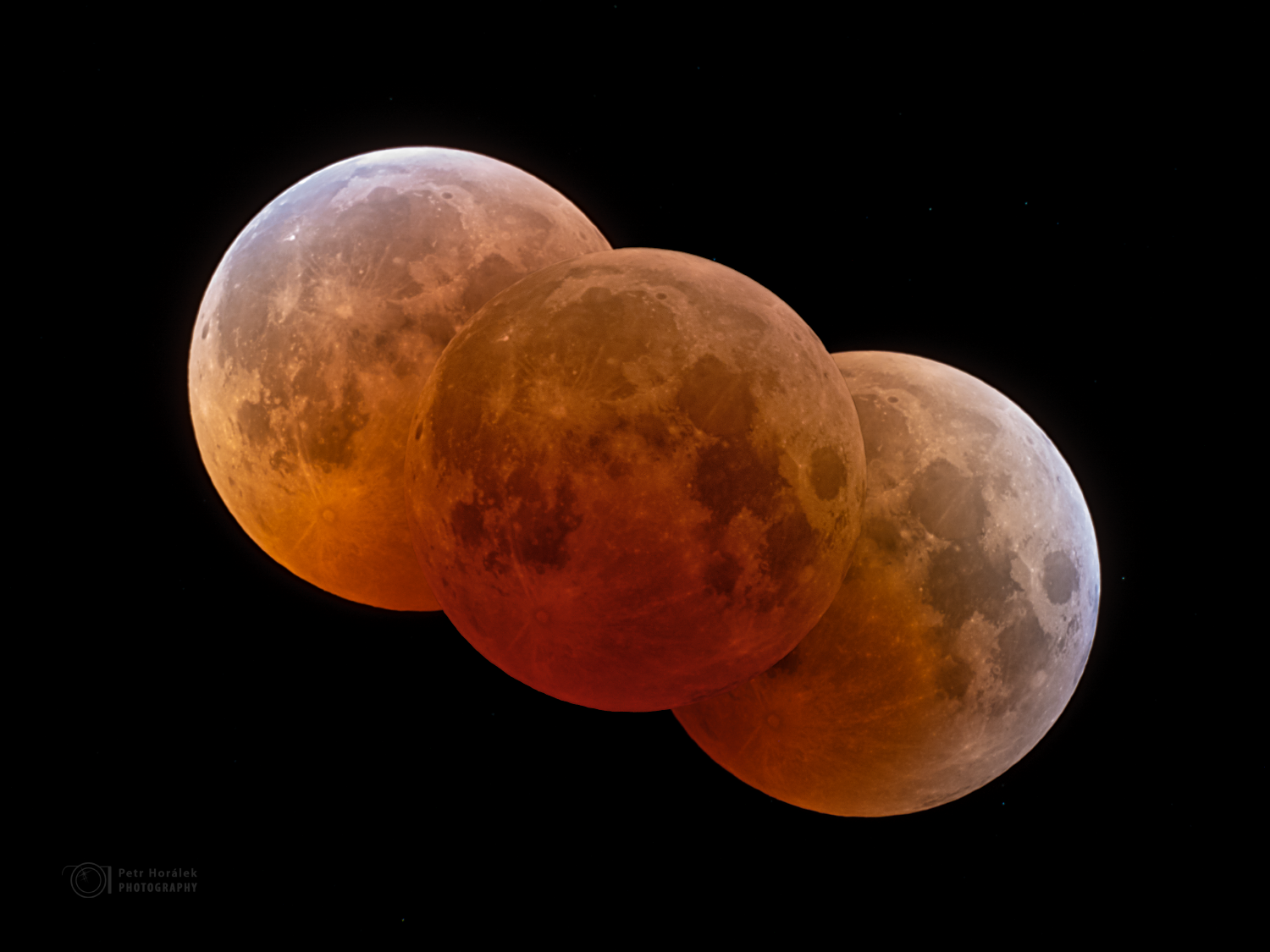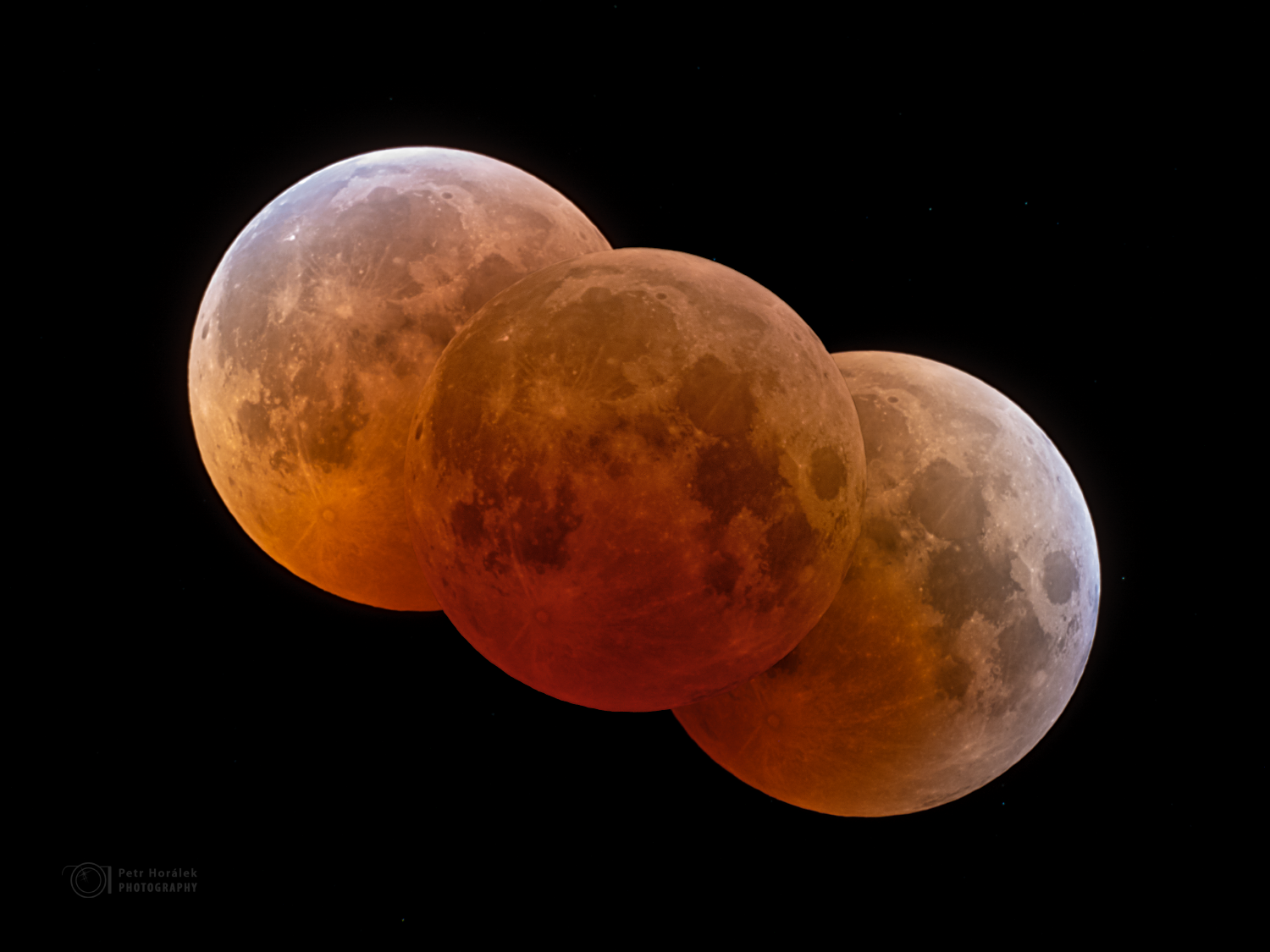
The beginning, middle, and end of a journey through planet Earth's colorful umbral shadow is captured in this timelapse composite image of a total lunar eclipse. Taken on November 8 from Kitt Peak National Observatory this eclipse's 1 hour and 25 minute long total phase starts on the right and finishes on the left. Reddened sunlight, scattered into the central shadow by Earth's dusty atmosphere produces the dramatic dark red hues reflected by the lunar disk. For this eclipse, additional reddening is likely due to scattering from ash lingering in the atmosphere after a large volcanic eruption in the southern Pacific earlier this year. Seen at the right and left, the Earth's shadow is still lighter along its edge though. That faint bluish fringe along the lunar limb is colored by sunlight filtered through Earth's stratospheric ozone layer. Lunar Eclipse of November 2022: Notable Submissions to APOD Love Eclipses? (US): Apply to become a NASA Partner Eclipse Ambassador
El comienzo, el medio y el final de un viaje a través de la sombra umbra de colorida de la Tierra se capturan en esta imagen compuesta de tiempo de un eclipse lunar total. Tomada el 8 de noviembre desde el Observatorio Nacional de Kitt Peak, la fase total de este eclipse, que duró 1 hora y 25 minutos, comienza a la derecha y termina a la izquierda. La luz solar rojiza, dispersada hacia la sombra central por la atmósfera terrestre llena de polvo, produce los tonos rojos oscuros reflejados en el disco lunar. Para este eclipse, un enrojecimiento adicional es probablemente debido a la dispersión causada por la ceniza que permanece en la atmósfera después de una gran erupción volcánica en el Pacífico sur este año. A la derecha y a la izquierda, la sombra de la Tierra aún es más clara a lo largo de su borde. Ese leve borde azulado a lo largo del limbo lunar está coloreado por la luz solar filtrada a través de la capa de ozono estratosférico de la Tierra.