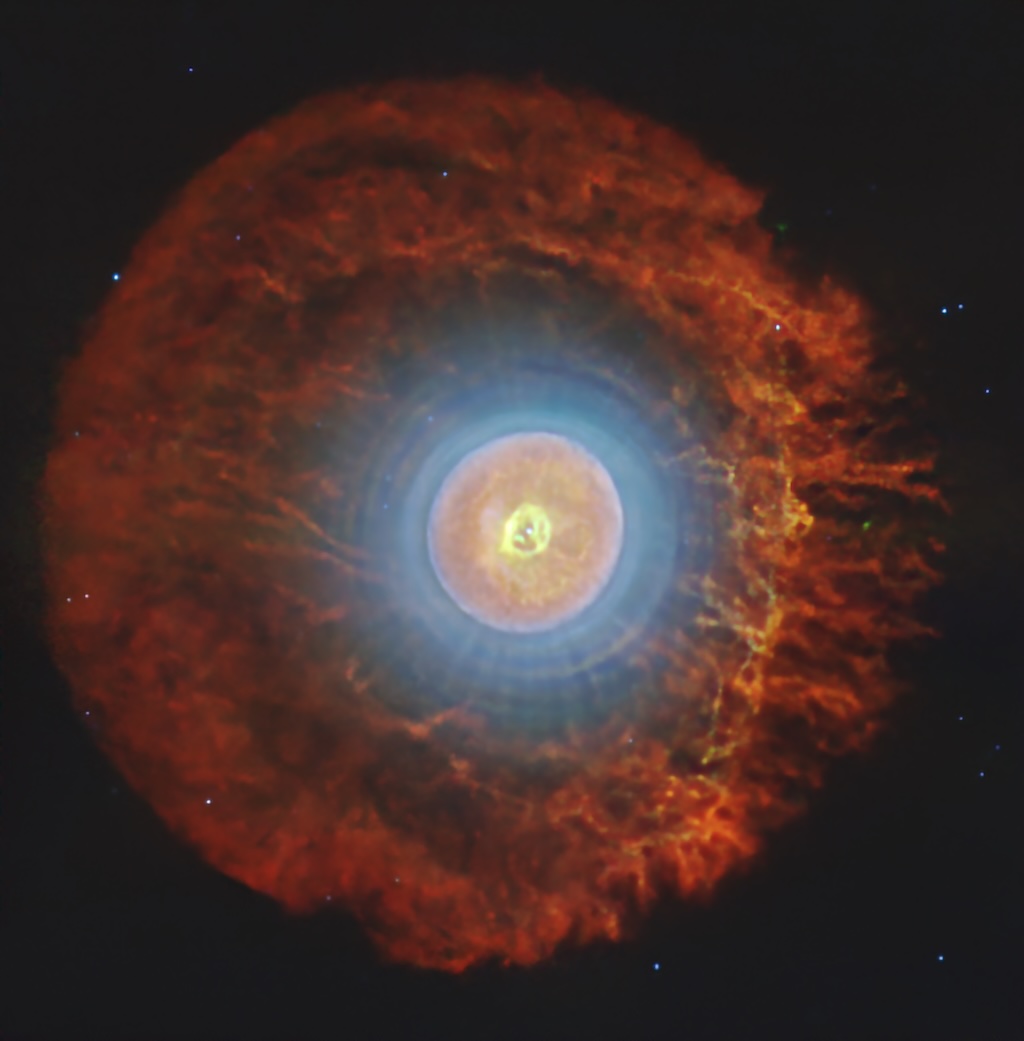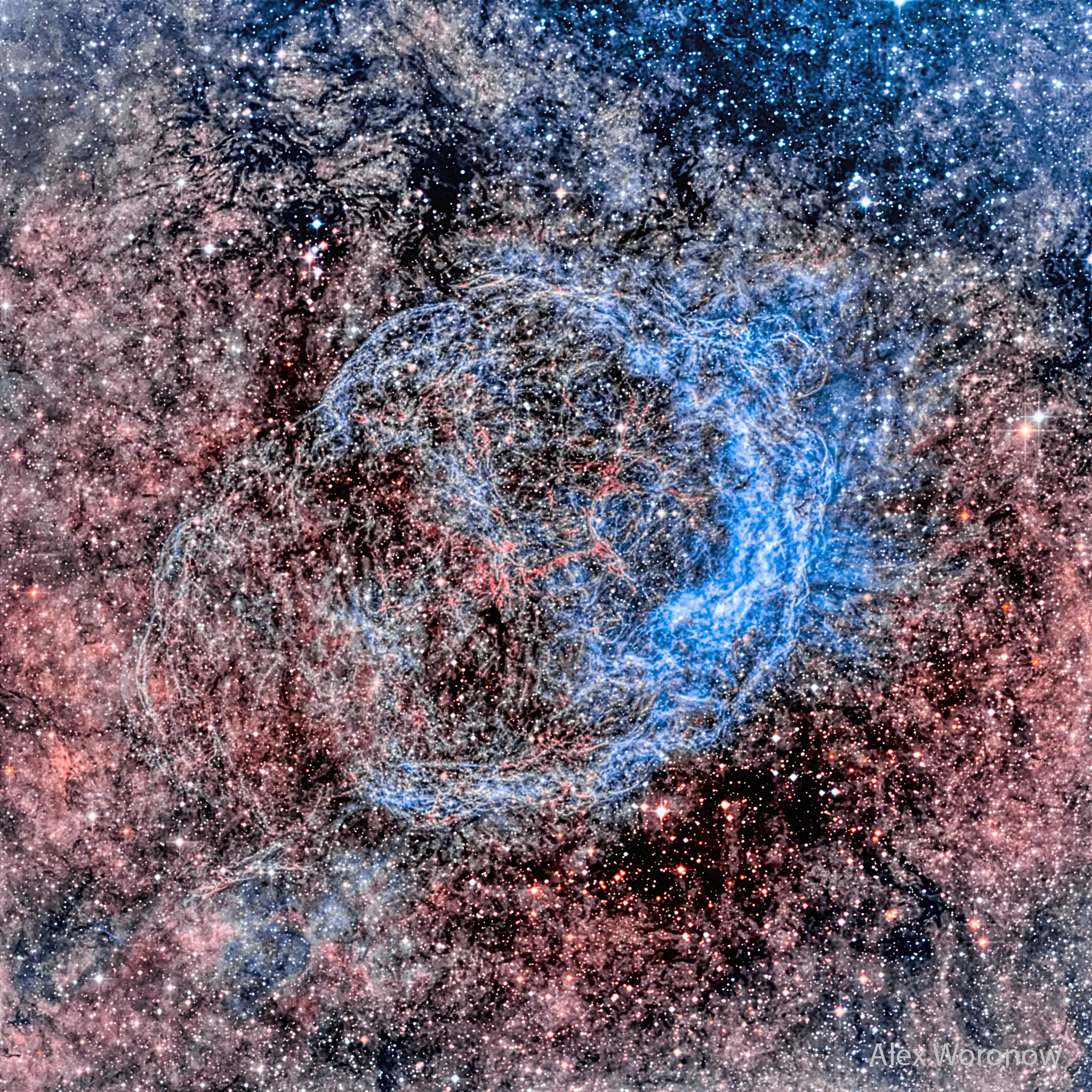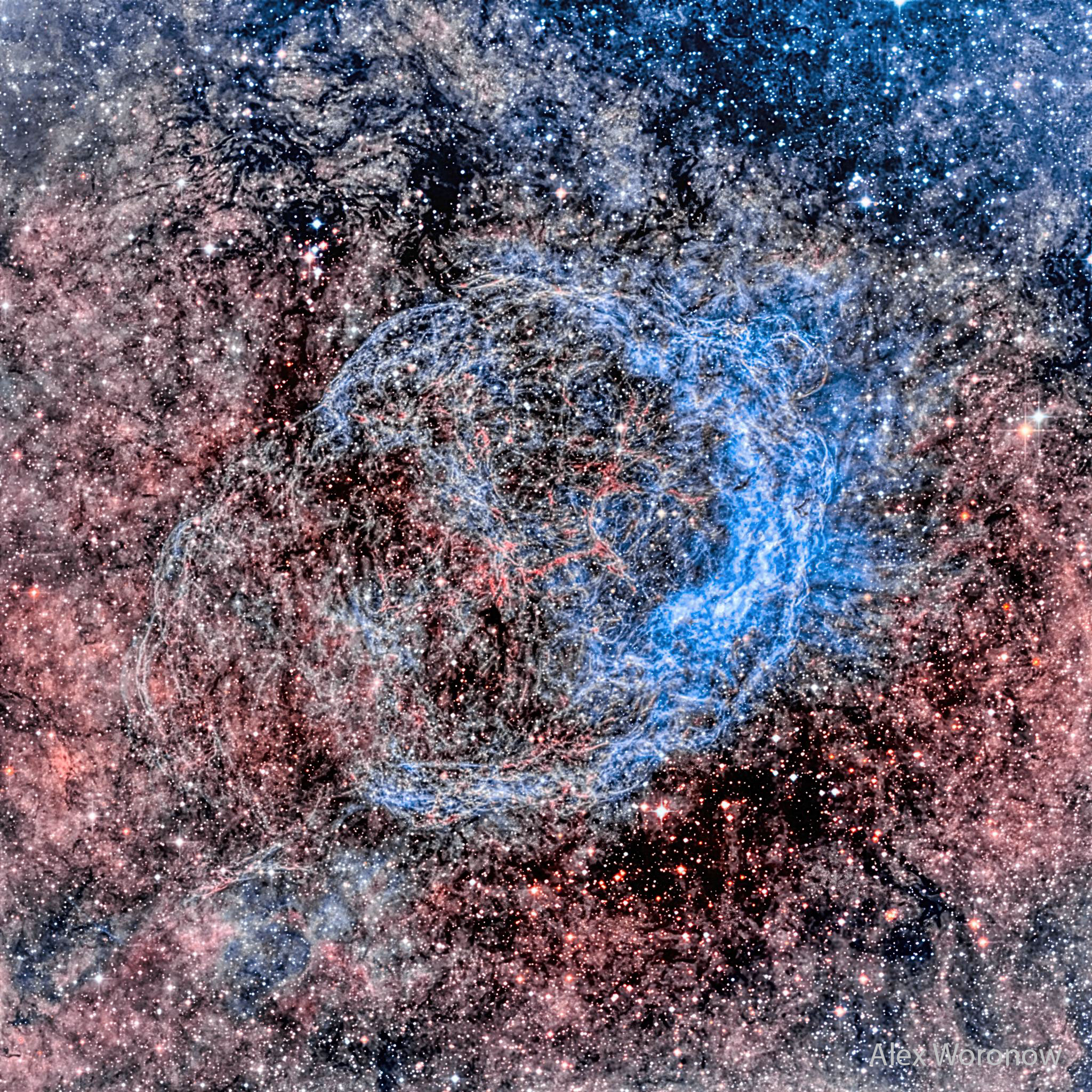
Why does the nebula around the star WR-18 shine brighter on one side? Also known as NGC 3199, this active star and its surrounding nebula lie about 12,000 light-years away toward the nautical southern constellation of Carina. The featured deep image has been highly processed to bring out filamentary details of the glowing gas in the bubble-shaped nebula. The nebula is about 75 light-years across. Near the nebula's center is a Wolf-Rayet star, WR-18, which is a massive, hot, short-lived star that generates an intense and complex stellar wind. In fact, Wolf-Rayet stars are known to create nebulas with interesting shapes as their powerful winds sweep up surrounding interstellar material. In this case, the bright right edge was initially thought to indicate that a bow shock was being produced as the star plowed through a uniform medium, like a boat through water. Recent measurements and analyses, however, have shown the star is not moving quickly toward the bright edge. A more likely explanation has emerged that the material surrounding the star is not uniform, but clumped and denser near the bright edge.
¿Por qué la nebulosa que rodea a la estrella WR-18 brilla más en un lado? También conocida como NGC 3199, esta estrella activa y su nebulosa circundante se encuentran a unos 12 000 años luz de distancia, en dirección a la constelación austral Carina. La imagen detallada mostrada aquí ha sido procesada en forma intensa para resaltar los detalles filamentosos del gas brillante en la nebulosa de forma de burbuja. La nebulosa tiene aproximadamente 75 años luz de diámetro. Cerca del centro de la nebulosa se encuentra una estrella Wolf-Rayet, WR-18, que es una estrella masiva, caliente y de corta vida que genera un viento estelar intenso y complejo. De hecho, las estrellas Wolf-Rayet son conocidas por crear nebulosas con formas interesantes, ya que sus vientos poderosos recogen el material interestelar circundante. En este caso, el borde brillante del lado derecho se pensaba inicialmente que indicaba la formación de un choque de proa, producido mientras la estrella se movía a través de un medio uniforme, como una embarcación a través del agua. Sin embargo, mediciones y análisis recientes han mostrado que la estrella no se mueve rápidamente hacia el borde brillante. Ha surgido una explicación más probable: el material que rodea a la estrella no es uniforme, sino que está fragmentado y más denso cerca del borde brillante.