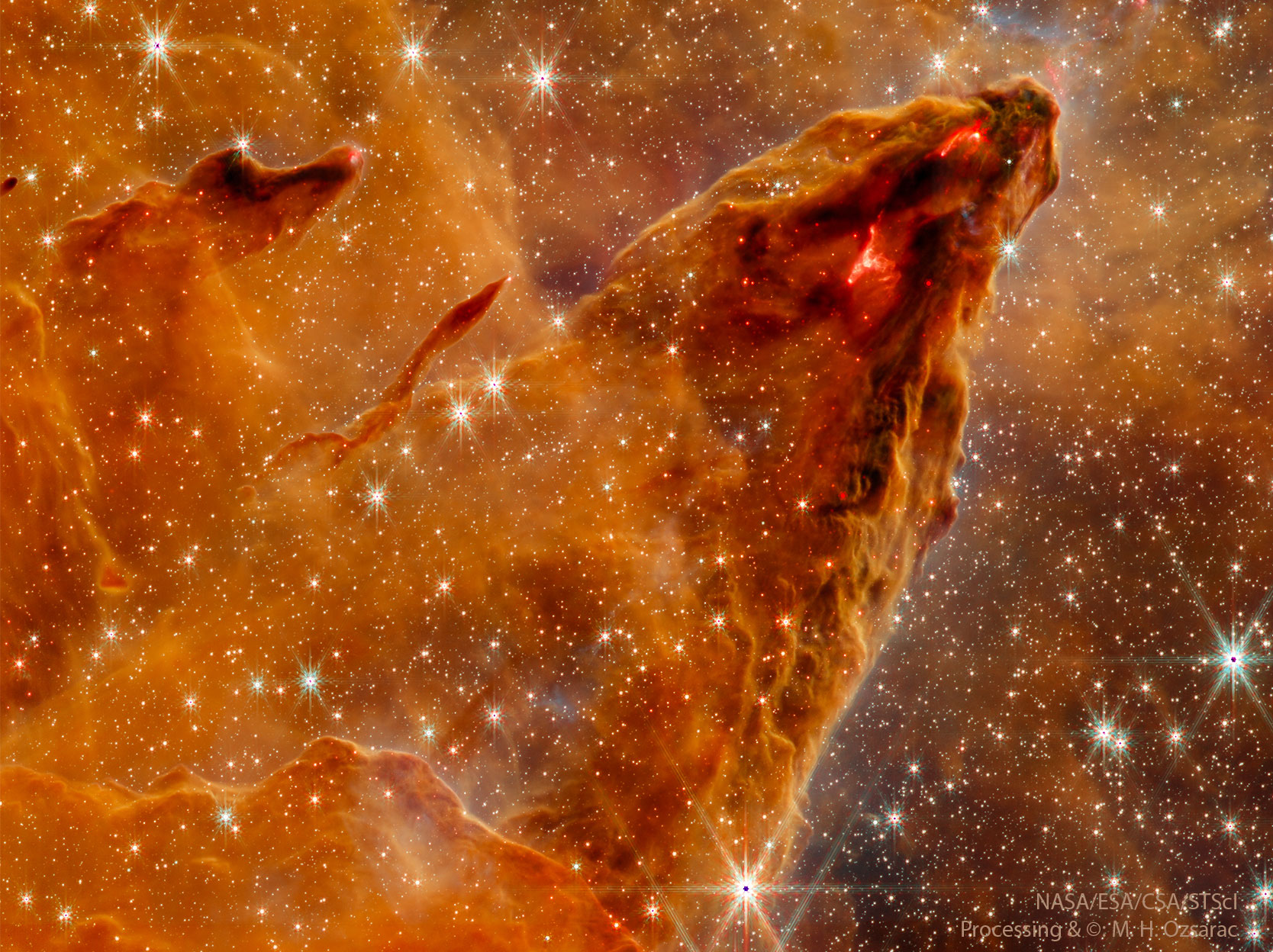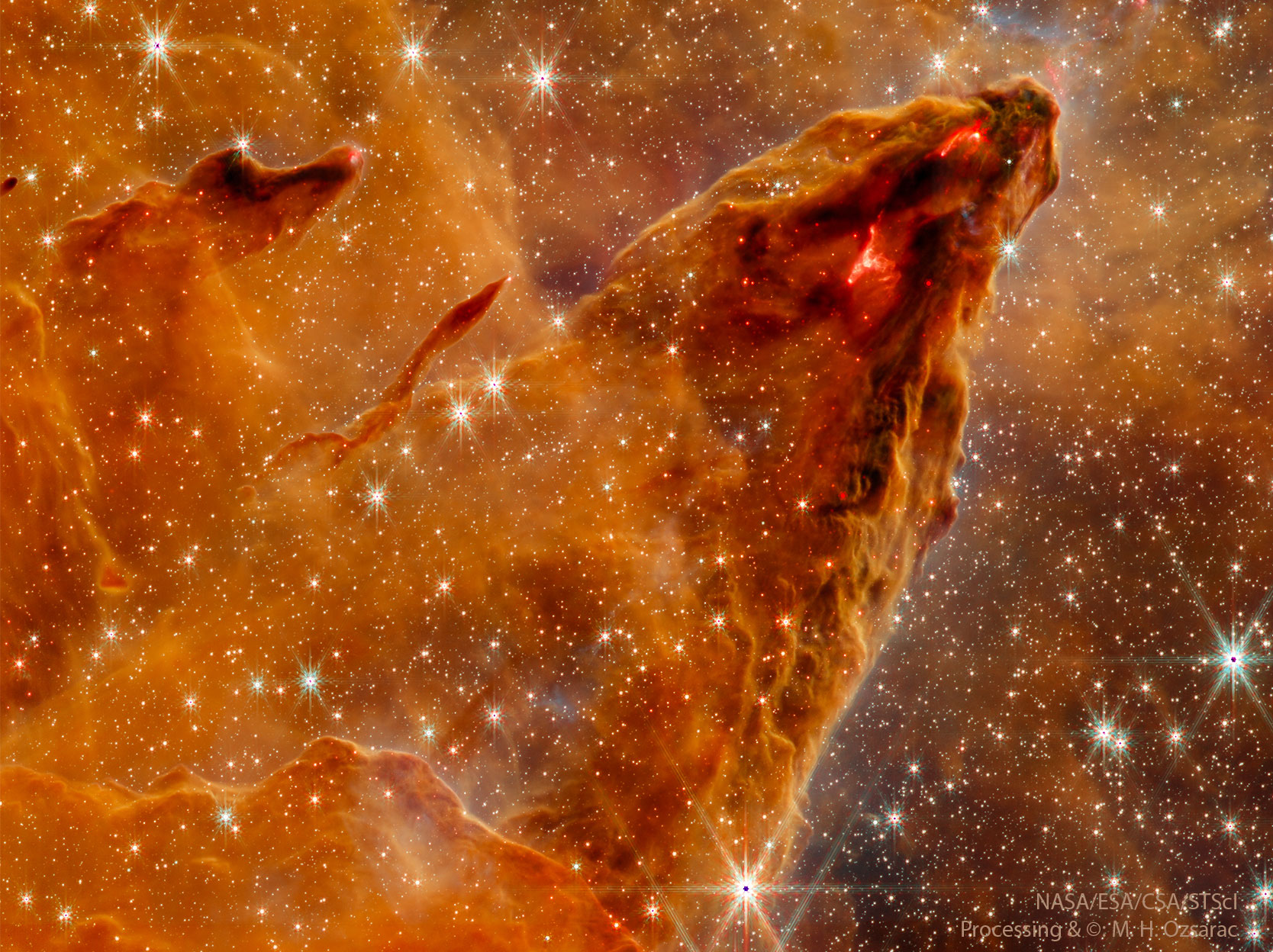
What’s happening inside this interstellar mountain? Stars are forming. The mountain is actually a column of gas and dust in the picturesque Eagle Nebula (M16). A pillar like this is so low in density that you could easily fly though it -- it only appears solid because of its high dust content and great depth. The glowing areas are lit internally by newly formed stars. These areas shine in red and infrared light because blue light is scattered away by intervening interstellar dust. The featured image was captured recently in near-infrared light in unprecedented detail by the James Webb Space Telescope (JWST), launched late last year. Energetic light, abrasive winds, and final supernovas from these young stars will slowly destroy this stellar birth column over the next 100,000 years. Astrophysicists: Browse 2,900+ codes in the Astrophysics Source Code Library
¿Qué está sucediendo dentro de esta montaña interestelar? Se están formando estrellas. La montaña es en realidad una columna de gas y polvo en la colorida Nebulosa del Águila (M16). Una columna como esta tiene una densidad tan baja que podría atravesarse fácilmente — solo parece sólida debido a su alto contenido de polvo y su gran profundidad. Las áreas brillantes están iluminadas internamente por estrellas recién formadas. Estas áreas brillan en luz roja e infrarroja porque la luz azul es dispersada por el polvo interestelar intermedio. La imagen destacada fue capturada recientemente en luz infrarroja cercana con un detalle sin precedentes por el Telescopio Espacial James Webb (JWST), lanzado a finales del año pasado. La luz energética, los vientos abrasivos y las supernovas finales de estas jóvenes estrellas destruirán lentamente esta columna de nacimiento estelar en los próximos 100,000 años.