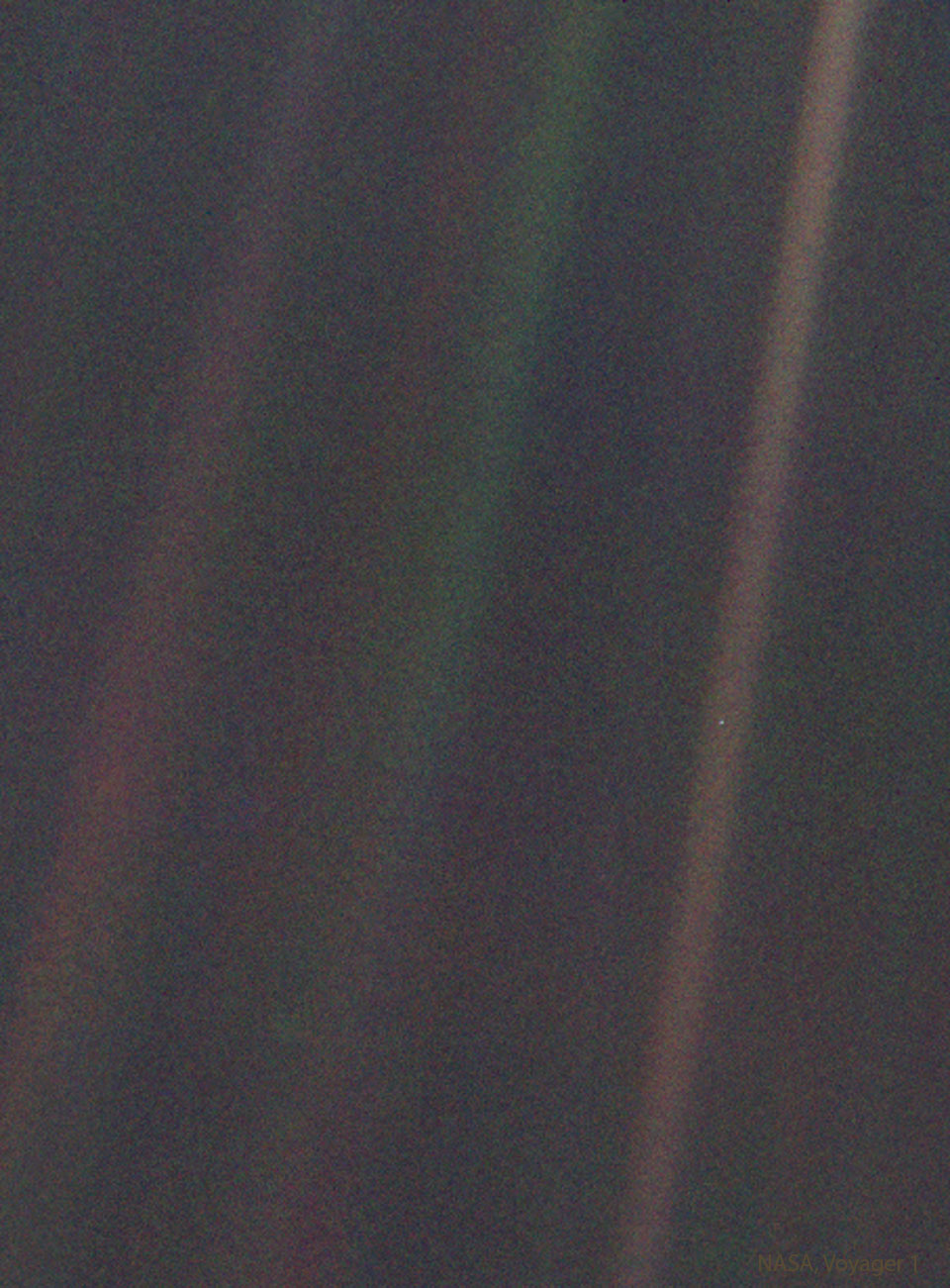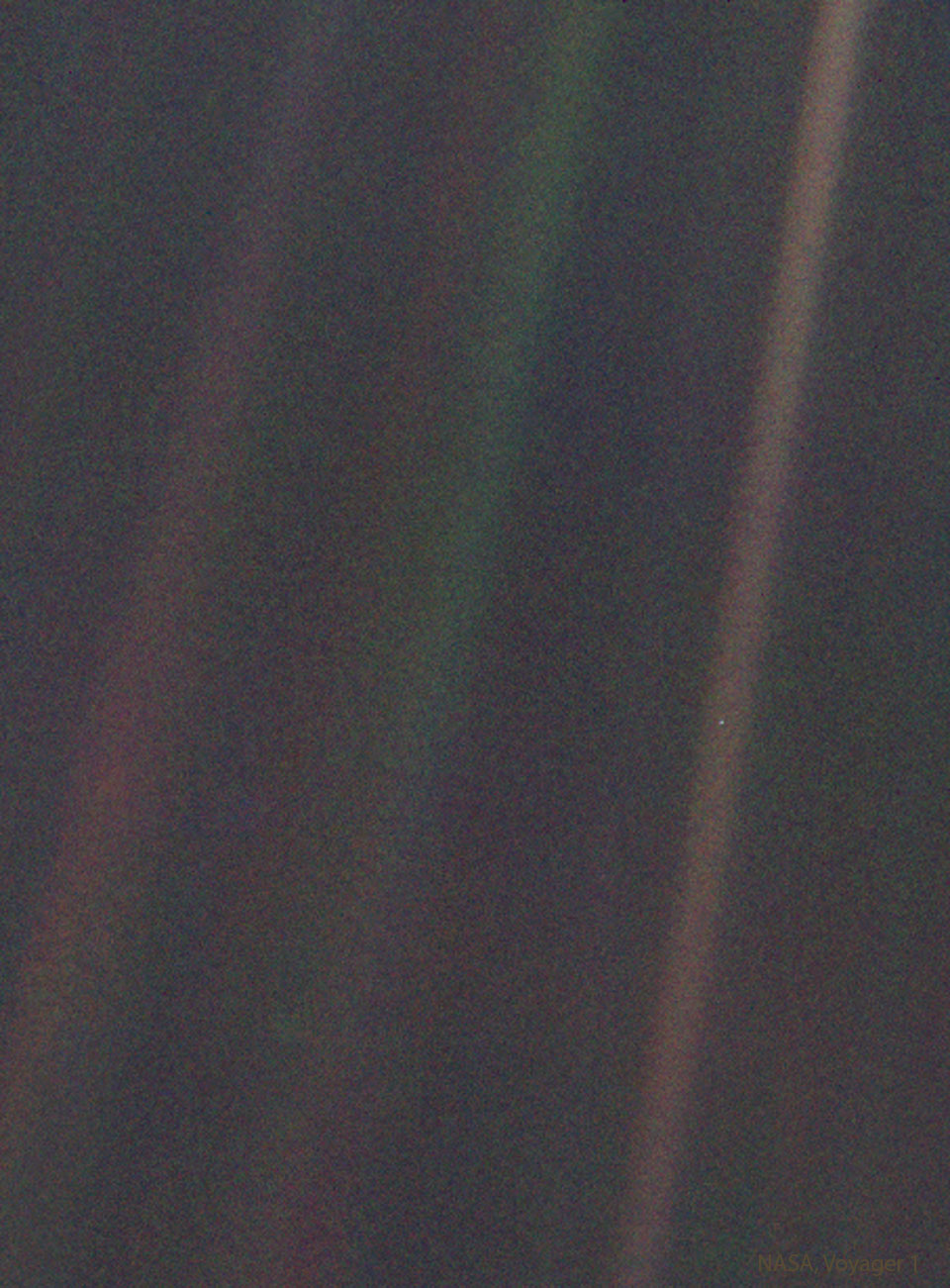
There, that dot on the right, that's the largest rock known in our Solar System. It is larger than every known asteroid, moon, and comet nucleus. It is larger than any other local rocky planet. This rock is so large its gravity makes it into a large ball that holds heavy gases near its surface. (It used to be the largest known rock of any type until the recent discoveries of large dense planets orbiting other stars.) The Voyager 1 spacecraft took the featured picture -- famously called Pale Blue Dot -- of this giant space rock in 1990 from the outer Solar System. Today, this rock starts another orbit around its parent star, for roughly the 5 billionth time, spinning over 350 times during each trip. Happy Gregorian Calendar New Year to all inhabitants of this rock we call Earth.
Crédito: NASA, Voyager 1 Ese punto allí, a la derecha, es la roca más grande conocida en nuestro Sistema Solar. Es más grande que cualquier asteroide, luna o núcleo de cometa conocido. Es más grande que cualquier otro planeta rocoso local. Esta roca es tan grande que su gravedad la convierte en una gran bola que retiene gases pesados cerca de su superficie. (Solía ser la roca más grande conocida de cualquier tipo hasta los recientes descubrimientos de grandes planetas densos orbitando otras estrellas.) La nave espacial Voyager 1 tomó la imagen destacada, famosamente llamada Punto Azul Pálido, de esta roca espacial gigante en 1990 desde el exterior del Sistema Solar. Hoy, esta roca comienza otro órbita alrededor de su estrella madre, aproximadamente la quinta billonésima vez, girando más de 350 veces durante cada viaje. ¡Feliz Año Nuevo del Calendario Gregoriano a todos los habitantes de esta roca que llamamos Tierra.