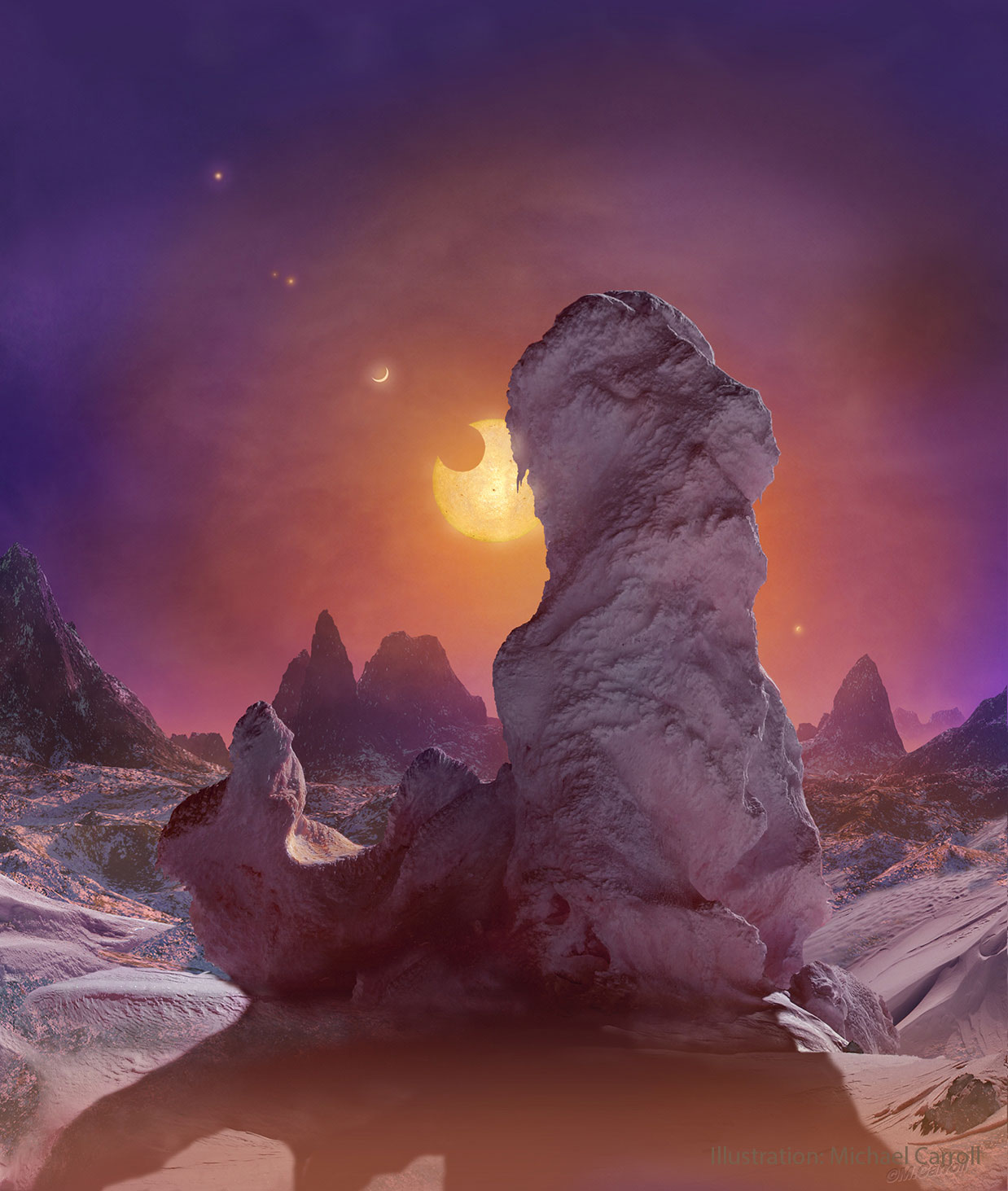
Seven worlds orbit the ultracool dwarf star TRAPPIST-1. A mere 40 light-years away, many of the exoplanets were discovered in 2016 using the Transiting Planets and Planetesimals Small Telescope (TRAPPIST) located at La Silla Observatory in Chile and later confirmed with telescope including NASA's Spitzer Space Telescope. The TRAPPIST-1 planets are likely all rocky and similar in size to Earth, and so compose one of the largest treasure troves of terrestrial planets ever detected around a single star. Because they orbit very close to their faint, tiny star they could also have regions where surface temperatures allow for the presence of ice or even liquid water, a key ingredient for life. Their tantalizing proximity to Earth makes them prime candidates for future telescopic explorations of the atmospheres of potentially habitable planets. All seven exoplanets appear in the featured illustration, which imagines a view from the most distant known world of this system, TRAPPIST-1h, as having a rocky landscape covered in ice. Meanwhile, in the imagined background, one of the system's inner planets crosses in front of the dim, orange, nearly Jupiter-sized parent star. Astrophysicists: Browse 3,000+ codes in the Astrophysics Source Code Library
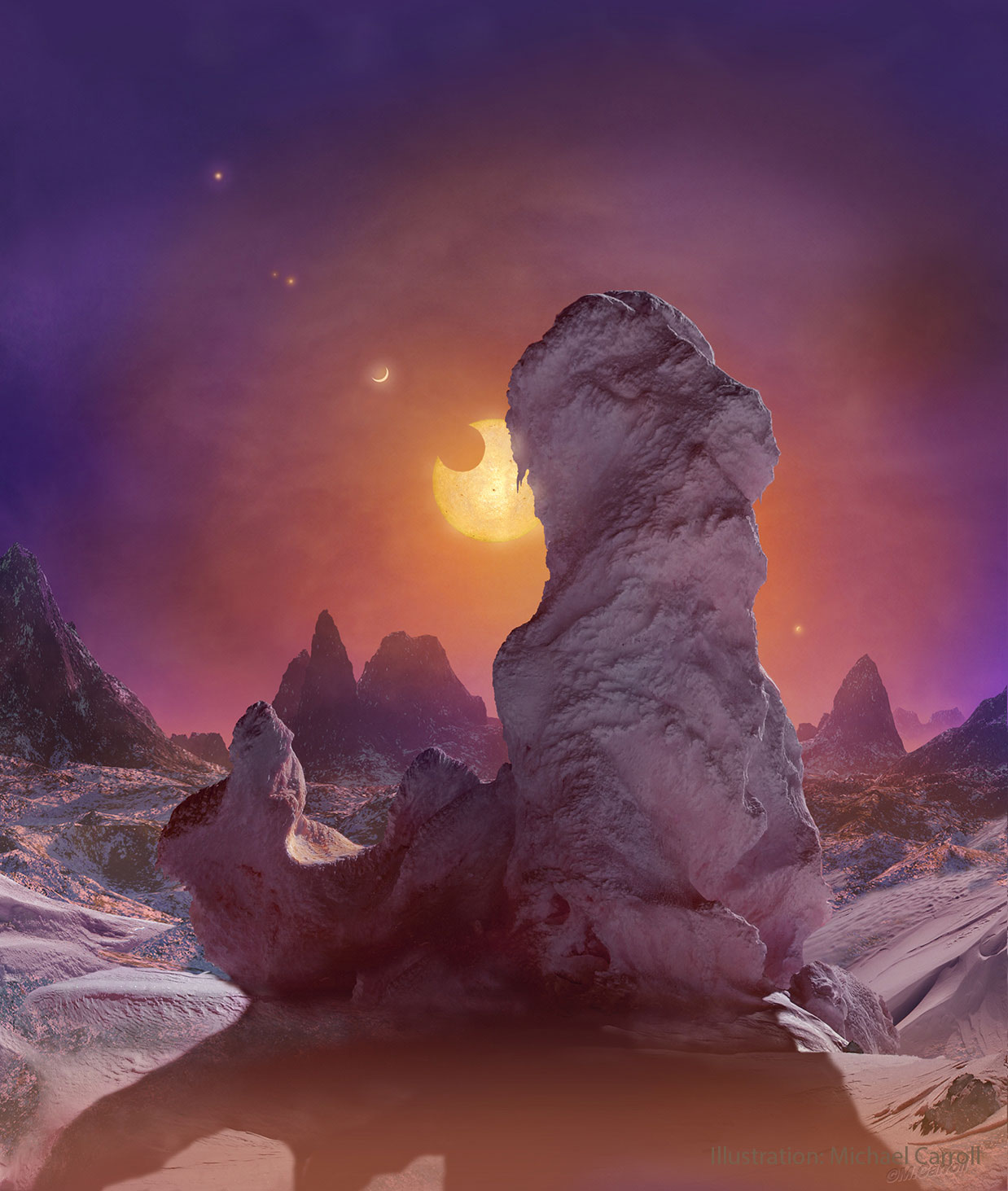
Siete mundos orbitan la enana ultracálida TRAPPIST-1. A tan solo 40 años luz de distancia, muchos de estos exoplanetas fueron descubiertos en 2016 utilizando el Telescopio de Planetas en Tránsito y Planetesimales Pequeños (TRAPPIST), ubicado en la Observatorio La Silla en Chile, y posteriormente confirmados con telescopios, incluido el Telescopio Espacial Spitzer de la NASA. Los planetas de TRAPPIST-1 probablemente sean todos rocosos y similares en tamaño a la Tierra, por lo que componen uno de los mayores tesoros de planetas terrestres jamás detectados alrededor de una sola estrella. Debido a que orbitan muy cerca de su estrella tenue y diminuta, podrían tener regiones donde las temperaturas superficiales permiten la presencia de hielo o incluso agua líquida, un ingrediente clave para la vida. Su proximidad tentadora a la Tierra los convierte en candidatos ideales para futuras exploraciones telescópicas de las atmósferas de planetas potencialmente habitables. Los siete exoplanetas aparecen en la ilustración destacada, que imagina una vista desde el mundo más distante conocido de este sistema, TRAPPIST-1h, con un paisaje rocoso cubierto de hielo. Mientras tanto, en el fondo imaginado, uno de los planetas interiores del sistema cruza frente a la estrella madre tenue, anaranjada y casi del tamaño de Júpiter.