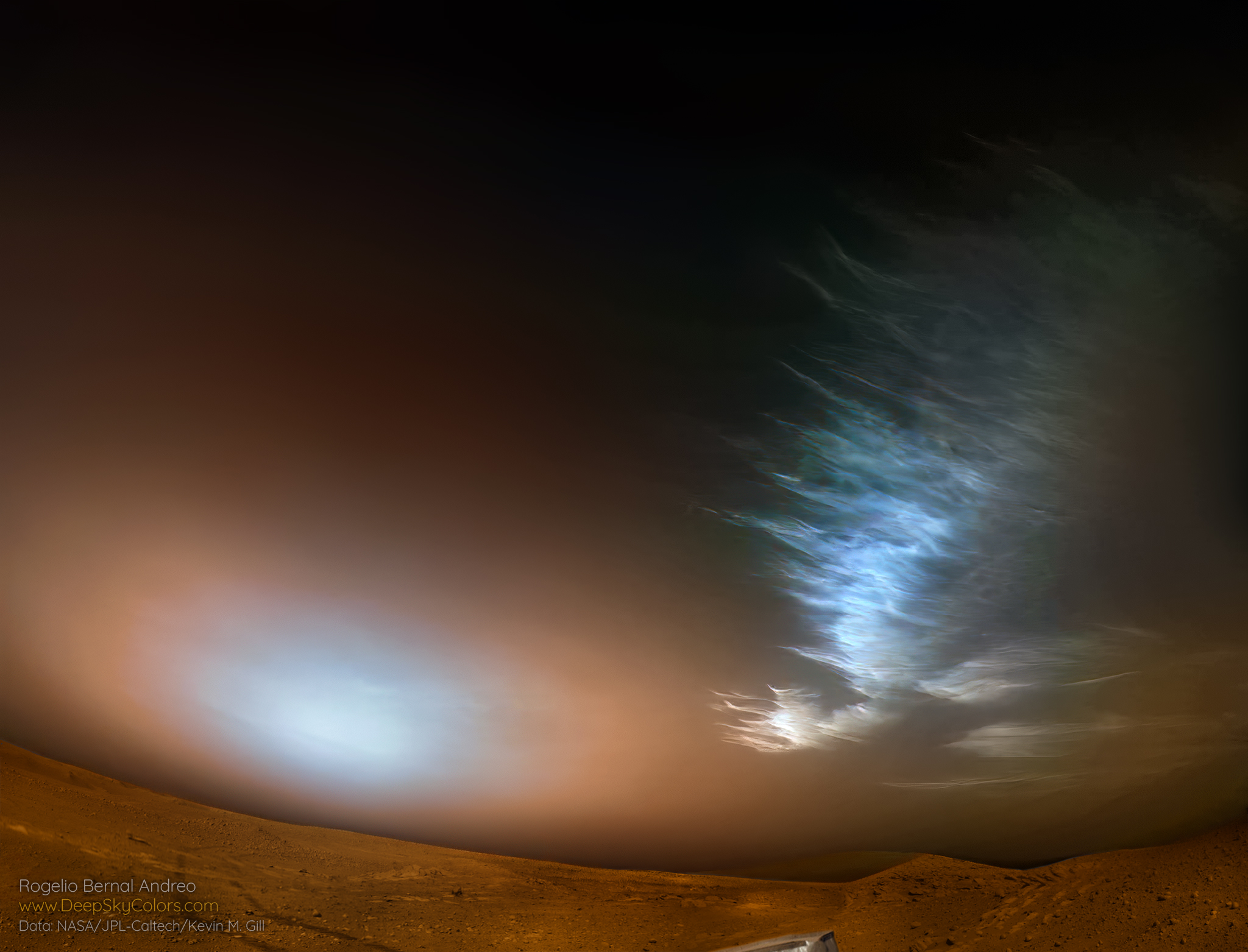
If you could stand on Mars -- what might you see? You might look out over a vast orange landscape covered with rocks under a dusty orange sky, with a blue-tinted Sun over the horizon, and odd-shaped water clouds hovering high overhead. This was just the view captured last March by NASA's rolling explorer, Perseverance. The orange coloring is caused by rusted iron in the Martian dirt, some of which is small enough to be swept up by winds into the atmosphere. The blue tint near the rising Sun is caused by blue light being preferentially scattered out from the Sun by the floating dust. The light-colored clouds on the right are likely composed of water-ice and appear high in the Martian atmosphere. The shapes of some of these clouds are unusual for Earth and remain a topic of research.
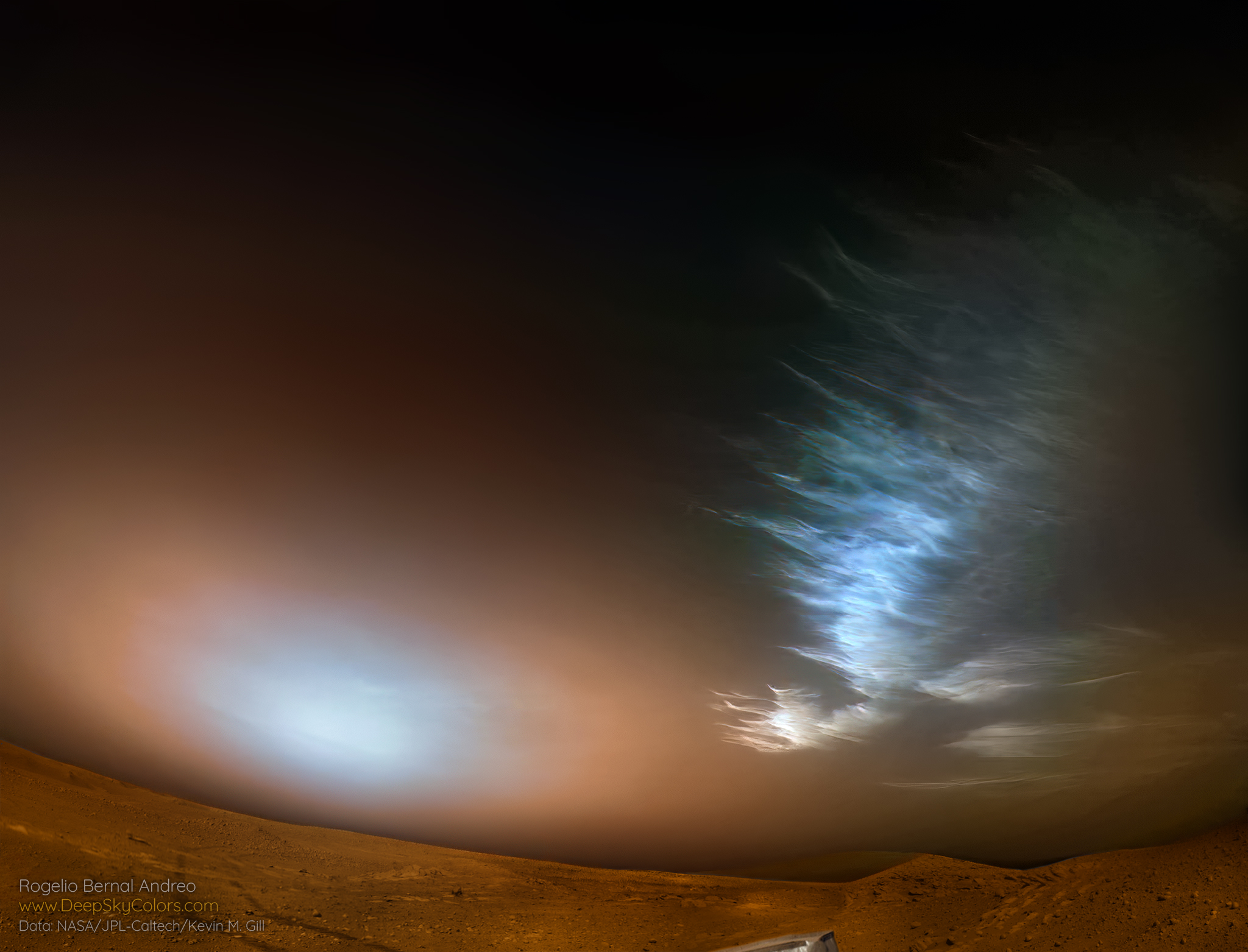
Si pudieras estar de pie en Marte, ¿qué verías? Podrías contemplar una vasta extensión de paisaje naranja cubierto de rocas bajo un cielo naranja polvoriento, con un Sol teñido de azul sobre el horizonte, y nubes de agua de formas extrañas flotando a gran altura sobre ti. Esta fue precisamente la vista capturada en marzo pasado por el explorador rodante de la NASA, Perseverance. El color naranja es causado por el hierro oxidado en el suelo marciano, parte del cual es lo suficientemente pequeño como para ser levantado por el viento hacia la atmósfera. El tono azulado cerca del Sol naciente es causado por la luz azul que se dispersa preferentemente desde el Sol por el polvo suspendido. Las nubes de color claro a la derecha probablemente estén compuestas de hielo de agua y aparecen a gran altura en la atmósfera marciana. Las formas de algunas de estas nubes son inusuales para la Tierra y siguen siendo un tema de investigación.