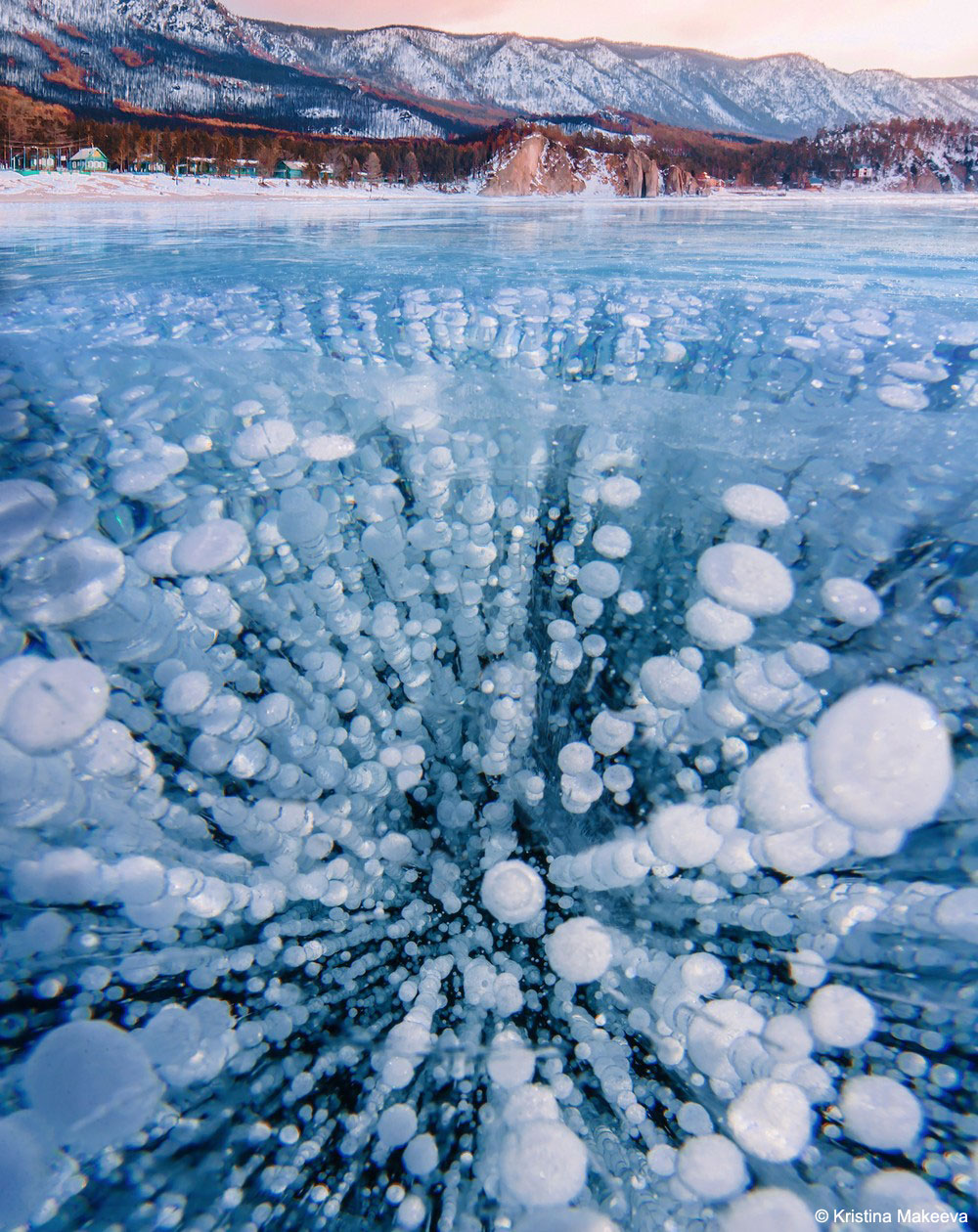
What are these bubbles frozen into Lake Baikal? Methane. Lake Baikal, a UNESCO World Heritage Site in Russia, is the world's largest (by volume), oldest, and deepest lake, containing over 20% of the world's fresh water. The lake is also a vast storehouse of methane, a greenhouse gas that, if released, could potentially increase the amount of infrared light absorbed by Earth's atmosphere, and so increase the average temperature of the entire planet. Fortunately, the amount of methane currently bubbling out is not climatologically important. It is not clear what would happen, though, were temperatures to significantly increase in the region, or if the water level in Lake Baikal were to drop. Pictured, bubbles of rising methane froze during winter into the exceptionally clear ice covering the lake. Jigsaw Challenge: Astronomy Puzzle of the Day
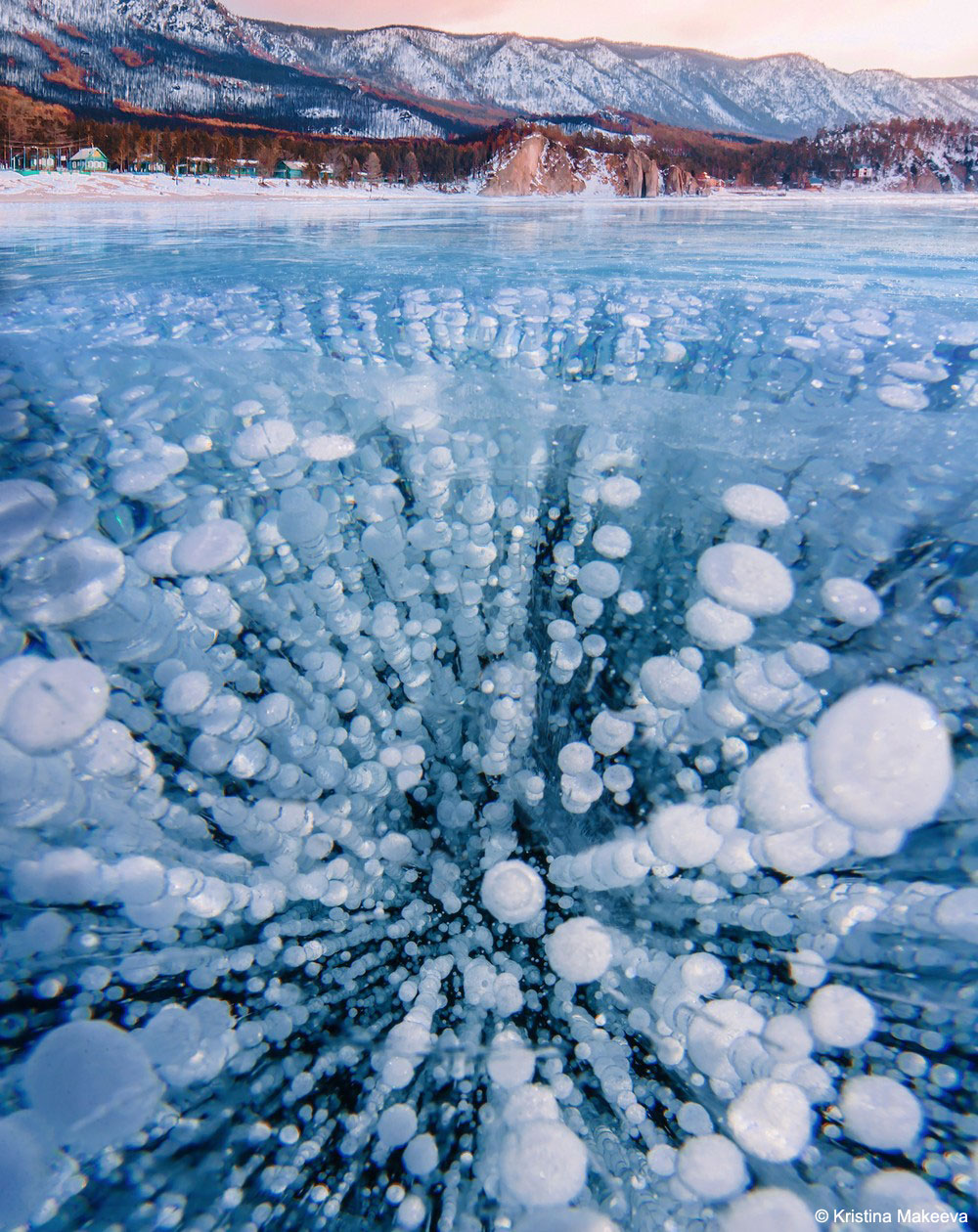
¿Qué burbujas están congeladas en el lago Baikal? Metano. El lago Baikal, un Sitio del Patrimonio Mundial de la UNESCO en Rusia, es el lago más grande (por volumen), más antiguo y más profundo del mundo, conteniendo más del 20 % del agua dulce del planeta. El lago también es un vasto depósito de metano, un gas de efecto invernadero que, si se liberara, podría aumentar la cantidad de luz infrarroja absorbida por la atmósfera terrestre, y por tanto elevar la temperatura promedio del planeta. Afortunadamente, la cantidad actual de metano que burbujea no es climáticamente significativa. No está claro, sin embargo, qué ocurriría si las temperaturas en la región aumentaran significativamente, o si el nivel de agua del lago Baikal disminuyera. En la imagen, burbujas de metano ascendente se congelaron durante el invierno en el hielo extremadamente transparente que cubre el lago.