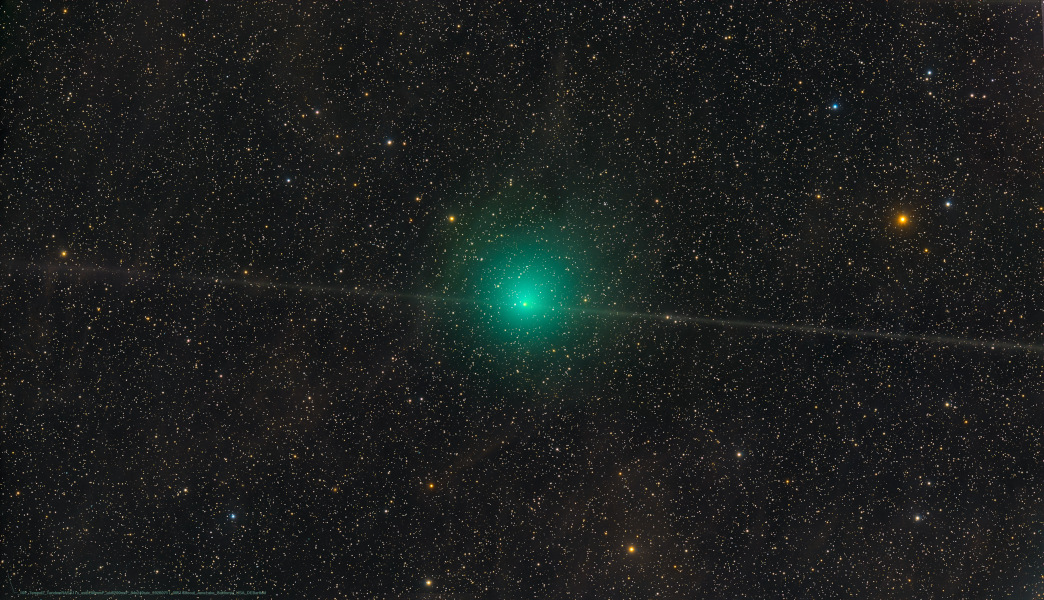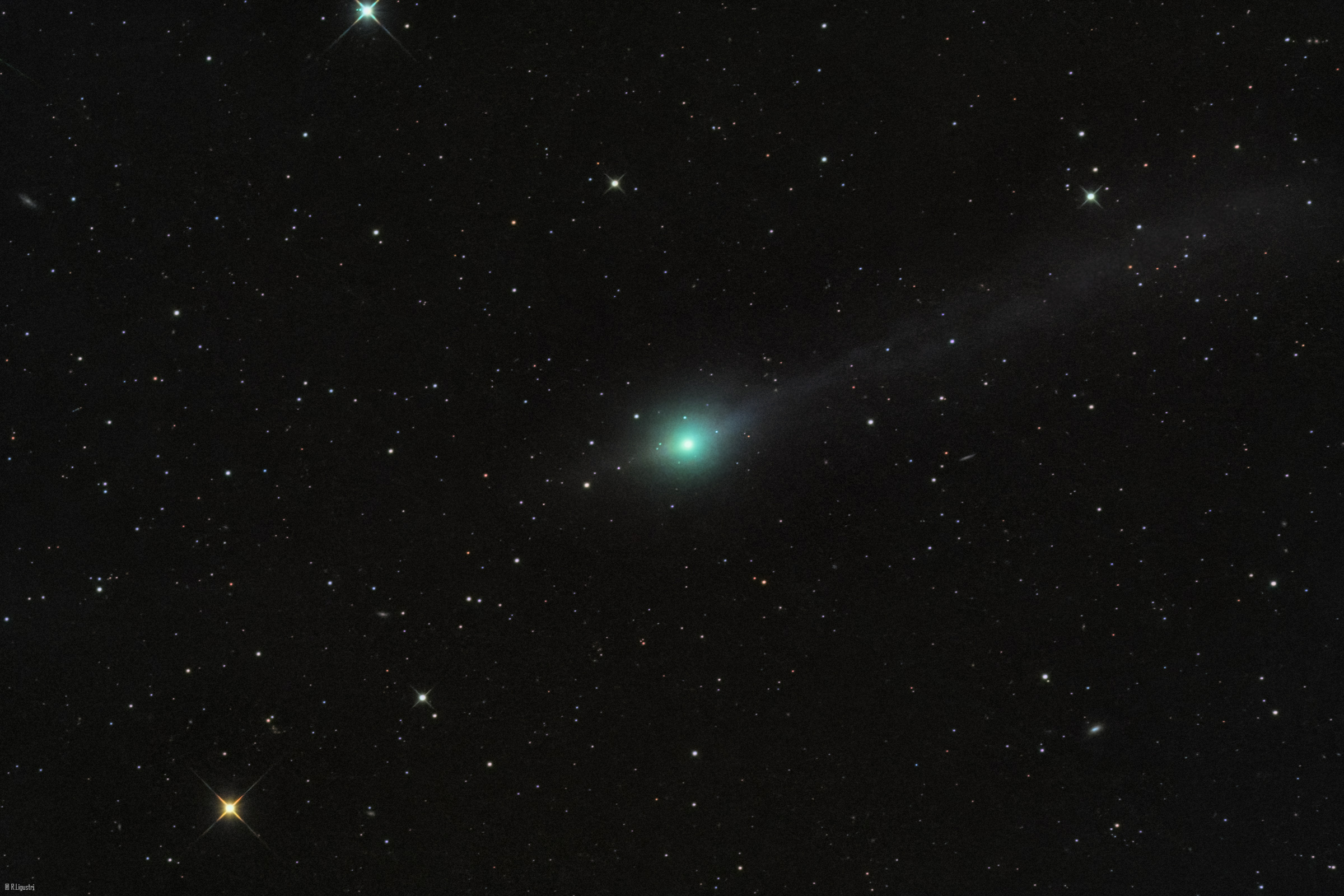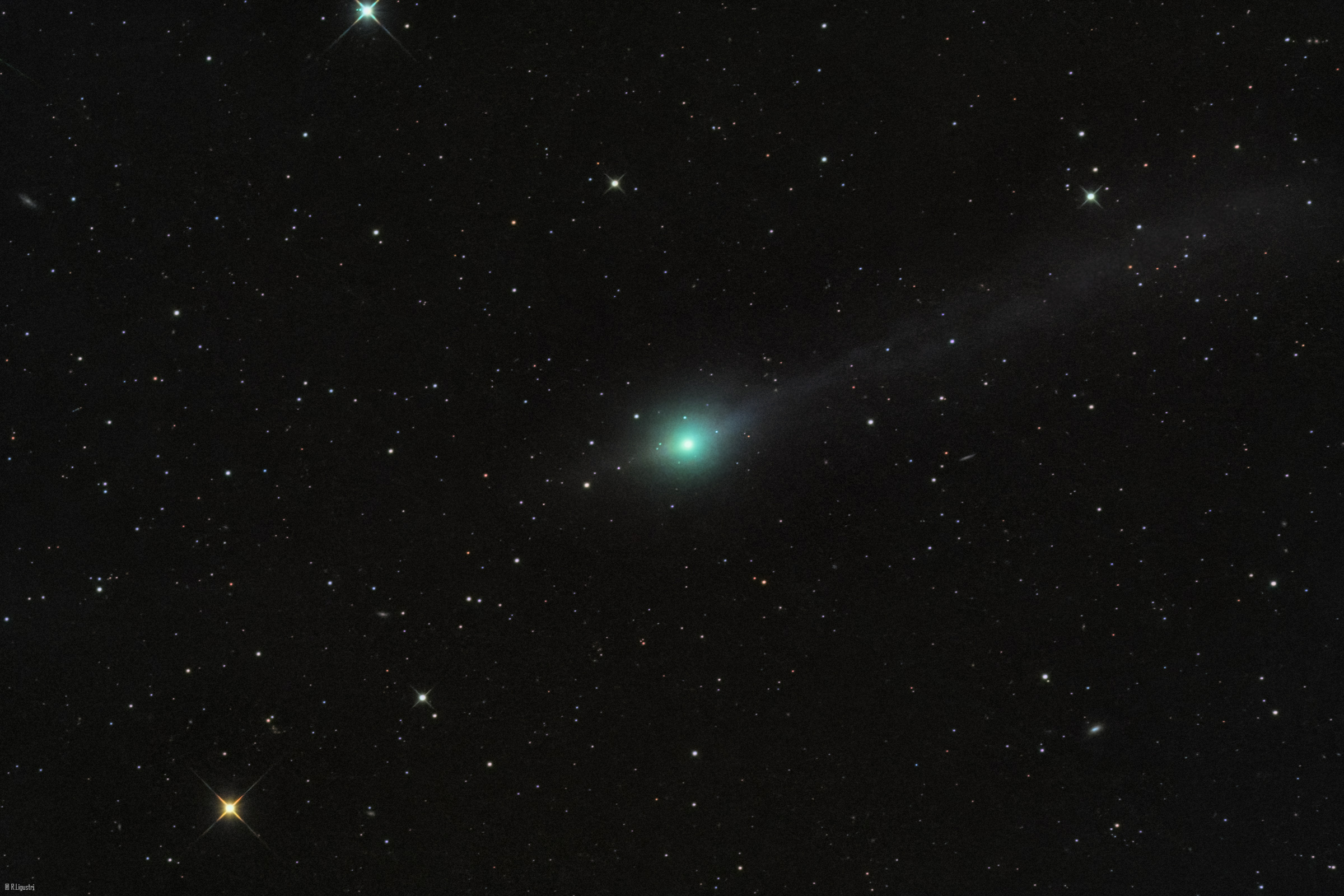
Now outbound after its perihelion or closest approach to the Sun on October 29, Comet 3I/ATLAS is only the third known interstellar object to pass through our fair Solar System. Its greenish coma and faint tails are seen against a background of stars in the constellation Virgo in this view from planet Earth, recorded with a small telescope on November 14. But this interstellar interloper is the subject of an on-going, unprecedented Solar System-wide observing campaign involving spacecraft and space telescopes from Earth orbit to the surface of Mars and beyond. And while the comet from another star-system has recently grown brighter, you'll still need a telescope if you want to see 3I/ATLAS from planet Earth. It's now above the horizon in November morning skies and will make its closest approach to Earth, a comfortable 270 million kilometers distant, around December 19.
Crédito: NASA, CGRO SSC Ahora en trayectoria de salida tras alcanzar su perihelio o punto más cercano al Sol el 29 de octubre, el cometa 3I/ATLAS es solo el tercer objeto interestelar conocido que pasa por nuestro sistema solar. Su coma de color verde y sus colas tenues se ven contra un fondo de estrellas en la constelación de Virgo en esta imagen desde la Tierra, capturada con un telescopio pequeño el 14 de noviembre. Pero este intruso interestelar es el tema de una campaña de observación sin precedentes a nivel del Sistema Solar, que involucra naves espaciales y telescopios espaciales desde la órbita terrestre hasta la superficie de Marte y más allá. Y aunque el cometa de otro sistema estelar ha crecido en brillo recientemente, aún necesitarás un telescopio si quieres ver 3I/ATLAS desde la Tierra. Ahora está por encima del horizonte en los cielos de la mañana de noviembre y alcanzará su punto más cercano a la Tierra, a una distancia cómoda de 270 millones de kilómetros, alrededor del 19 de diciembre.