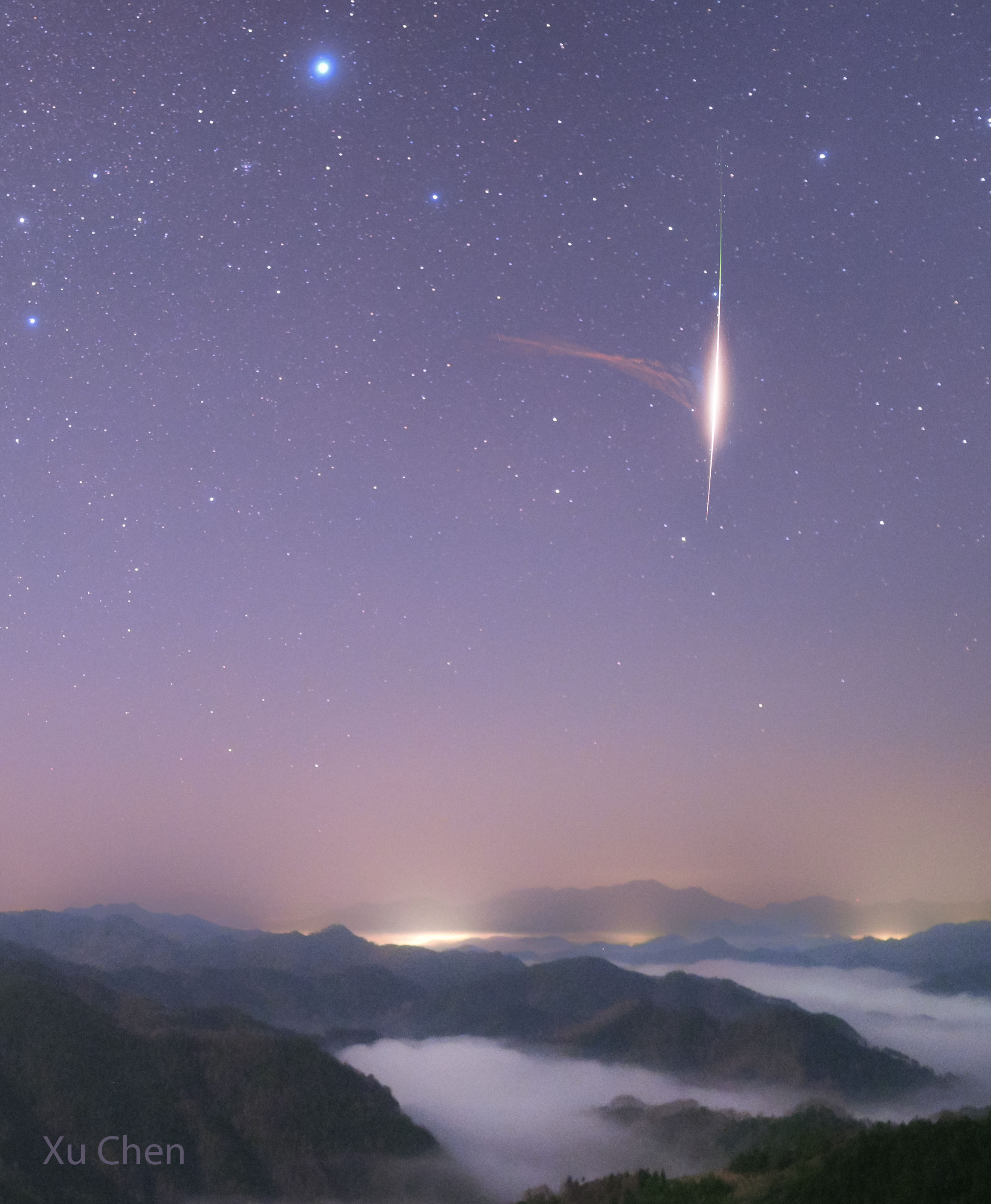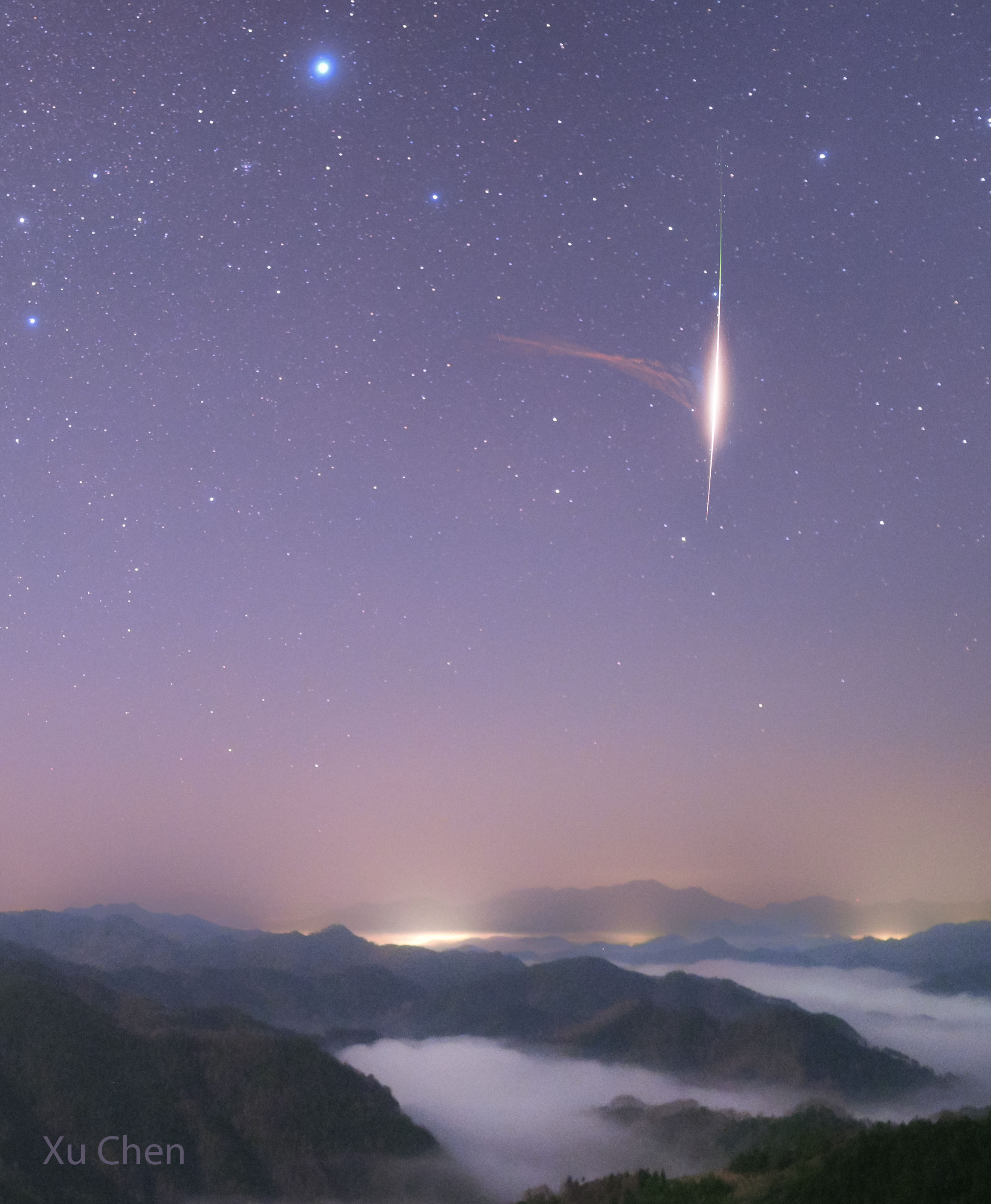
What's happening to this meteor? It is shedding its outer layers as it passes through the Earth's atmosphere and heats up. The sudden high temperatures not only cause the bright glow along the dramatic streak but also melt and vaporize the meteor's component rock and ice, creating dust. Wind in the atmosphere typically blows this dust away over the next few seconds, leaving no visible trace after only a few minutes. Much of this dust will eventually settle down to the Earth. The featured image was captured in mid-December, coincident with the Geminids meteor shower. On the upper left is Sirius, the brightest star in the night sky, while in the foreground is fog-engulfed Huangshan, the Yellow Mountains of eastern China.
¿Qué le ocurre a este meteoro? Está desprendiendo sus capas externas al atravesar la atmósfera terrestre y calentarse. Las elevadas temperaturas repentinas no solo provocan el brillante resplandor a lo largo de la dramática estela, sino que también funden y vaporizan la roca y el hielo que componen el meteoro, generando polvo. El viento en la atmósfera generalmente dispersa este polvo en los segundos siguientes, sin dejar rastro visible tras apenas unos minutos. Gran parte de este polvo acabará depositándose sobre la Tierra. La imagen destacada fue capturada a mediados de diciembre, coincidiendo con la lluvia de meteoros de las Gemínidas. En la parte superior izquierda se aprecia Sirio, la estrella más brillante del cielo nocturno, mientras que en primer plano aparece Huangshan, las Montañas Amarillas del este de China, envueltas en niebla.