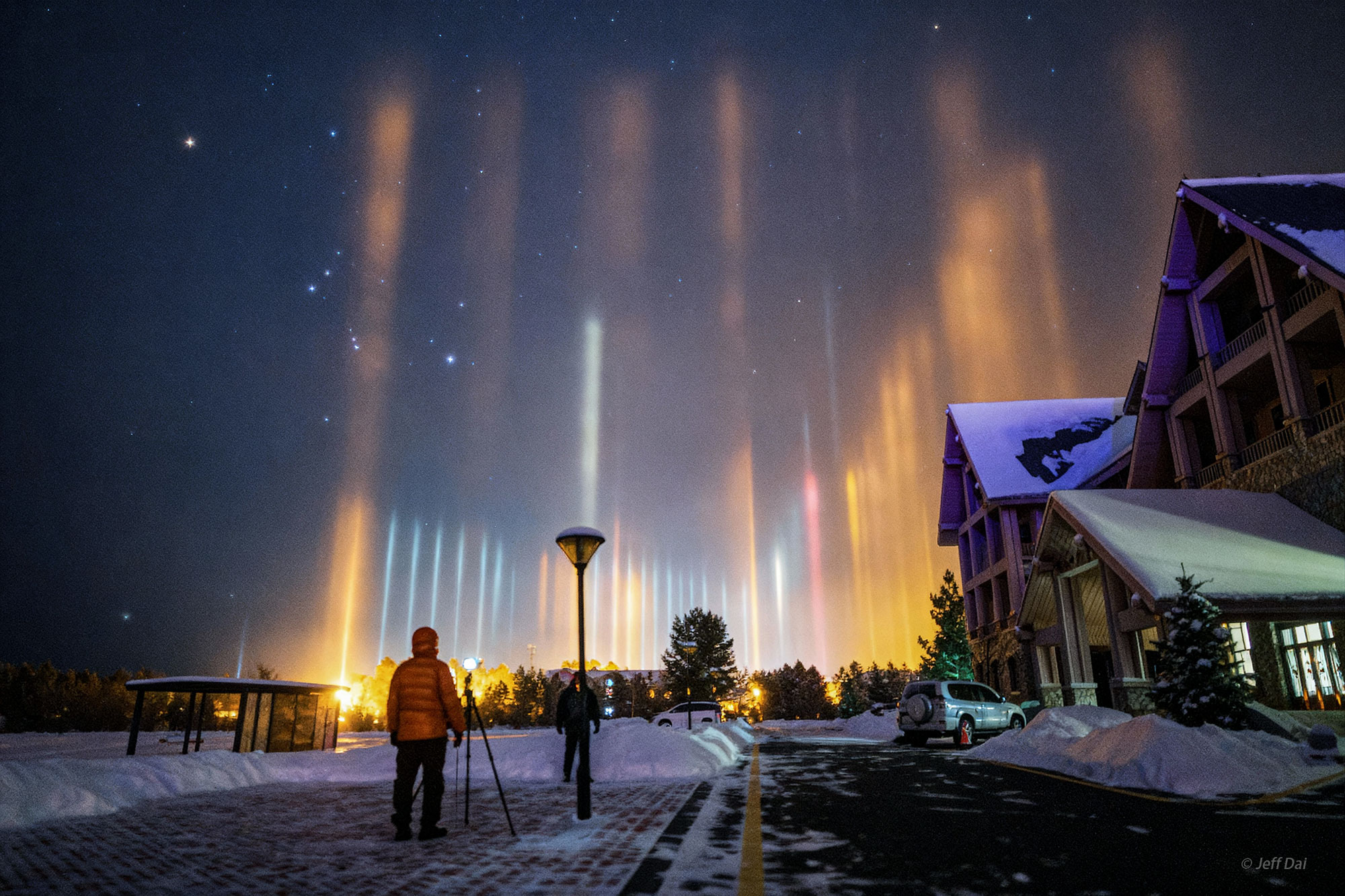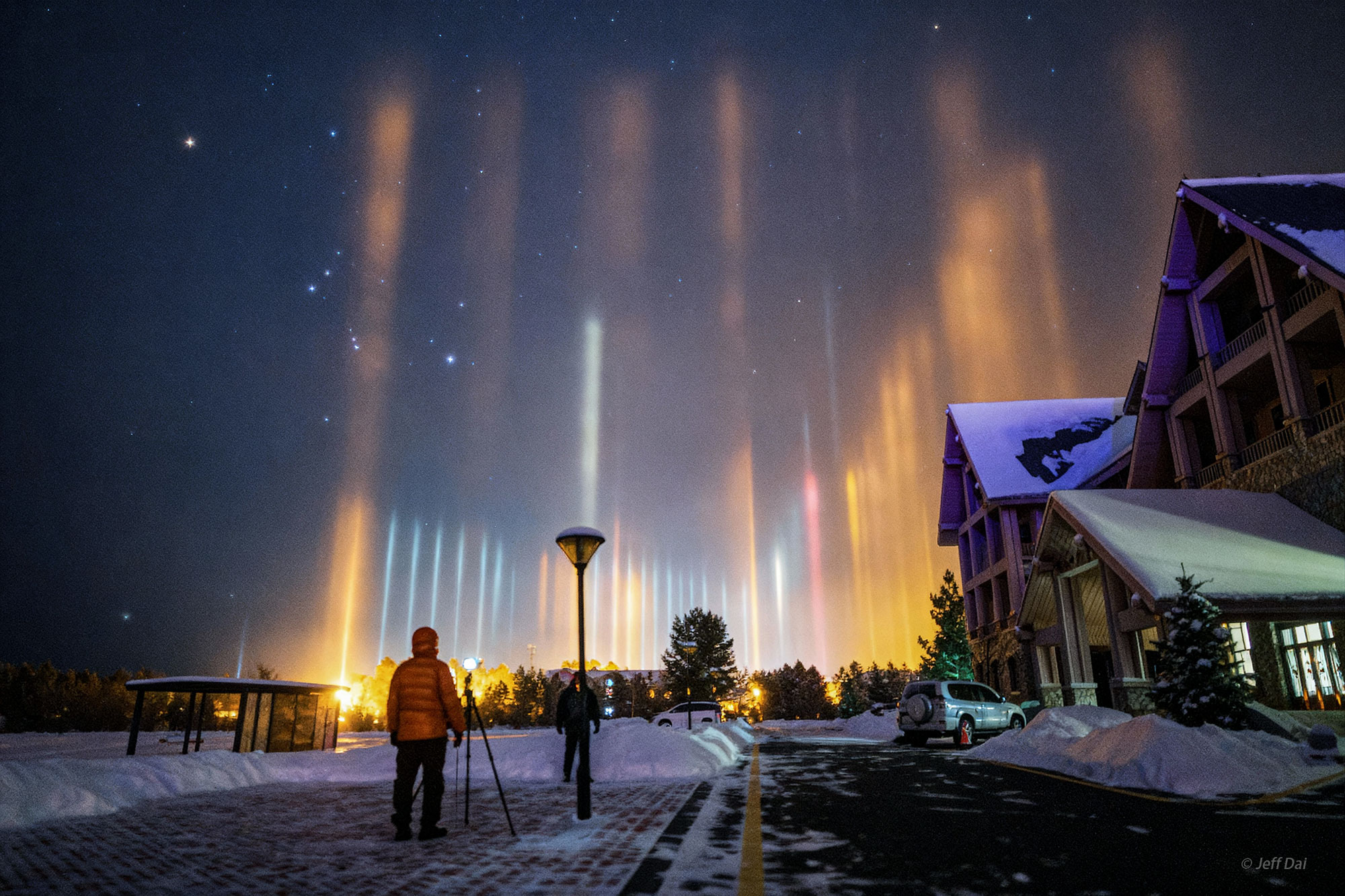
What's happening at the end of that street? Pictured here are not auroras but light pillars, a phenomenon typically much closer. In most places on Earth, a lucky viewer can see a Sun pillar, a column of light appearing to extend up from the Sun caused by flat fluttering ice-crystals reflecting sunlight from the upper atmosphere. Usually, these ice crystals evaporate before reaching the ground. During freezing temperatures, however, flat fluttering ice crystals may form near the ground and are sometimes known as a crystal fog. These small ice crystals may then reflect not the Sun but ground lights. The featured image captured not only numerous light pillars but also the iconic constellation of Orion, and was taken in Mohe, the northernmost city in China.
¿Qué está sucediendo al final de esa calle? En la imagen se muestran no auroras, sino pilares de luz, un fenómeno típicamente mucho más cercano. En la mayoría de los lugares de la Tierra, un observador afortunado puede ver un pilar solar, una columna de luz que parece extenderse hacia arriba desde el Sol, causada por cristales de hielo planos que se mueven de arriba abajo y reflejan la luz solar de la atmósfera superior. Normalmente, estos cristales de hielo se evaporan antes de llegar al suelo. Sin embargo, durante temperaturas heladas, los cristales de hielo planos pueden formarse cerca del suelo y a veces se conocen como niebla de cristales. Estos pequeños cristales de hielo pueden reflejar no el Sol, sino las luces del suelo. La imagen destacada capturó no solo numerosos pilares de luz, sino también la constelación icónica de Orión, y fue tomada en Mohe, la ciudad más septentrional de China.