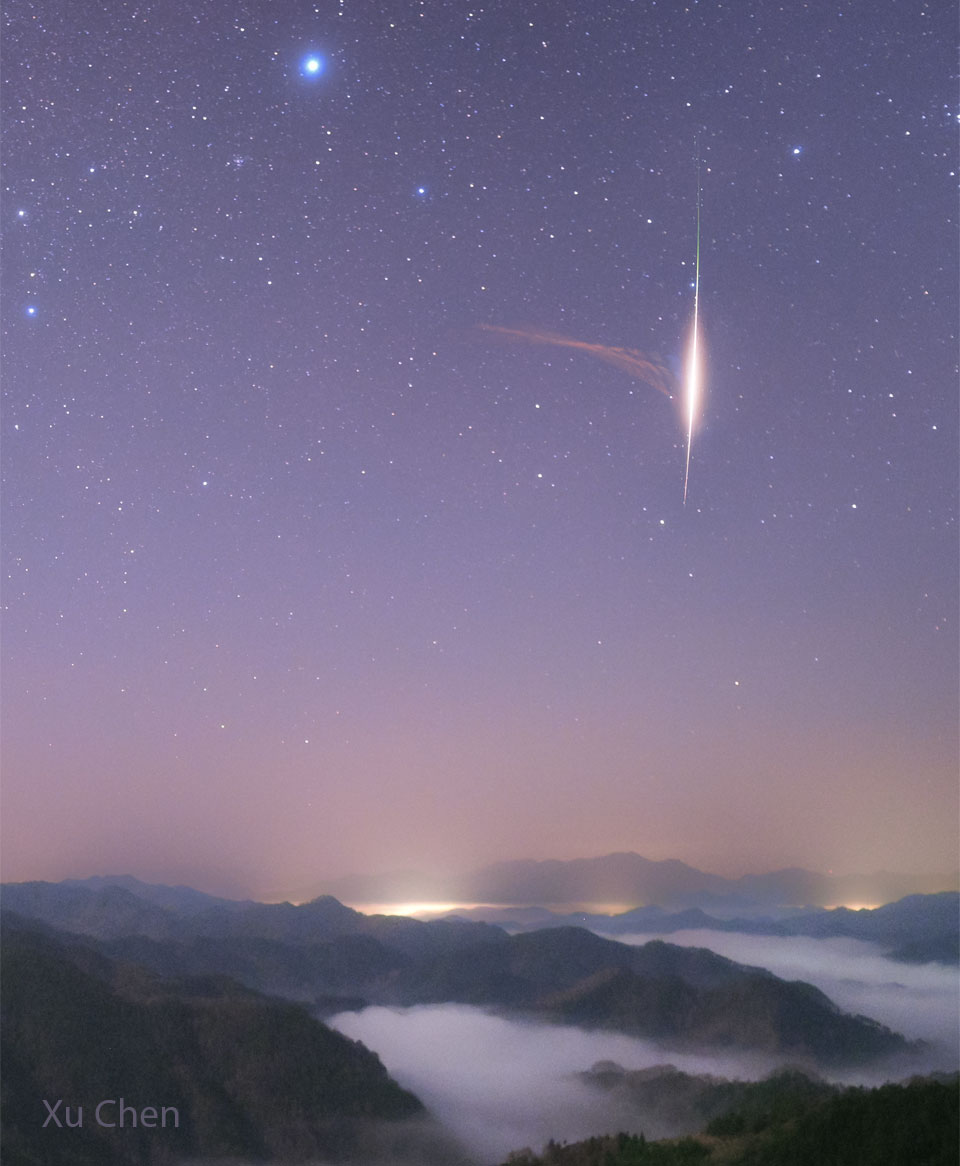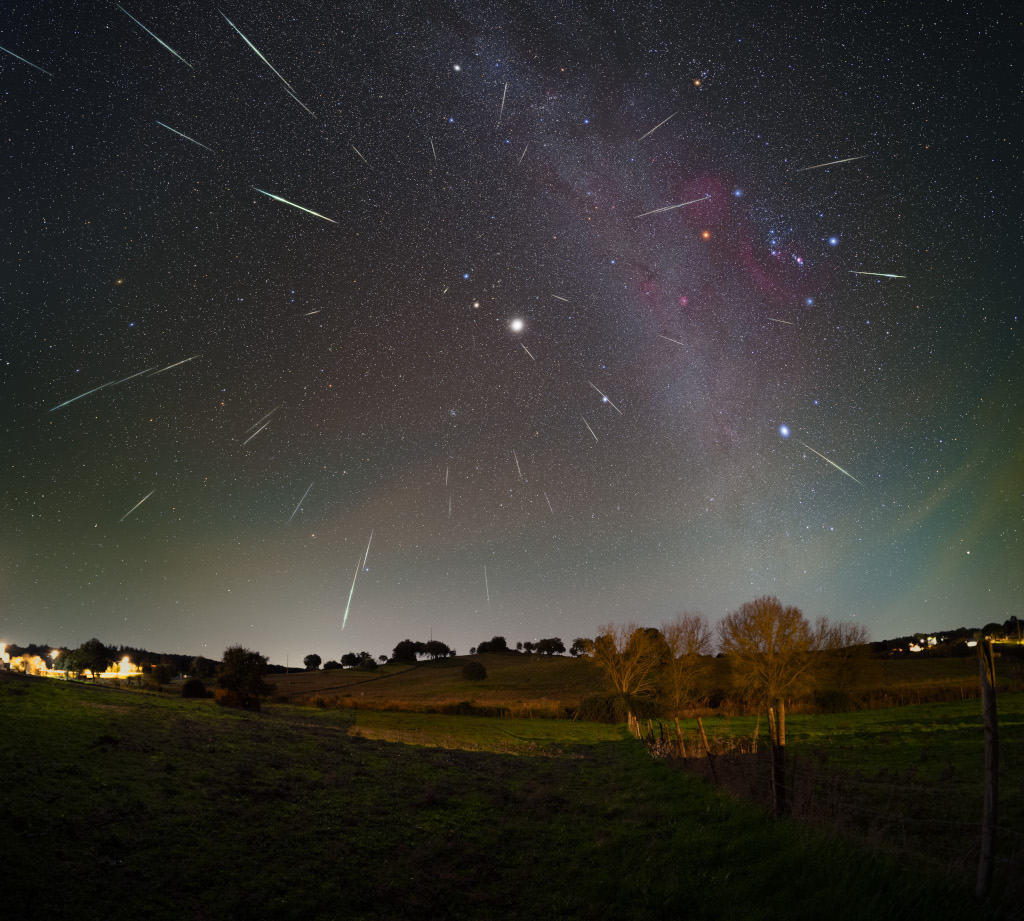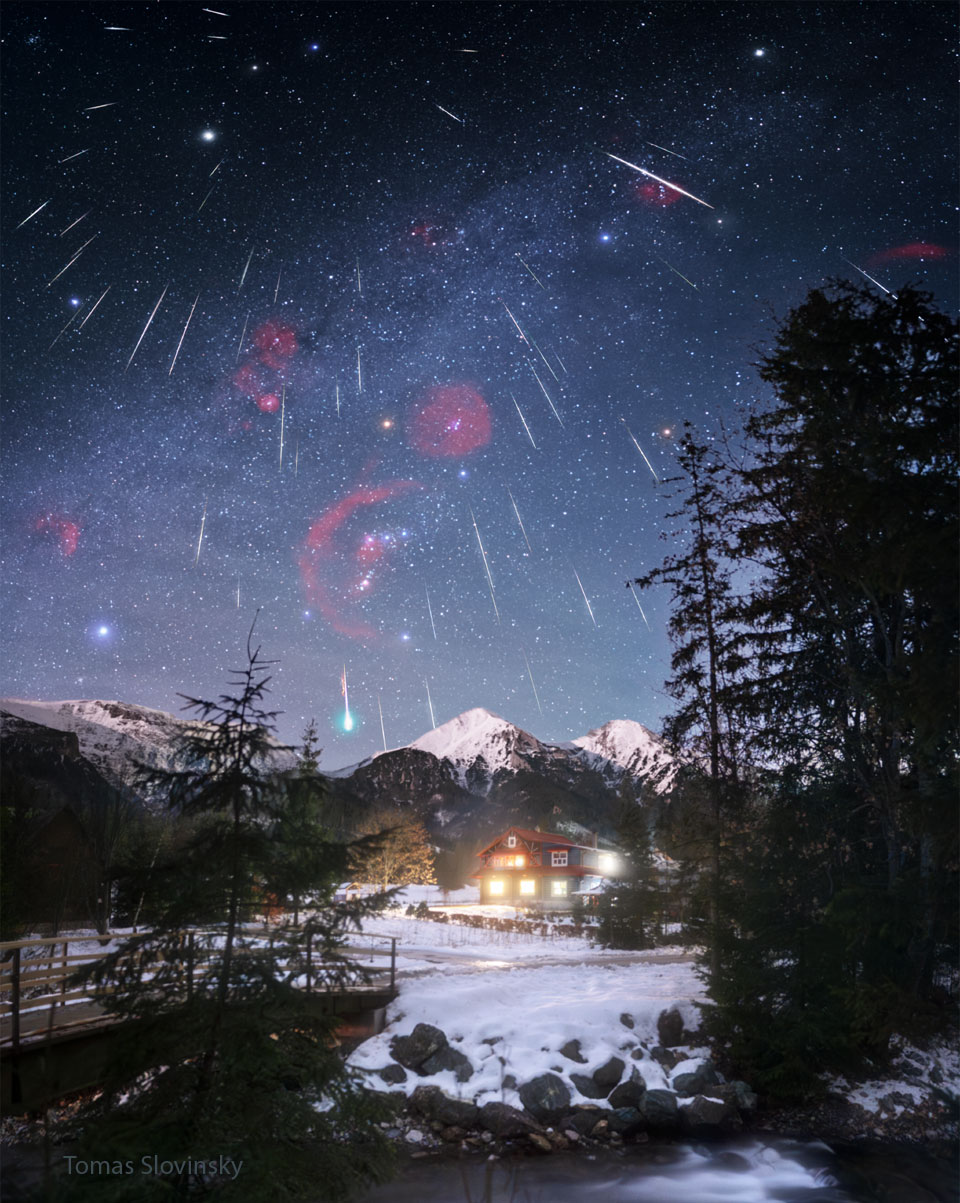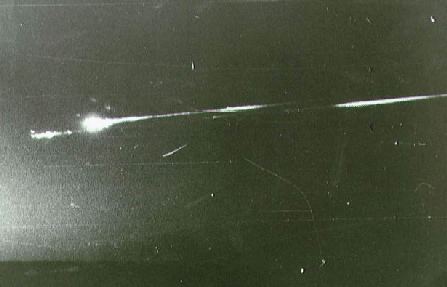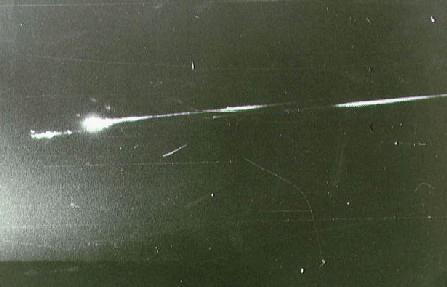
July 9, 1995 A Meteoric View of Apollo 13 Picture Credit: Unknown Explanation: Meteors, also called shooting stars, normally begin as bits of dust from the tails of comets or even small pieces chipped off asteroids. Falling toward Earth, these particles enter the atmosphere at extremely high speeds. Friction with the air heats them up and makes them glow brightly. Their rapid motion across the sky causes them to show up as bright streaks in photographs. In this picture, however, the bright streaks which appear to be meteor trails are believed to be two large pieces of the Apollo 13 spacecraft, the service and lunar modules, reentering the atmosphere. For more information about the picture see the NASA photo caption. We keep an archive of Astronomy Pictures of the Day. Astronomy Picture of the Day is brought to you by Robert Nemiroff and Jerry Bonnell . Original material on this page is copyrighted to Robert J. Nemiroff and Jerry T. Bonnell.
Los meteoros, también llamados estrellas fugaces, normalmente comienzan como partículas de polvo de las colas de los cometas o incluso pequeños fragmentos desprendidos de asteroides. Al caer hacia la Tierra, estas partículas entran en la atmósfera a velocidades extremadamente altas. La fricción con el aire las calienta y las hace brillar intensamente. Su rápido movimiento a través del cielo hace que aparezcan como trazos brillantes en las fotografías. Sin embargo, en esta imagen, los trazos brillantes que parecen ser rastros de meteoros se cree que son dos grandes piezas de la nave espacial Apolo 13, el módulo de servicio y el módulo lunar, reingresando en la atmósfera. Para más información sobre la imagen, consulte el pie de foto de la NASA. Mantenemos un archivo de la Imagen Astronómica del Día. La Imagen Astronómica del Día es presentada por Robert Nemiroff y Jerry Bonnell. El material original en esta página tiene derechos de autor de Robert J. Nemiroff y Jerry T. Bonnell.