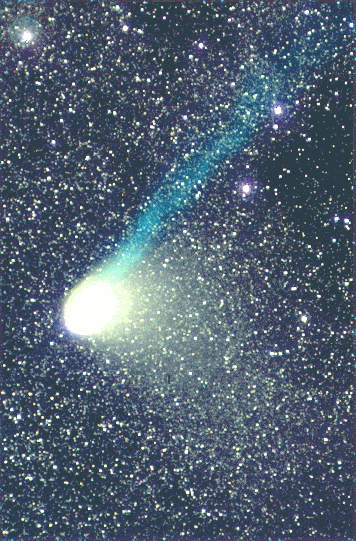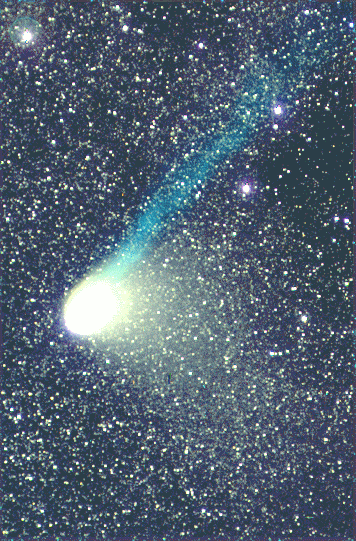
Comet Hale-Bopp has quite a tail to tell already. This remarkable comet was first discovered in 1995, even before Comet Hyakutake. Since then, this erupting snowball continues to fall into our inner Solar System and is starting to put on quite a show. Comets have been known throughout history to show tails that spread across the sky. In the above picture, the blue stream is the ion tail which consists of ions pushed away from the comet's head by the solar wind. The ion tail always points directly away from the Sun. Comet Hale-Bopp is now visible in the morning sky, moving a few degrees each day. Comet Hale-Bopp is expected to be at its best and brightest in late March and early April.
El cometa Hale-Bopp tiene ya toda una historia que contar. Este extraordinario cometa fue descubierto por primera vez en 1995, incluso antes que el cometa Hyakutake. Desde entonces, esta bola de nieve en erupción continúa cayendo hacia el interior de nuestro Sistema Solar y está comenzando a ofrecer un espectáculo notable. A lo largo de la historia, se ha observado que los cometas desarrollan colas que se extienden por el cielo. En la imagen superior, el flujo azul corresponde a la cola iónica, compuesta por iones expulsados desde la cabeza del cometa por el viento solar. La cola iónica siempre apunta directamente en dirección opuesta al Sol. El cometa Hale-Bopp es actualmente visible en el cielo matutino, desplazándose varios grados cada día. Se espera que el cometa Hale-Bopp alcance su máximo esplendor y brillo a finales de marzo y principios de abril.