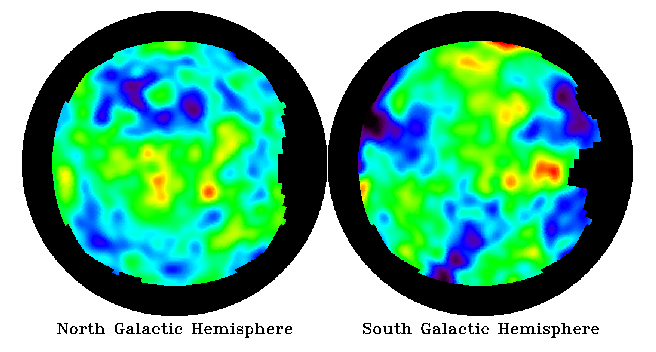
Above are two images of the microwave sky, north and south of our galaxy's equator, based on data from NASA's COsmic Background Explorer (COBE) satellite. After computer processing to remove contributions from nearby objects and the effects of the earth's motion, they show "spots". These spots are the oldest, most distant structures known. They represent temperature variations in the early Universe. As our Universe expanded and cooled, conglomerations of mass formed. The COBE images confirm that only a million years after the big-bang - which occurred roughly 15 billion years ago - parts of the universe were visibly hotter than other parts. By studying the size and distribution of the spots found with COBE and future missions, astronomers hope to learn what matter and processes caused the spots to form - and hence determine the composition, density, and future of our Universe.
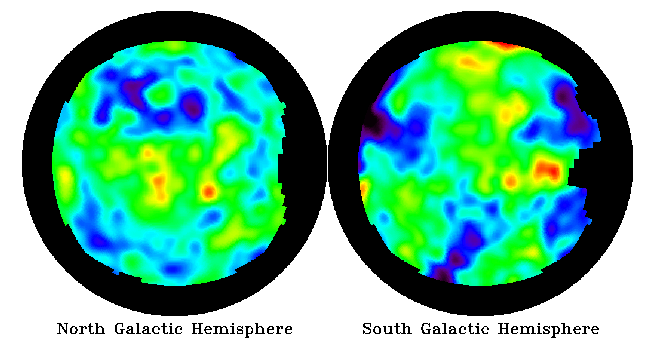
Las imágenes superiores muestran dos vistas del cielo en microondas, al norte y al sur del ecuador de nuestra galaxia, obtenidas a partir de datos del satélite COsmic Background Explorer (COBE) de la NASA. Tras un procesamiento informático destinado a eliminar las contribuciones de objetos cercanos y los efectos del movimiento de la Tierra, revelan la presencia de "manchas". Estas manchas constituyen las estructuras más antiguas y distantes conocidas, y representan variaciones de temperatura en el Universo primitivo. A medida que nuestro Universo se expandía y enfriaba, se fueron formando conglomeraciones de materia. Las imágenes del COBE confirman que tan solo un millón de años después del Big Bang —ocurrido hace aproximadamente 15 000 millones de años— algunas regiones del universo eran visiblemente más calientes que otras. Mediante el estudio del tamaño y la distribución de las manchas detectadas por el COBE y misiones futuras, los astrónomos esperan descubrir qué tipos de materia y procesos dieron origen a dichas manchas, y con ello determinar la composición, la densidad y el destino final de nuestro Universo.