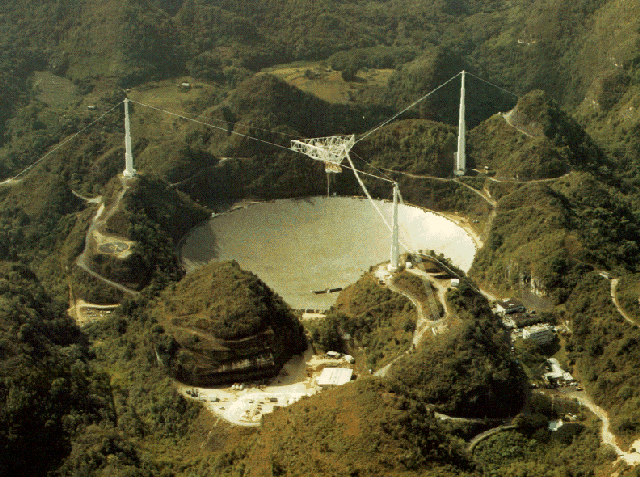
The Arecibo radio telescope is currently the largest single-dish telescope in the world. First opening in 1963, this 305 meter (1000 foot) radio telescope resides in a natural valley of Puerto Rico. The Arecibo telescope has been used for many astronomical research projects, including searches and studies of pulsars, and mapping atomic and molecular gas in the Galaxy and the universe. As the Arecibo dish can also be used to send radio waves, it has bounced and recorded radiation off of planets in our Solar System, and has even broadcast messages to areas of the Galaxy that might contain intelligent extra-terrestrial life. Any person in the world may use the telescope, providing their proposal is selected by a review committee.
El radiotelescopio de Arecibo es actualmente el telescopio de disco único más grande del mundo. Inaugurado en 1963, este radiotelescopio de 305 metros (1000 pies) se encuentra en un valle natural de Puerto Rico. El telescopio de Arecibo ha sido utilizado en numerosos proyectos de investigación astronómica, entre ellos la búsqueda y el estudio de púlsares, así como el mapeo de gas atómico y molecular en la Galaxia y el universo. Dado que el disco de Arecibo también puede emplearse para emitir ondas de radio, ha permitido rebotar y registrar radiación procedente de planetas de nuestro Sistema Solar, e incluso ha transmitido mensajes hacia regiones de la Galaxia que podrían albergar vida extraterrestre inteligente. Cualquier persona en el mundo puede solicitar el uso del telescopio, siempre que su propuesta sea seleccionada por un comité de revisión.