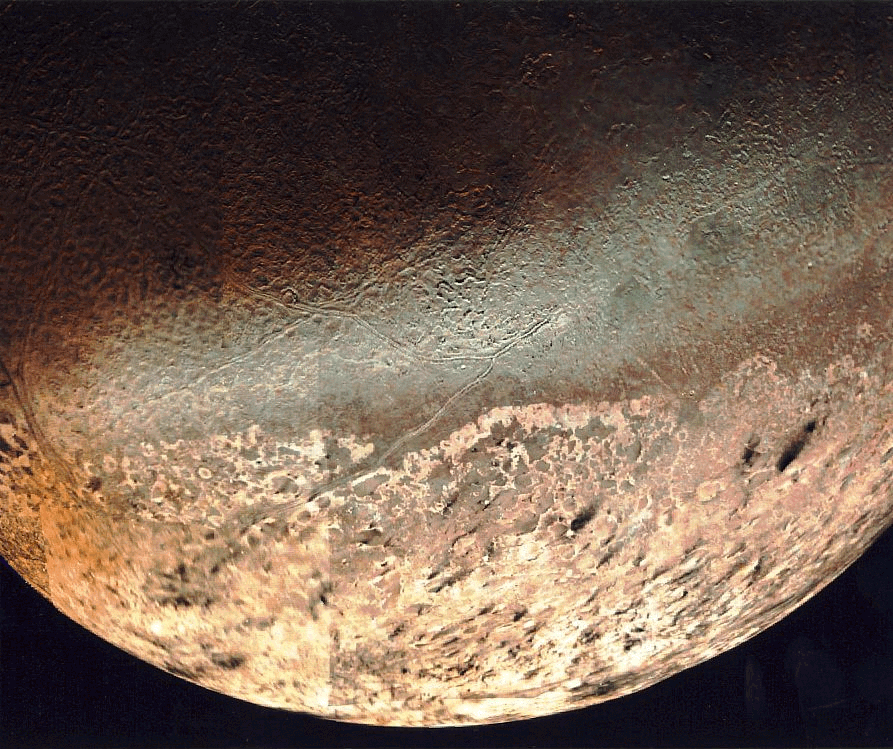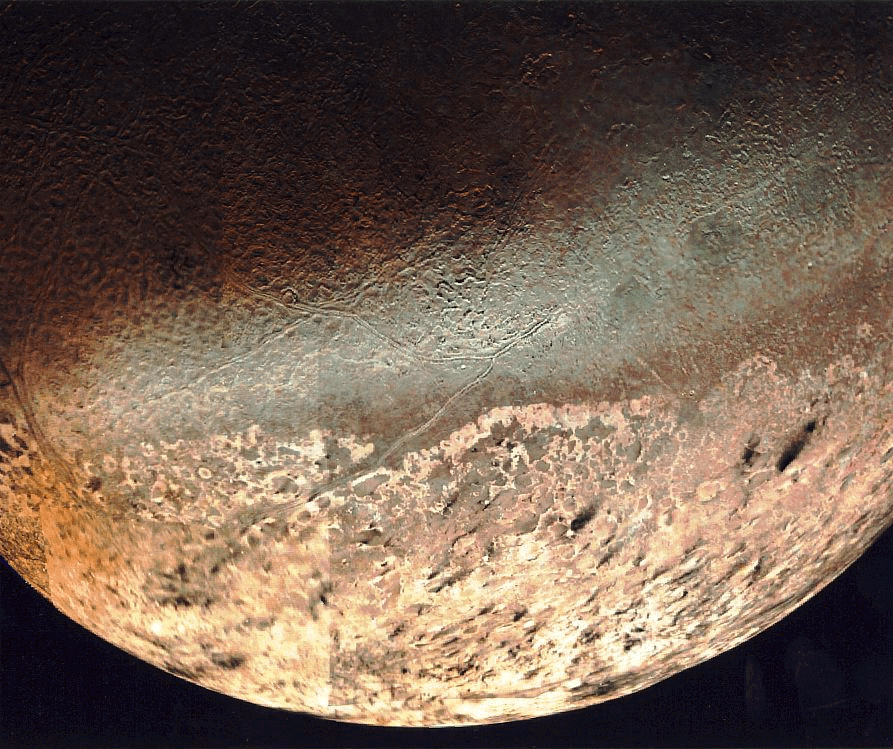
On October 10th, 1846, William Lassell was observing the newly discovered planet Neptune. He was attempting to confirm his observation, made just the previous week, that Neptune had a ring. But this time he discovered that Neptune had a satellite as well. Lassell soon proved that the ring was a product of his new telescope's distortion, but the satellite Triton remained. The above picture of Triton was taken in 1989 by the only spacecraft ever to pass Triton: Voyager 2. Voyager 2 found fascinating terrain, a thin atmosphere, and even evidence for ice volcanoes on this world of peculiar orbit and spin. Ironically, Voyager 2 also confirmed the existence of complete thin rings around Neptune - but these would have been quite invisible to Lassell!
El 10 de octubre de 1846, William Lassell observaba el recién descubierto planeta Neptuno. Intentaba confirmar su observación, realizada apenas la semana anterior, de que Neptuno poseía un anillo. Sin embargo, en esta ocasión descubrió que Neptuno también tenía un satélite. Lassell demostró poco después que el anillo era un artefacto producido por la distorsión de su nuevo telescopio, pero el satélite Tritón permaneció como un hallazgo real. La imagen de Tritón mostrada arriba fue tomada en 1989 por la única nave espacial que jamás ha sobrevolado este mundo: la Voyager 2. Dicha sonda encontró un terreno fascinante, una atmósfera tenue e incluso evidencias de volcanes de hielo en este mundo de órbita y rotación peculiares. Paradójicamente, la Voyager 2 también confirmó la existencia de anillos delgados y completos alrededor de Neptuno, aunque estos habrían resultado completamente invisibles para Lassell.