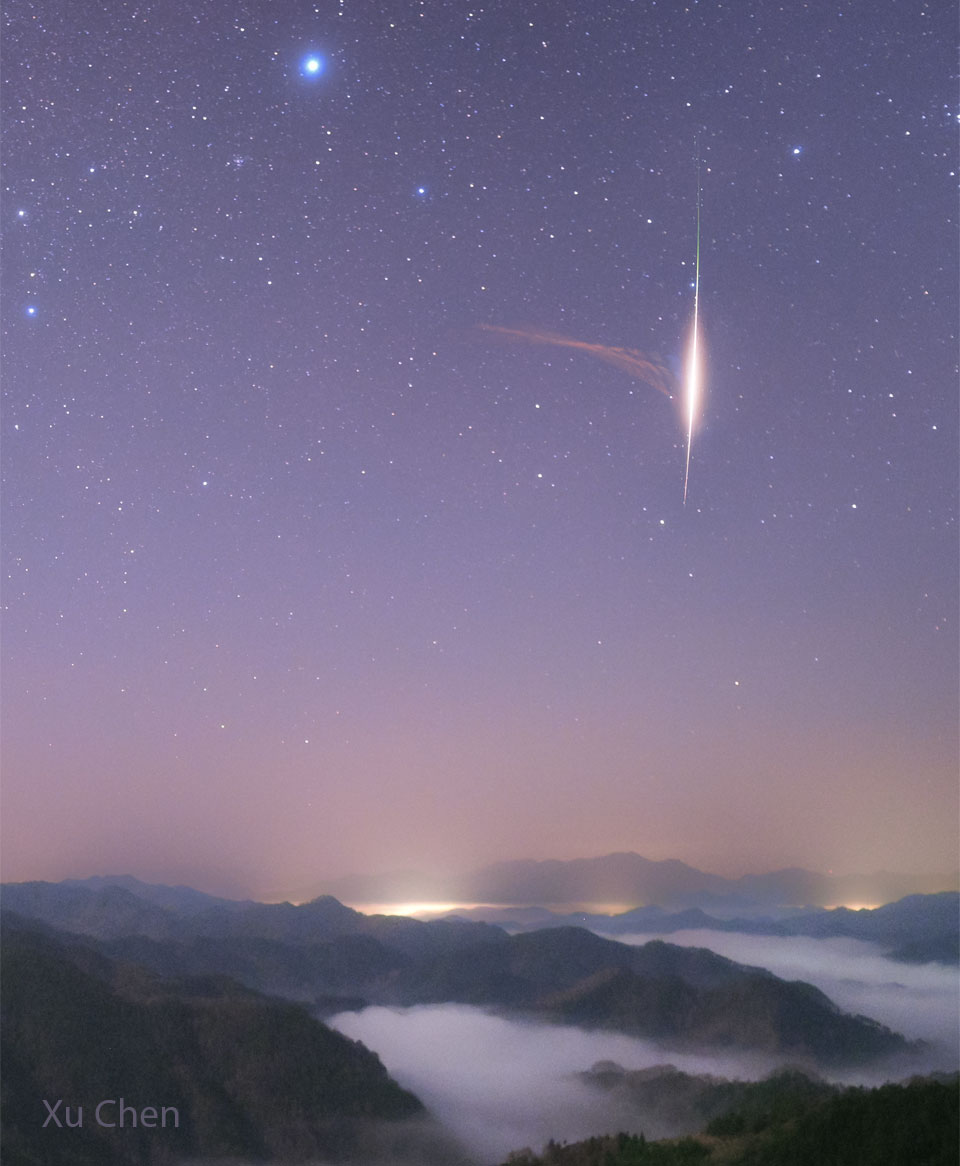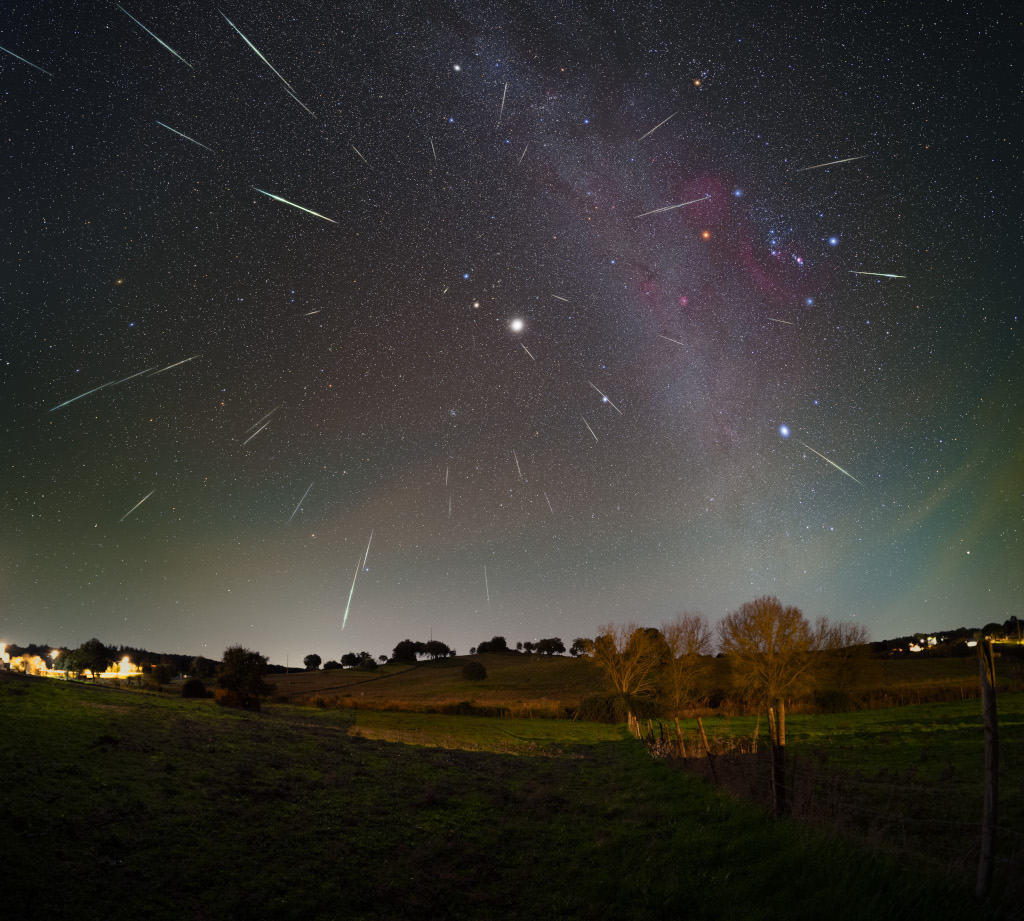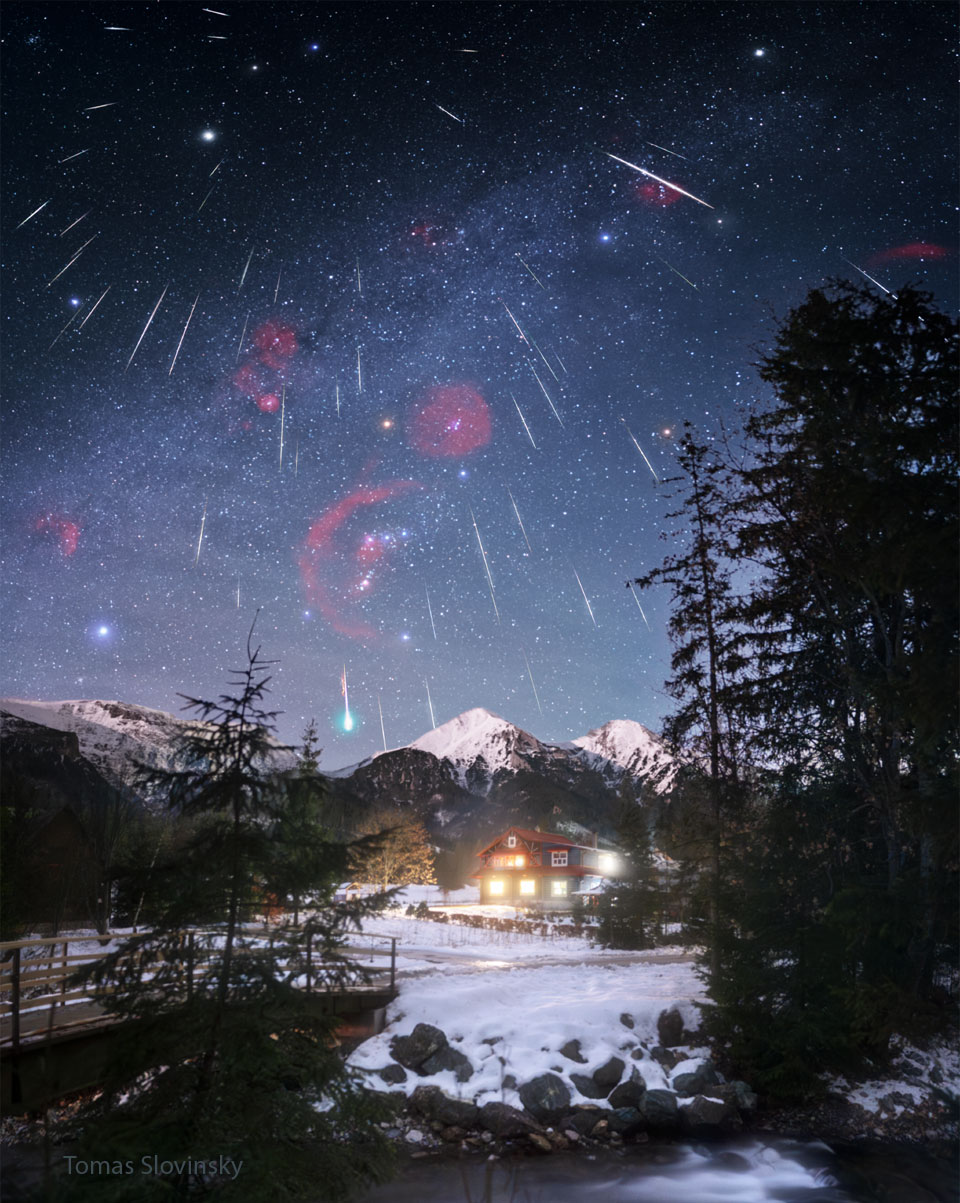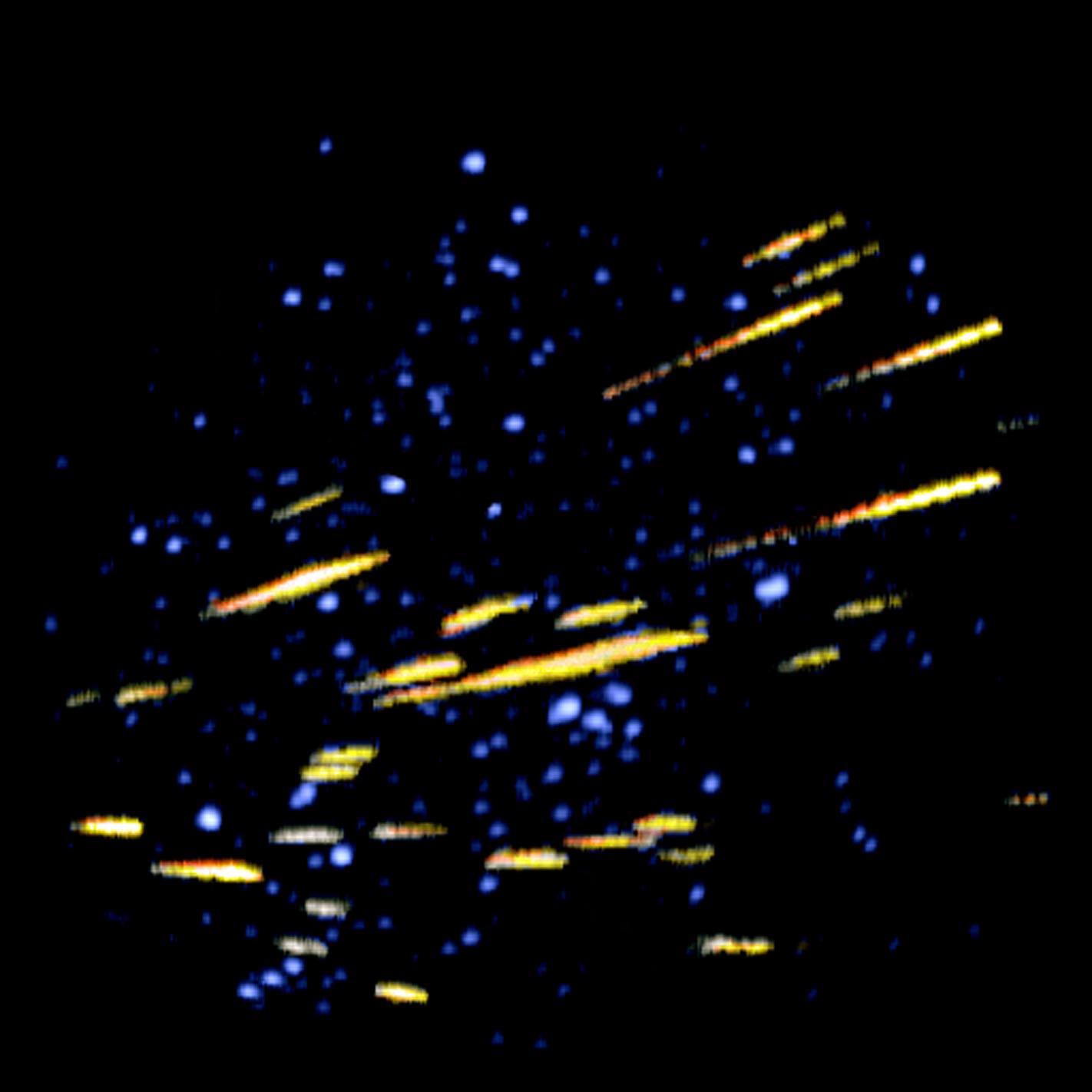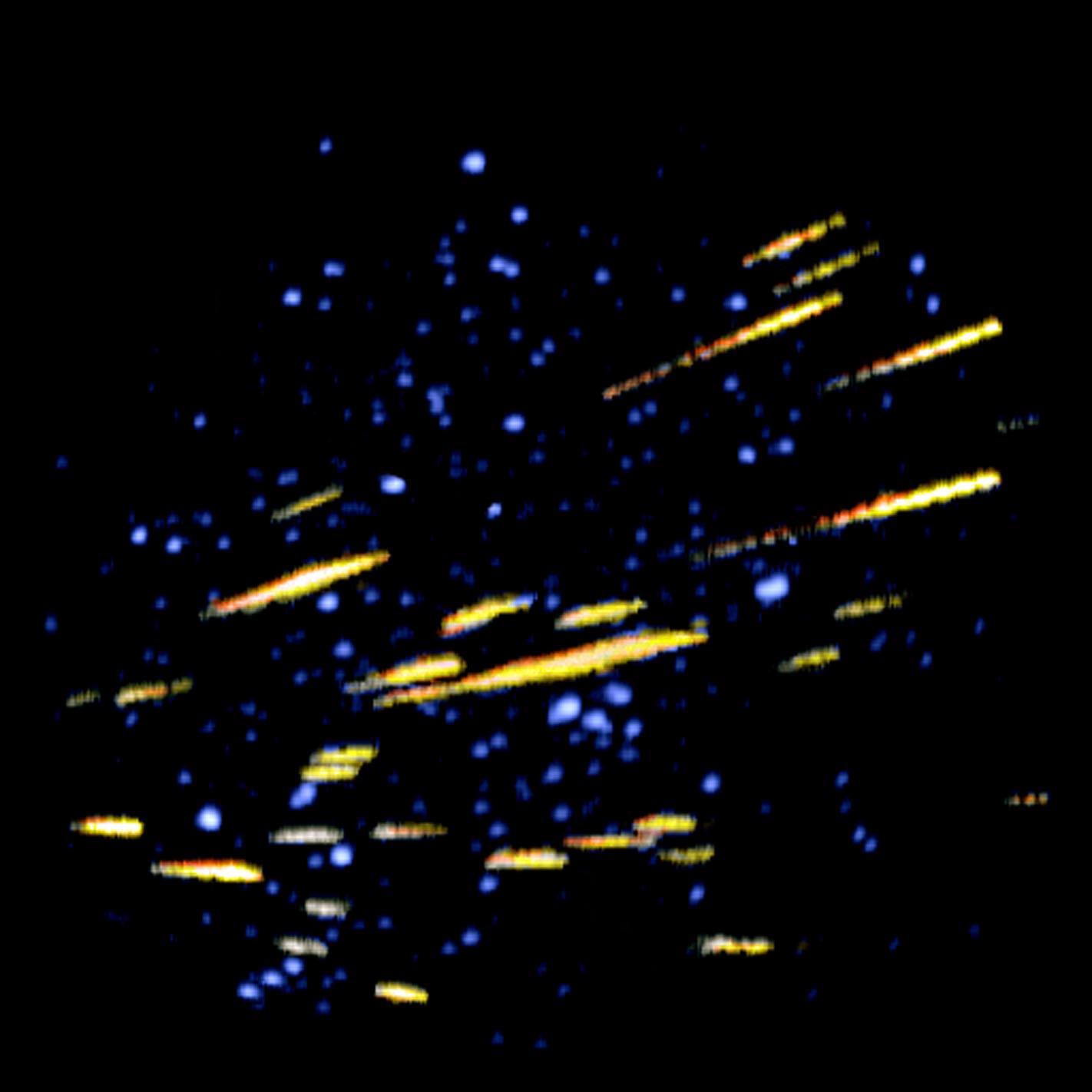
The Perseid Meteor Shower, usually the best meteor shower of the year, will peak over the next two nights. Over the course of an hour, a person watching a clear sky from a dark location might see as many as 100 meteors. These meteors are actually specs of rock that have broken off Comet Swift-Tuttle and continue to orbit the Sun. This year, however, the Perseids may only be second best. In November the Earth is predicted to move through a denser stream of Comet Tempel-Tuttle debris, possibly causing greater than 10,000 meteors per hour visible at some locations. Pictured above is the alpha-Monocerotid meteor outburst of 1995. This is the last week to send your name to a comet with NASA's planned Stardust mission.
La lluvia de meteoros de las Perseidas, generalmente la mejor lluvia de meteoros del año, alcanzará su punto máximo durante las próximas dos noches. En el transcurso de una hora, una persona que observe un cielo despejado desde un lugar oscuro podría ver hasta 100 meteoros. Estos meteoros son en realidad fragmentos de roca que se han desprendido del cometa Swift-Tuttle y continúan orbitando alrededor del Sol. Sin embargo, este año las Perseidas podrían quedar en segundo lugar. Se prevé que en noviembre la Tierra atravesará una corriente más densa de restos del cometa Tempel-Tuttle, lo que posiblemente provocará más de 10.000 meteoros por hora visibles desde algunos lugares. En la imagen se muestra el estallido de meteoros de las alfa-Monocerotidas de 1995. Esta es la última semana para enviar su nombre a un cometa con la misión Stardust planificada por la NASA.