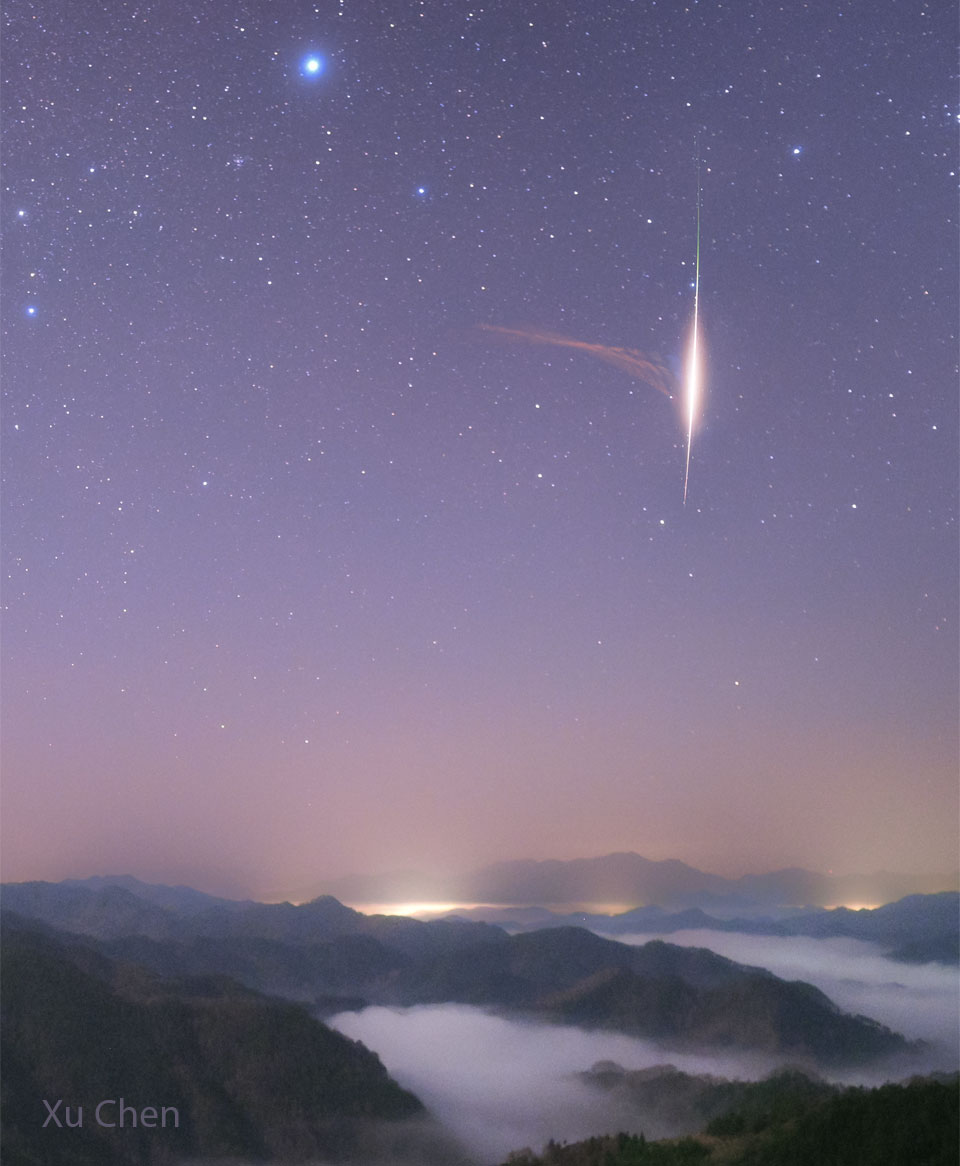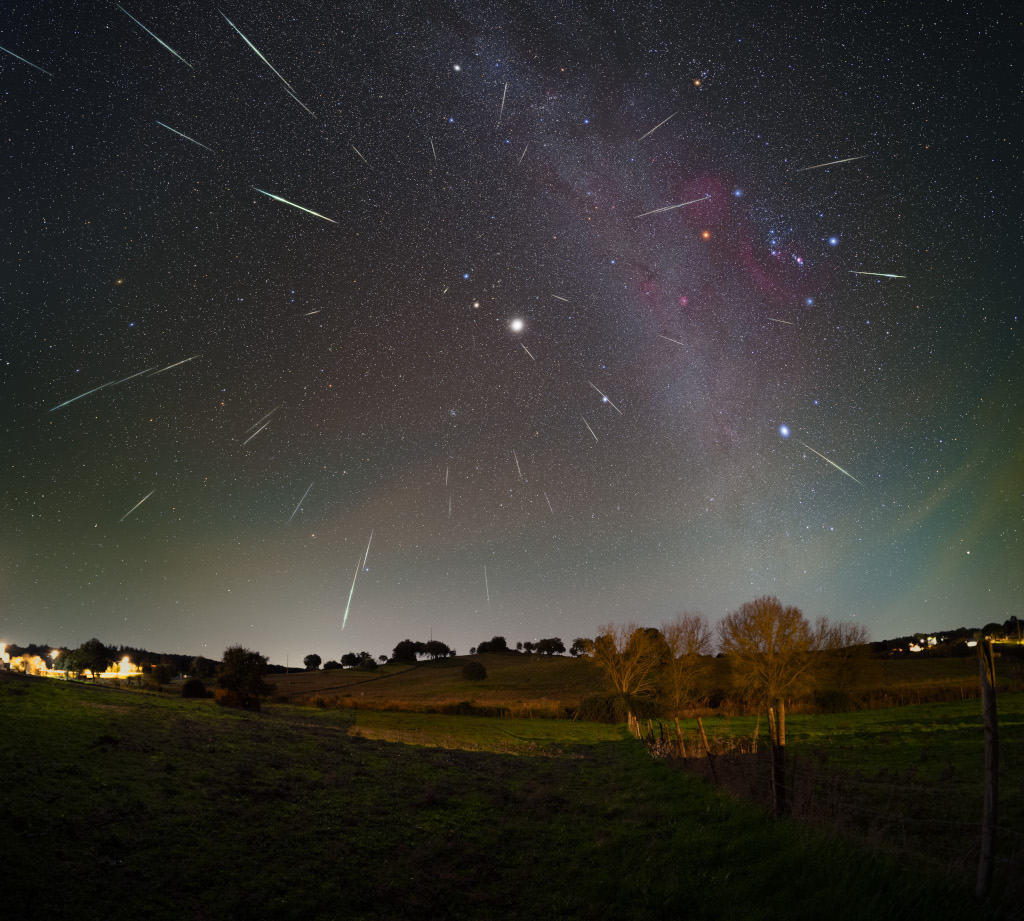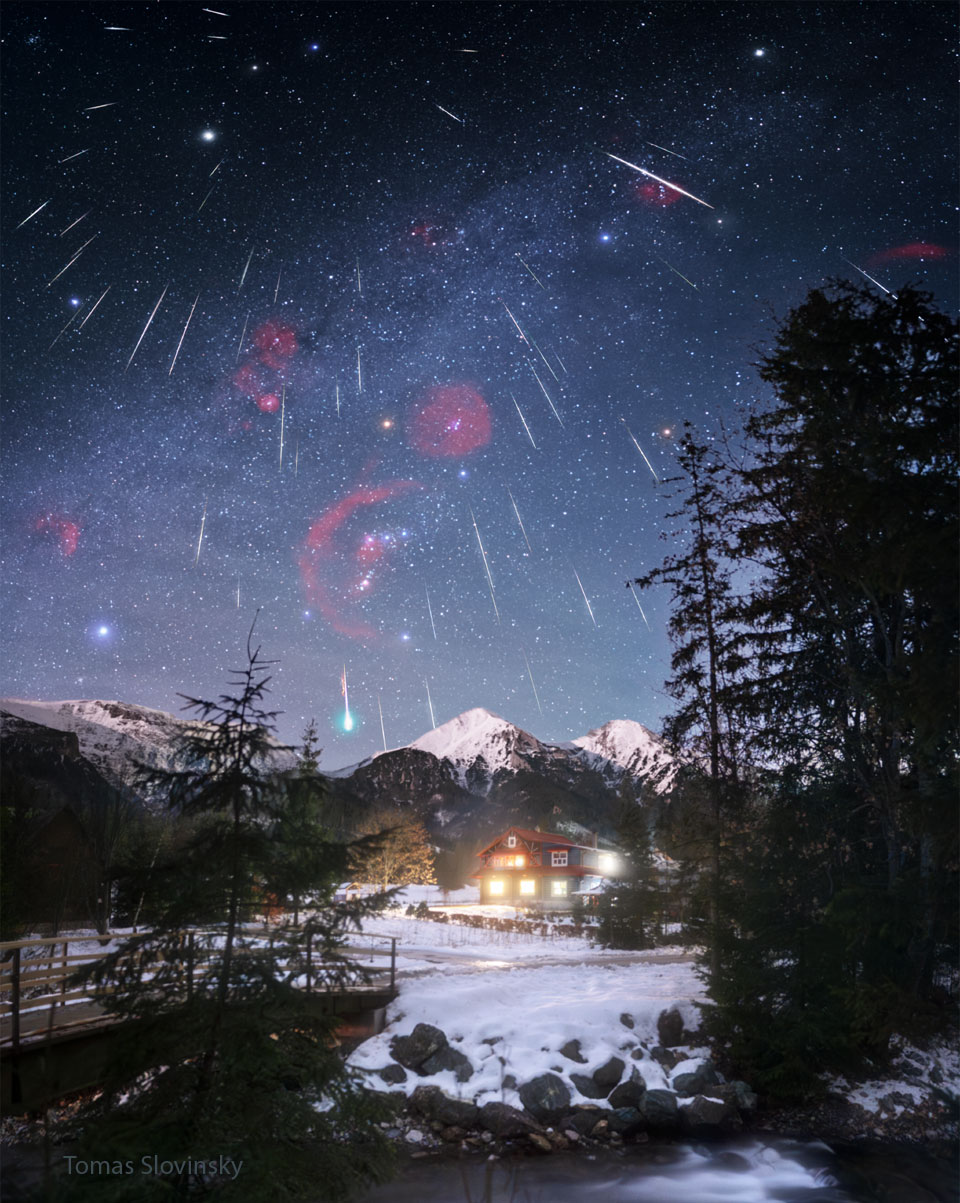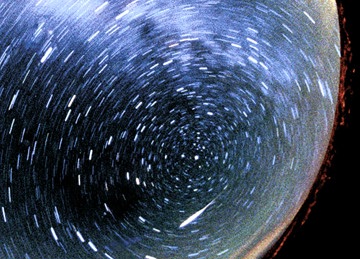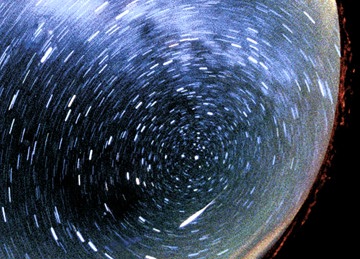
rly next week, a spectacular meteor storm is expected: the 1998 Leonids. It is widely thought that that the meteors from the Leonids meteor shower are just small pieces of Comet Temple-Tuttle falling to Earth. During each pass near the Sun, a comet will heat up and shed pieces of ice and rock from its nucleus. This debris continues to orbit the Sun until either evaporating or being swept up by some large solar-system body. A piece of comet debris striking the Moon creates a small crater, but a piece striking the Earth usually burns up in the atmosphere causing a brief, bright streak. The streak below center in the above picture of the northern sky actually depicts a meteor from the Perseid meteor shower, a usually impressive display that peaks every year in mid-August.
Se espera para principios de la próxima semana una espectacular tormenta de meteoros: las Leónidas de 1998. Se cree ampliamente que los meteoros de la lluvia de meteoros de las Leónidas son pequeños fragmentos del Cometa Temple-Tuttle que caen hacia la Tierra. Durante cada aproximación al Sol, un cometa se calienta y desprende fragmentos de hielo y roca de su núcleo. Estos residuos continúan orbitando el Sol hasta que se evaporan o son capturados por algún cuerpo masivo del sistema solar. Un fragmento de residuos cometarios que impacta la Luna crea un pequeño cráter, pero un fragmento que impacta la Tierra generalmente se desintegra en la atmósfera, produciendo un breve y brillante destello. El destello que aparece bajo el centro en la imagen del cielo boreal representa en realidad un meteoro de la lluvia de las Perseidas, un espectáculo generalmente impresionante que alcanza su máximo cada año a mediados de agosto.