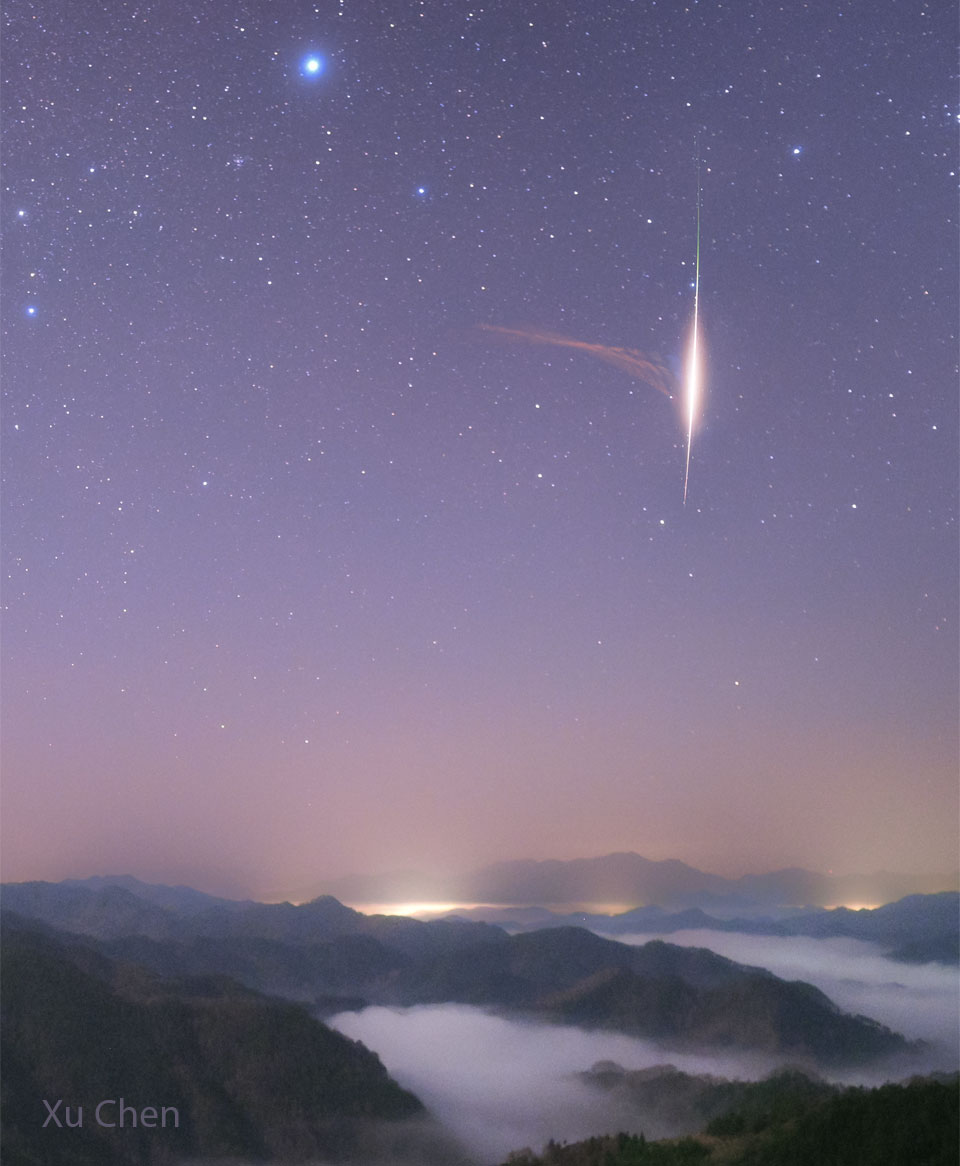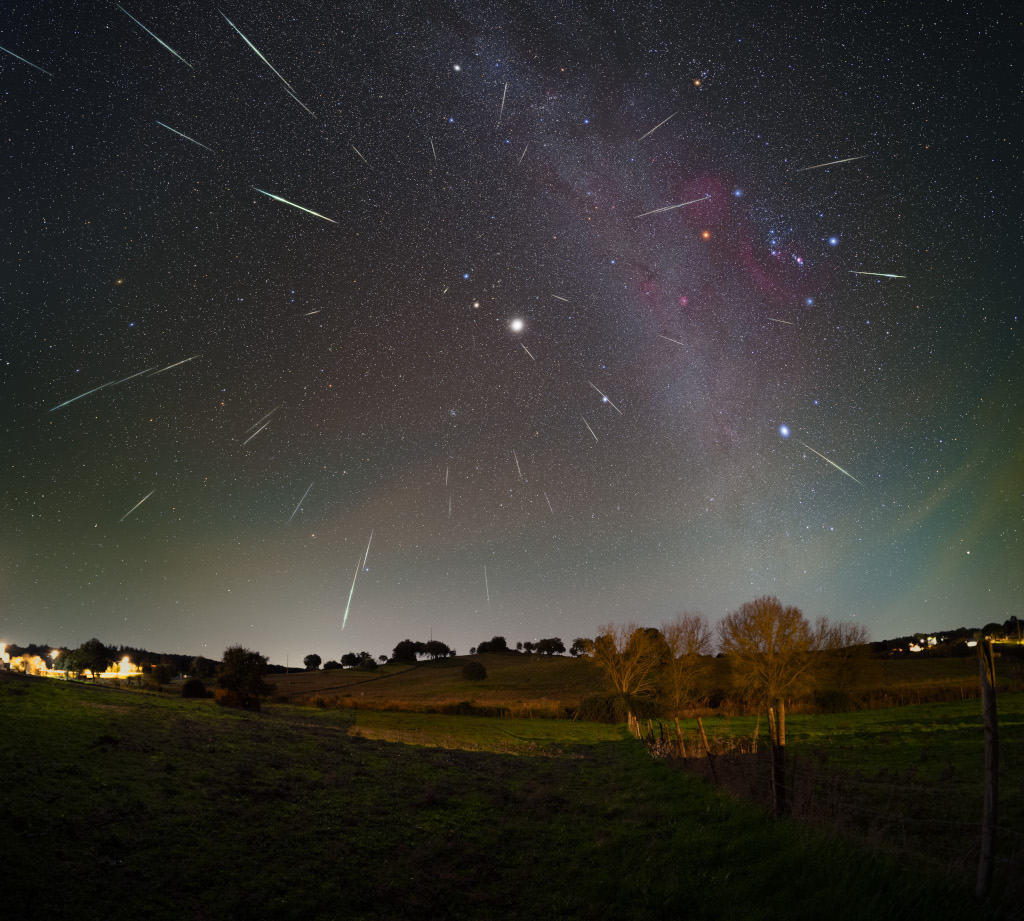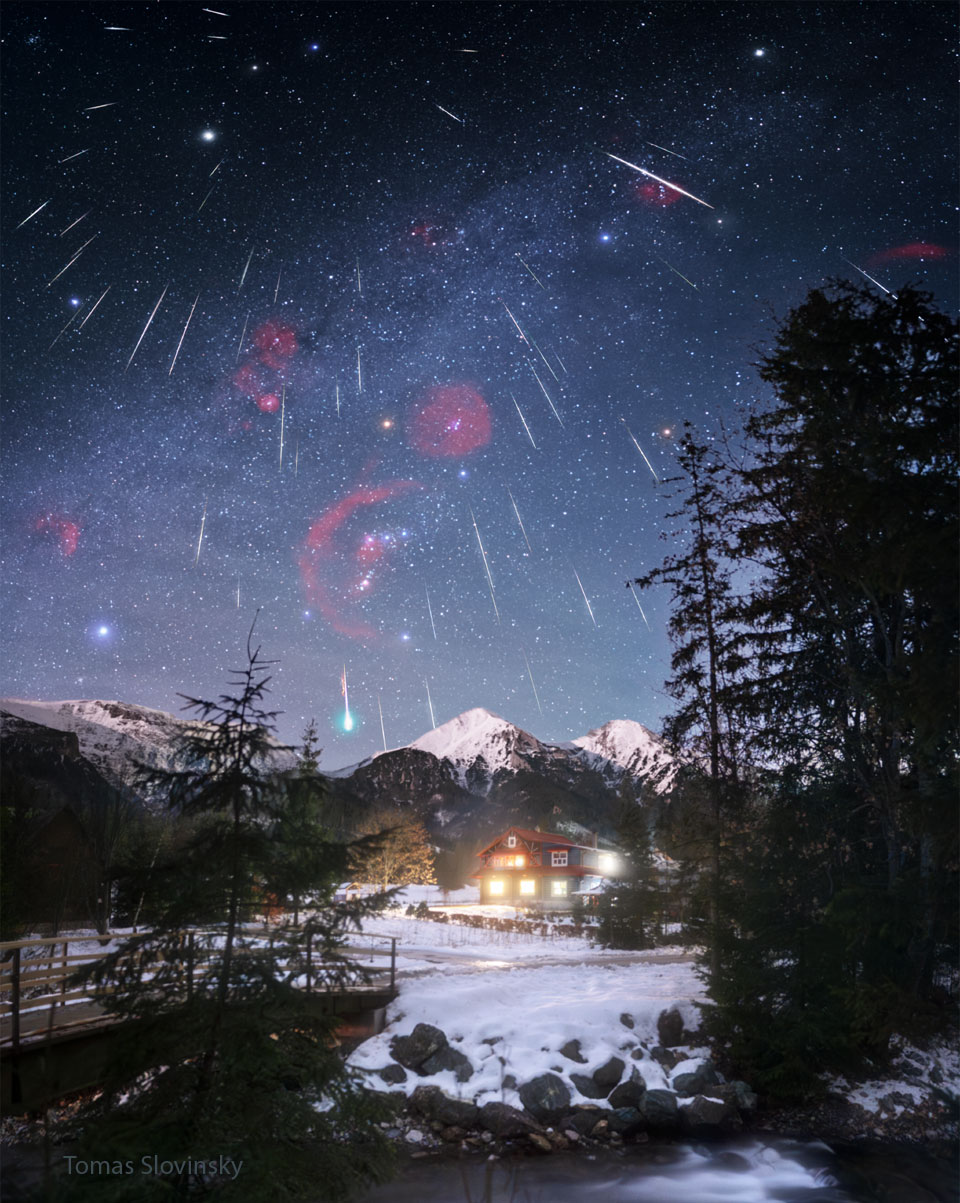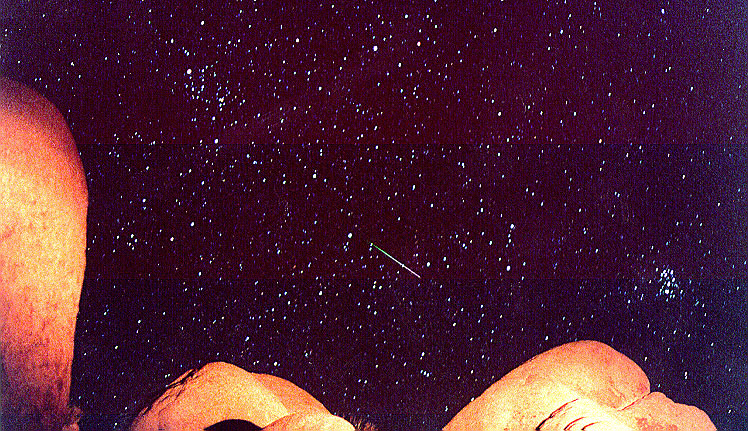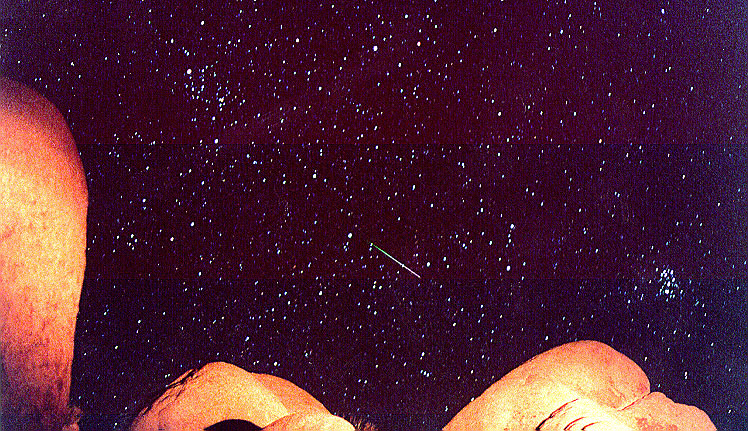
You're in no danger. During the meteor storm occurring tonight and tomorrow, thousands of bits of ice and rock will likely rain onto the Earth. Few, if any, will hit the ground. Touted as potentially the most active meteor shower since 1966, the Leonids of 1998 will be tracked by observers the world over. The meteor storm is caused by the Earth moving through the leftover debris of Comet Temple-Tuttle. The peak of the storm will be best visible tomorrow from Asia, though increased activity should be visible globally over many hours. It is even possible to monitor the storm live on the web. Pictured above is a Perseid 1997 meteor streaking across the sky behind an illuminated California desert.
No corre ningún peligro. Durante la tormenta de meteoros que ocurre esta noche y mañana, miles de fragmentos de hielo y roca caerán probablemente sobre la Tierra. Pocos, si alguno, llegarán al suelo. Considerada como potencialmente la lluvia de meteoros más activa desde 1966, las Leónidas de 1998 serán seguidas por observadores de todo el mundo. La tormenta de meteoros es causada por el paso de la Tierra a través de los restos del Cometa Temple-Tuttle. El pico de la tormenta será mejor visible mañana desde Asia, aunque una actividad incrementada debería ser visible a nivel global durante muchas horas. Incluso es posible monitorear la tormenta en directo por internet. En la imagen se aprecia un meteoro Perseida de 1997 surcando el cielo sobre un iluminado desierto de California.