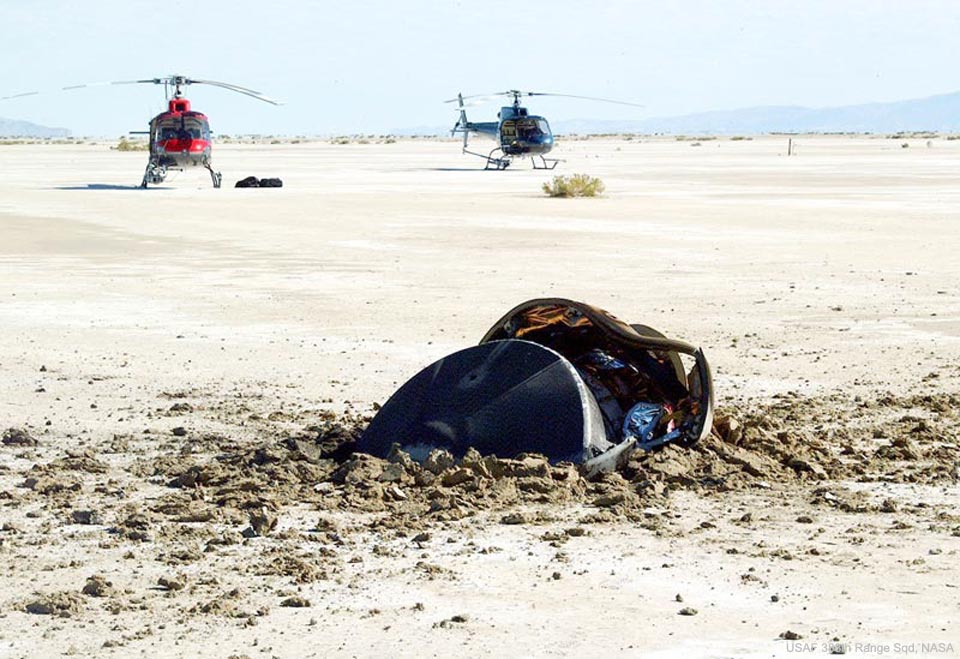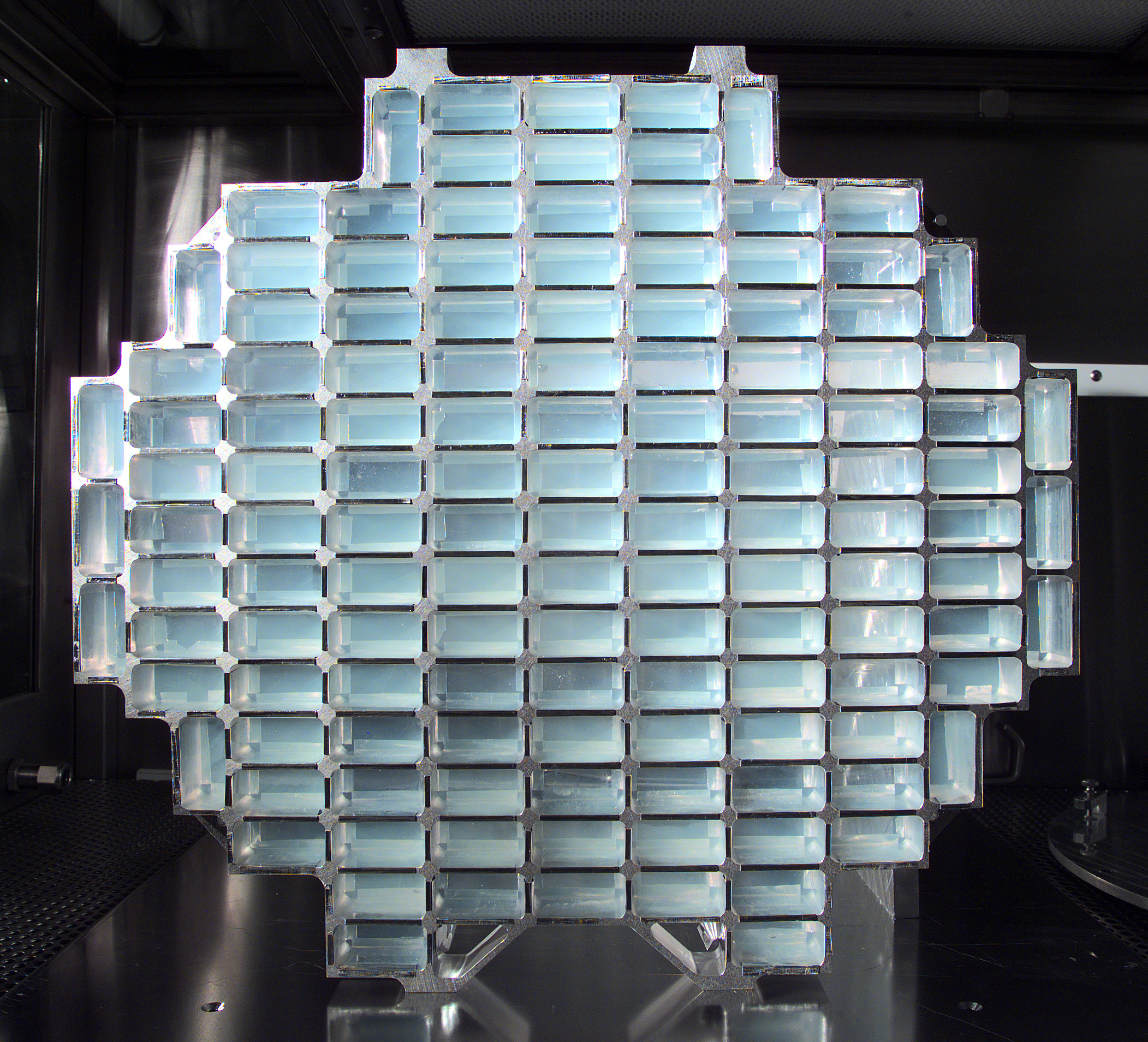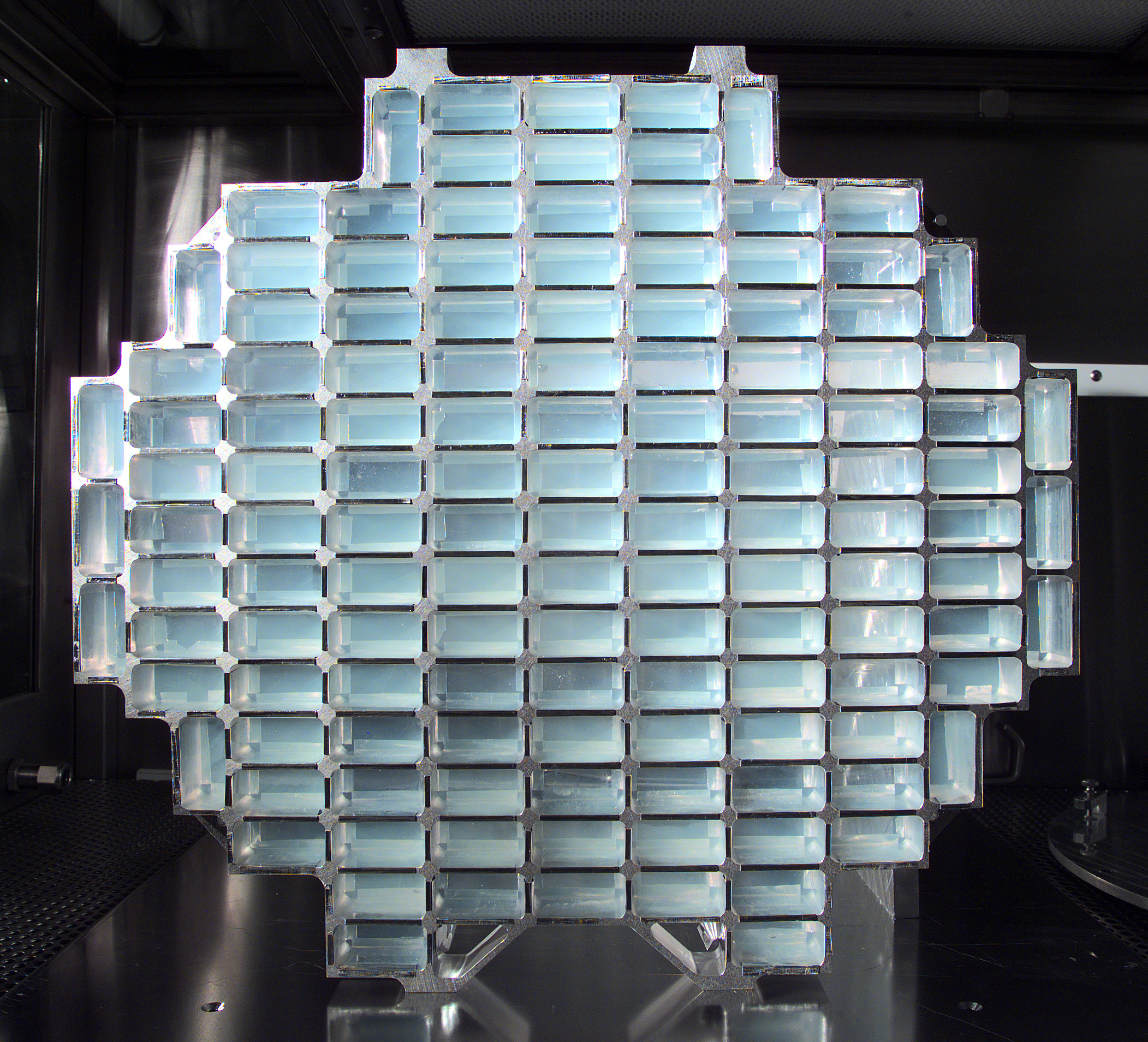
On February 7th, this honey comb of aluminum cells filled with aerogel was launched on the STARDUST mission to interplanetary space. STARDUST's goal is to capture dust from a comet's tail and return to planet Earth - the first sample return mission to a comet! This structure represents about 1,000 square centimeters of area for collecting dust trailing within 150 kilometers of the nucleus of P/Wild-2. Comet P/Wild-2 is new to the inner Solar System. Having spent its life in orbit between Jupiter and Uranus, this comet was deflected in 1974 by a close encounter with Jupiter and now orbits between Jupiter and Earth. Dust from P/Wild-2 should impact the aerogel at high speeds and come to rest leaving carrot-shaped tracks in this amazingly tough, transparent, ultra-low density material. Returning to Earth by parachute in 2006, the cometary dust sample will be analyzed for clues to the formation and primordial composition of our Solar System.
El 7 de febrero, este panal de celdas de aluminio rellenas de aerogel fue lanzado en la misión STARDUST hacia el espacio interplanetario. El objetivo de STARDUST es capturar polvo de la cola de un cometa y devolverlo a la Tierra, ¡convirtiéndose en la primera misión de retorno de muestras de un cometa! Esta estructura representa aproximadamente 1.000 centímetros cuadrados de área para recolectar el polvo que se encuentra a menos de 150 kilómetros del núcleo del cometa P/Wild-2. El cometa P/Wild-2 es nuevo en el Sistema Solar interior. Habiendo pasado su existencia en órbita entre Júpiter y Urano, este cometa fue desviado en 1974 por un encuentro cercano con Júpiter y ahora orbita entre Júpiter y la Tierra. El polvo de P/Wild-2 debería impactar el aerogel a alta velocidad y quedar atrapado dejando huellas en forma de zanahoria en este material extraordinariamente resistente, transparente y de densidad extremadamente baja. Al regresar a la Tierra en paracaídas en 2006, la muestra de polvo cometario será analizada en busca de pistas sobre la formación y la composición primordial de nuestro Sistema Solar.