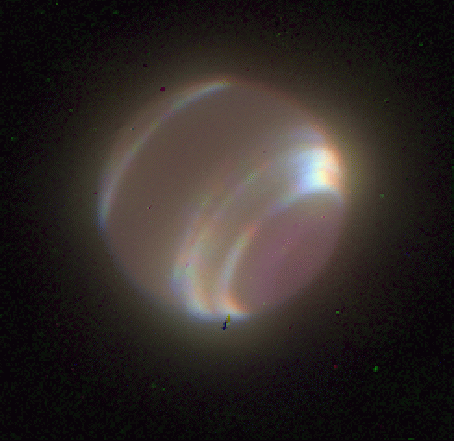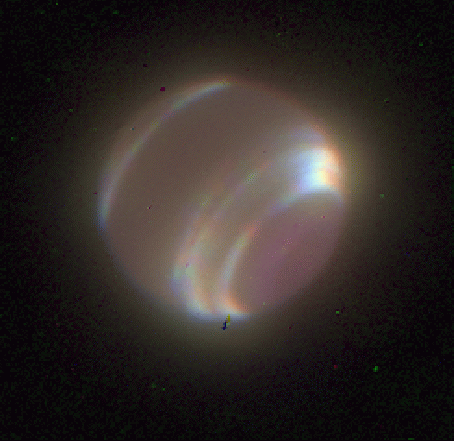
From the Earth's surface, Neptune usually appears as a fuzzy blotch. The blurring effects of the Earth's atmosphere deny clearer images. By distorting mirrors in the telescope itself in time with the changing atmosphere, however, these effects can be greatly reduced. Many of the world's largest telescopes are now implementing these "rubber mirror" adaptive optics (AO) systems to bring out the finest details that these telescopes can resolve. Recently the 10-meter Keck II telescope in Hawaii came on-line with AO capability. The above image of Neptune in three infrared colors demonstrates the clarity of the new technique - as compared to an image of Neptune from Keck II without AO.
Desde la superficie de la Tierra, Neptuno suele aparecer como una mancha borrosa. Los efectos de distorsión de la atmósfera terrestre impiden obtener imágenes más nítidas. Sin embargo, al deformar los espejos del propio telescopio de forma sincronizada con los cambios atmosféricos, estos efectos pueden reducirse considerablemente. Muchos de los telescopios más grandes del mundo están implementando actualmente estos sistemas de óptica adaptativa (AO) de "espejos flexibles" para revelar los detalles más finos que estos instrumentos son capaces de resolver. Recientemente, el telescopio Keck II de 10 metros de diámetro, ubicado en Hawái, entró en funcionamiento con capacidad de óptica adaptativa. La imagen superior de Neptuno, capturada en tres colores infrarrojos, demuestra la claridad que ofrece esta nueva técnica, en comparación con una imagen de Neptuno obtenida con el Keck II sin óptica adaptativa.