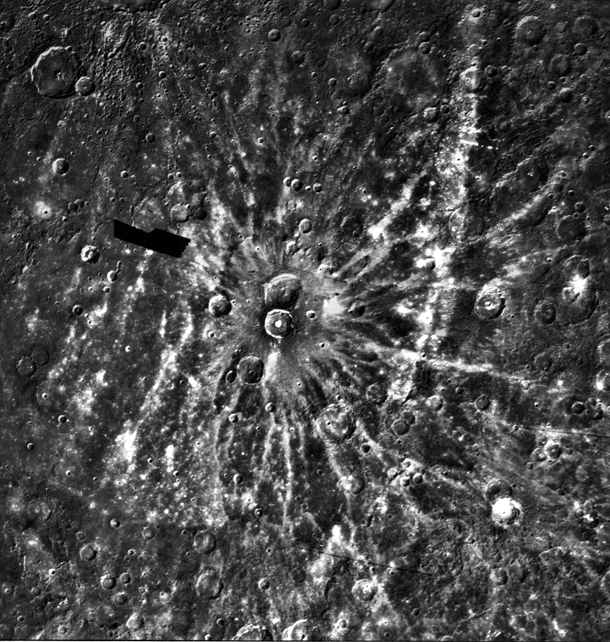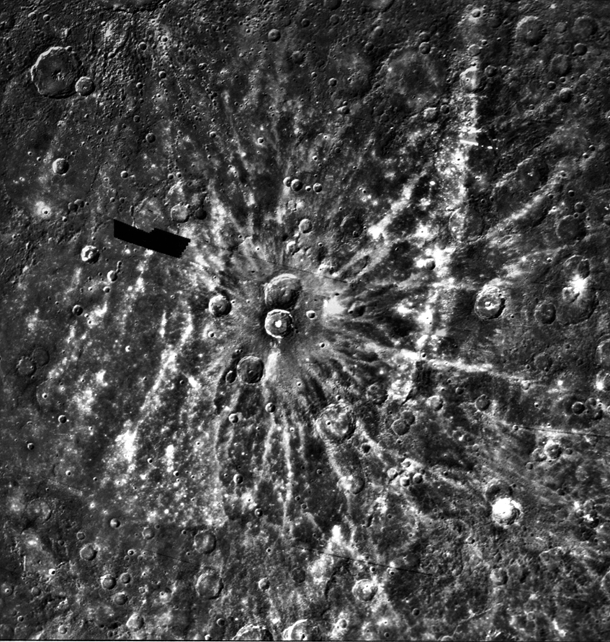
Like the Earth's Moon, Mercury is scarred with craters testifying to an intense bombardment during the early history of the Solar System. In 1974, the Mariner 10 spacecraft surveyed this innermost planet up close, producing the only detailed images of its tortured surface. In the above mosaic the bright rays emanating from the 45 kilometer wide Degas crater almost appear to be painted on. The rays consist of light colored material blasted out during the crater's formation. Craters older than Degas are covered by the ray material while younger craters are seen superimposed on the rays. Mercury's gravity and density are about twice that of Earth's Moon so such bright ray craters on the lunar surface tend to be much larger. NASA plans to launch MESSENGER to the least explored terrestrial planet in 2004.
Al igual que la Luna de la Tierra, Mercurio está marcado por cráteres que dan testimonio de un intenso bombardeo durante los primeros tiempos de la historia del Sistema Solar. En 1974, la nave espacial Mariner 10 exploró de cerca este planeta más interior, produciendo las únicas imágenes detalladas de su atormentada superficie. En el mosaico anterior, los brillantes rayos que emanan del cráter Degas, de 45 kilómetros de diámetro, casi parecen pintados. Los rayos están compuestos de material de color claro expulsado durante la formación del cráter. Los cráteres más antiguos que Degas están cubiertos por el material de los rayos, mientras que los cráteres más jóvenes se observan superpuestos sobre ellos. La gravedad y la densidad de Mercurio son aproximadamente el doble que las de la Luna de la Tierra, por lo que los cráteres con rayos brillantes en la superficie lunar tienden a ser mucho más grandes. La NASA tenía previsto lanzar MESSENGER hacia el planeta terrestre menos explorado en 2004.