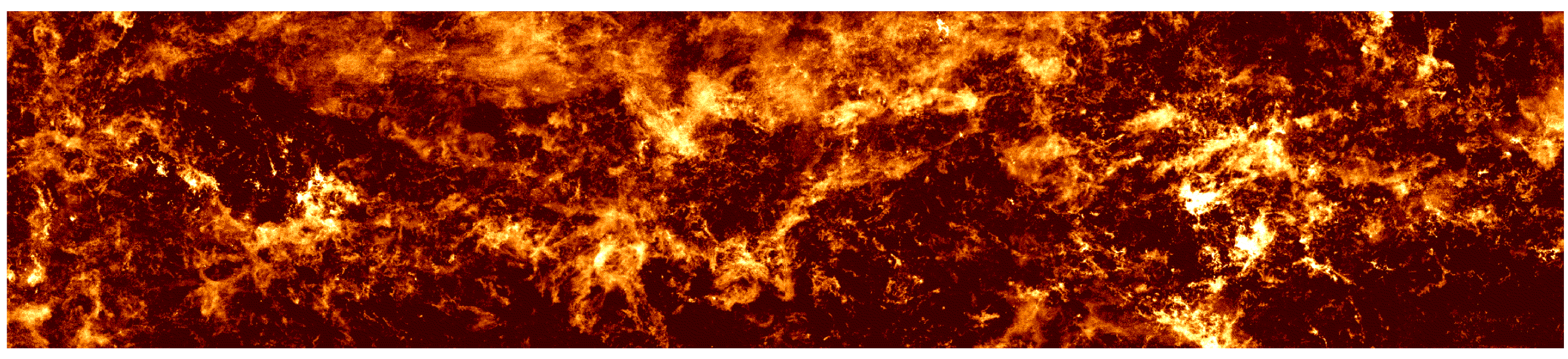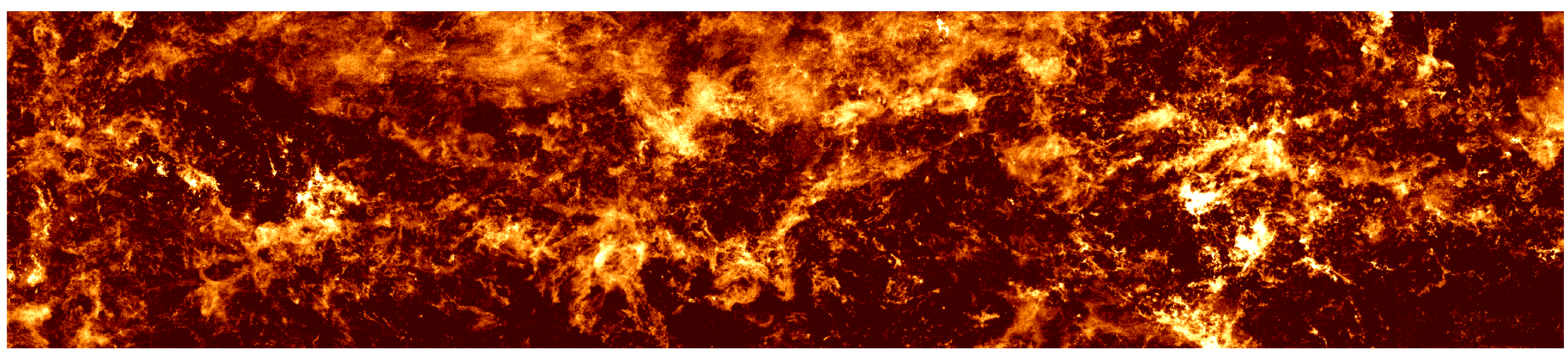
Our Galaxy is filled with gas. Most of this gas is hydrogen, some is helium, but there is a trace amount of relatively heavy molecules, including carbon monoxide (CO) - a component of smog. The above wide-angle radio CO image shows the incredibly diverse structures that the molecular interstellar medium forms. Dense clouds show where stars may be forming and open voids may indicate the action of strong winds from massive, recently formed stars. This FCRAO Outer Galaxy Survey was recently re-processed at the Dominion Radio Astrophysical Observatory for inclusion in the Canadian Galactic Plane Survey, an international effort to map all constituents of the interstellar medium over large scales at high angular resolution.
Nuestra Galaxia está llena de gas. La mayor parte de este gas es hidrógeno, algo de helio, pero hay una cantidad residual de moléculas relativamente pesadas, incluyendo monóxido de carbono (CO), un componente del smog. La imagen de radio de CO de gran angular mostrada arriba revela las estructuras increíblemente diversas que forma el medio interestelar molecular. Las nubes densas indican lugares donde podrían formarse estrellas y los espacios abiertos pueden indicar la acción de vientos fuertes provenientes de estrellas masivas recientemente formadas. Este Sondeo de la Galaxia Exterior del FCRAO fue reprocesado recientemente en el Observatorio de Astrofísica de Radio Dominion para su inclusión en el Sondeo del Plano Galáctico Canadiense, un esfuerzo internacional para cartografiar todos los constituyentes del medio interestelar a gran escala con alta resolución angular.