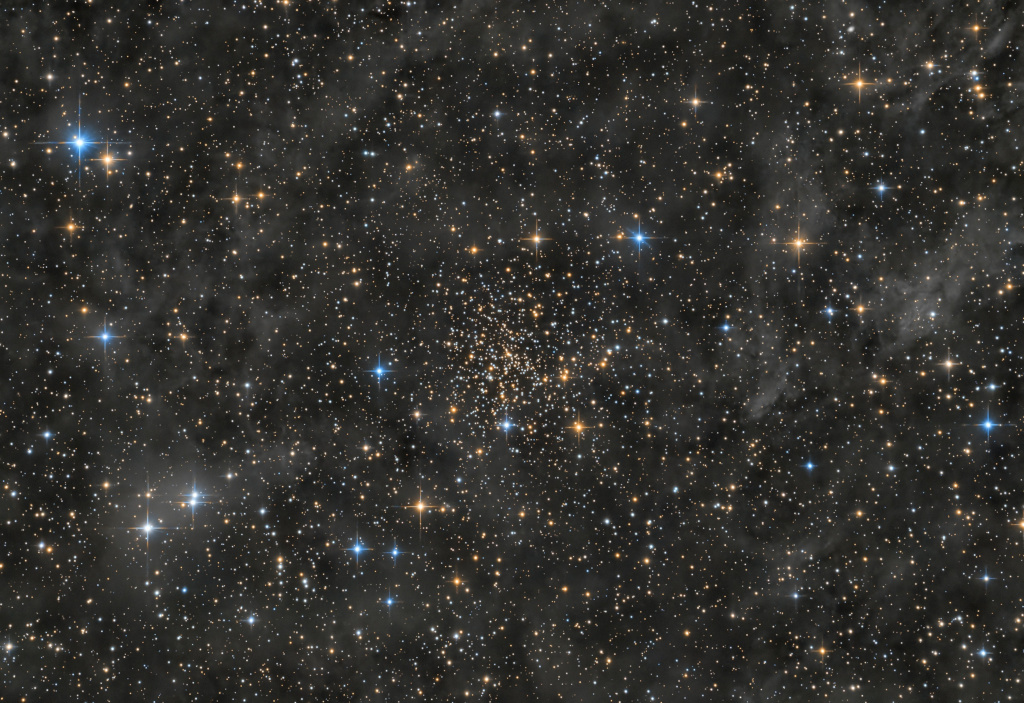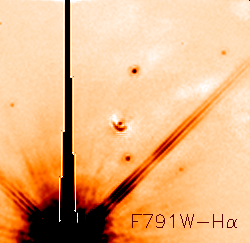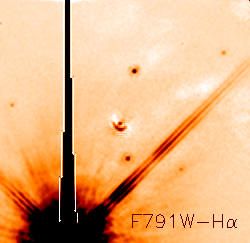
Unusual appendages around bright stars are commonplace, but never seem to be mentioned. What are they? First, a telescope brings starlight falling over a large area to a small area. To get at this small area, however, one must go inside a reflecting telescope, and one good way to do this is to use support rods, which are right in the view of the telescope. The wave nature of light causes it to deflect when passing near these rods. Light scatters away from the original destination point ending up elsewhere and appearing as "diffraction spikes." These annoying spikes steal precious light from the central image and hide light from fainter, more interesting stars. Above, astronomers are more interested in the half-circled point near the image center, than the cool-looking diffraction spikes from the bright star at the bottom. Apparently, that half-circle is a new stellar system forming in the Lagoon Nebula.
Apéndices inusuales alrededor de estrellas brillantes son comunes, pero nunca parecen mencionarse. ¿Qué son? Primero, un telescopio concentra la luz estelar que cae sobre un área grande en un área pequeña. Para llegar a esta pequeña área, sin embargo, uno debe ir dentro de un telescopio reflector, y una buena manera de hacerlo es usar varillas de soporte, que están directamente en la vista del telescopio. La naturaleza ondulatoria de la luz hace que se desvíe al pasar cerca de estas varillas. La luz se dispersa lejos del punto de destino original y termina en otro lugar, apareciendo como "espigas de difracción". Estas molestas espigas roban luz preciosa de la imagen central y ocultan la luz de estrellas más tenues y más interesantes. Arriba, los astrónomos están más interesados en el punto medio en forma de media circunferencia cerca del centro de la imagen, que en las llamativas espigas de difracción de la estrella brillante en la parte inferior. Aparentemente, esa media circunferencia es un nuevo sistema estelar en formación en la Nebulosa del Lago.