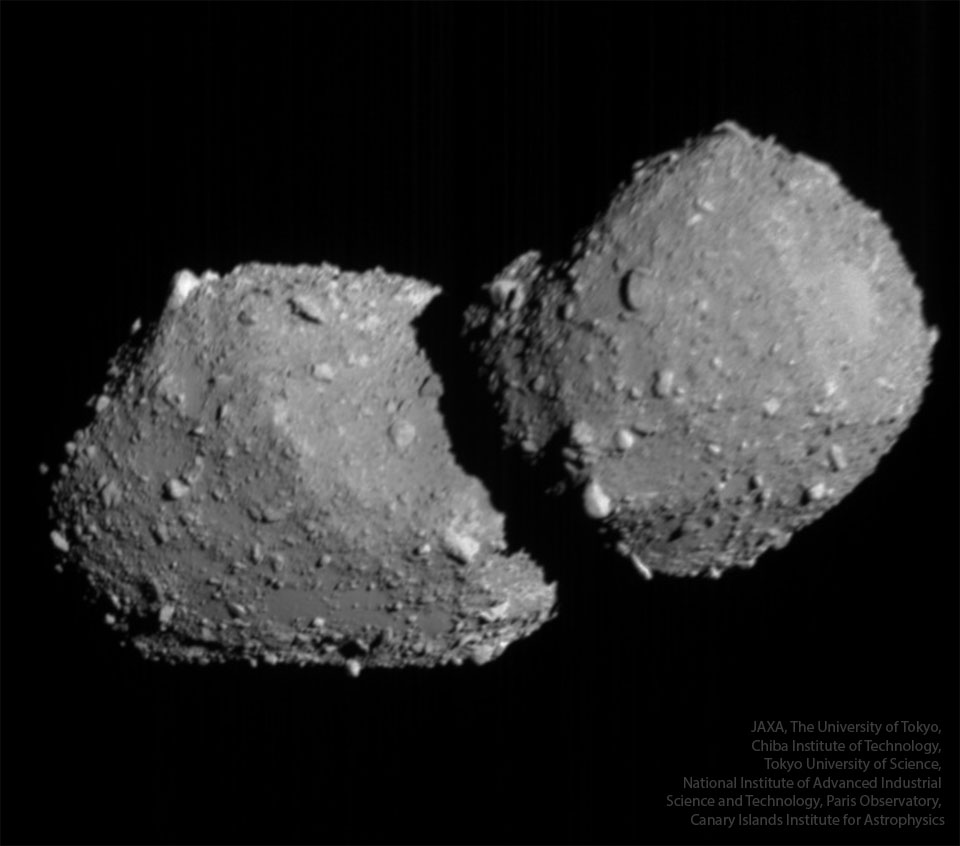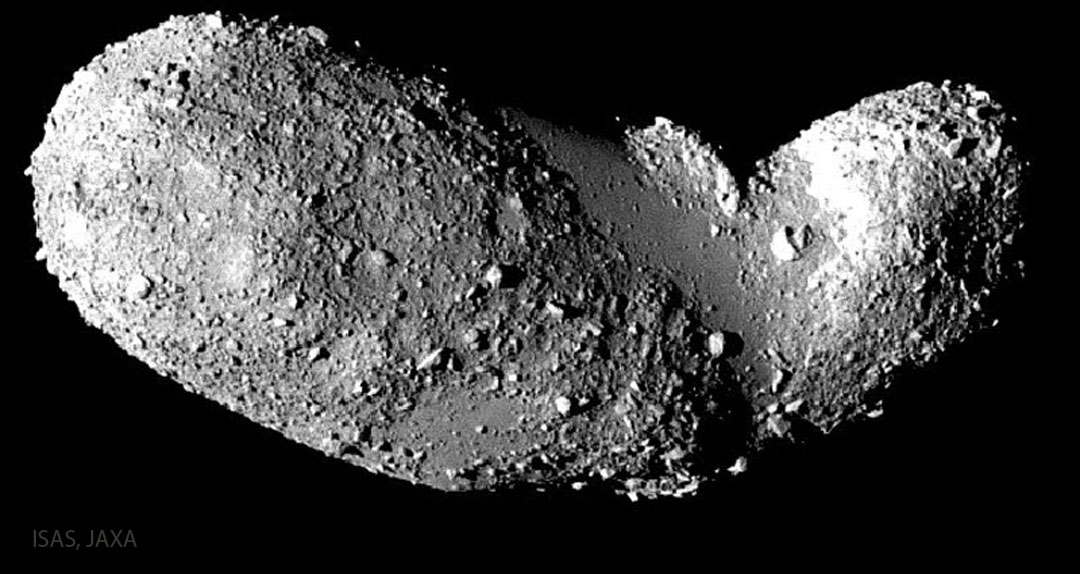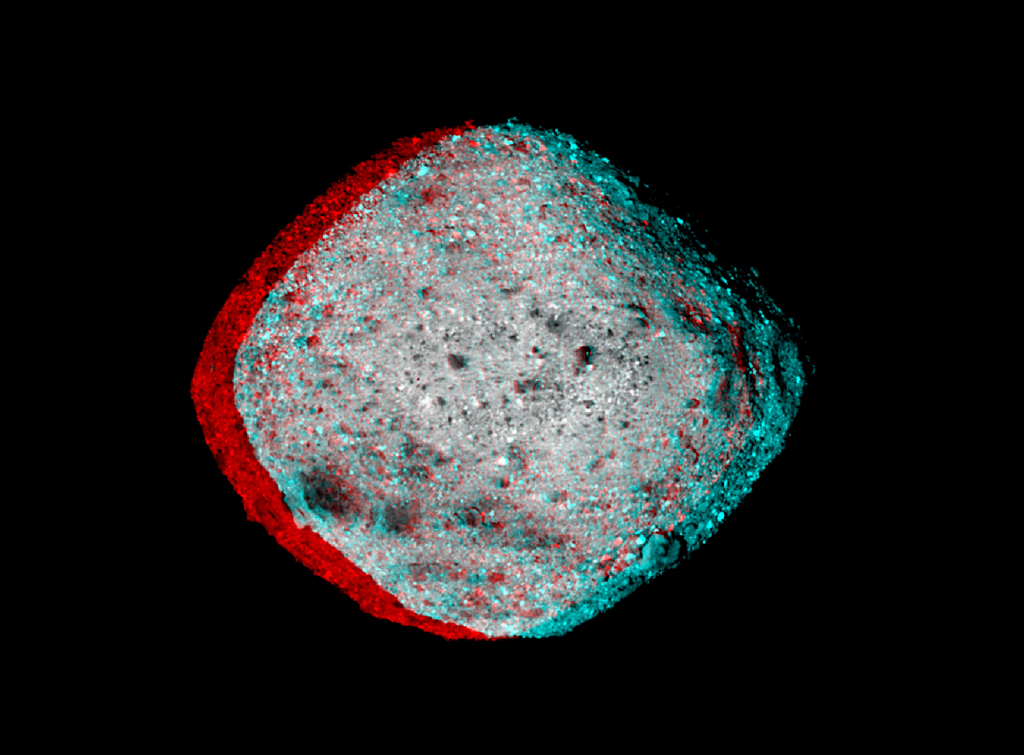
How did large rocks come to be scattered on the surface of asteroid Eros? Eros stands out not only because of its proximity to Earth but also because it was visited recently by NASA's NEAR-Shoemaker spacecraft. After arriving at Eros in 2000 February, the robot probe was maneuvered to a controlled landing earlier this year. Although NEAR-Shoemaker is no longer active, scientists are still poring over the images and data, finding new mysteries, and drawing new hypotheses about the ancient tumbling space mountain. For example, analyzing the locations of rocks has led to the hypothesis that many of them originated in a single large collision that occurred possibly about a billion years ago. Still unknown, however, includes why Eros has unusual ponds of blue dust.
¿Cómo llegaron las rocas grandes a estar dispersas en la superficie del asteroide Eros? Eros destaca no solo por su proximidad a la Tierra, sino también porque fue visitado recientemente por la nave espacial NEAR-Shoemaker de la NASA. Después de llegar a Eros en febrero de 2000, la sonda robótica fue maniobrada para un aterrizaje controlado hace unos meses. Aunque NEAR-Shoemaker ya no está activa, los científicos siguen analizando las imágenes y los datos, descubriendo nuevos misterios y formulando nuevas hipótesis sobre esta antigua montaña espacial que gira. Por ejemplo, al analizar las ubicaciones de las rocas se ha llegado a la hipótesis de que muchas de ellas provienen de una única colisión grande que podría haber ocurrido hace aproximadamente mil millones de años. Sin embargo, aún se desconoce por qué Eros tiene inusuales depósitos de polvo azul.