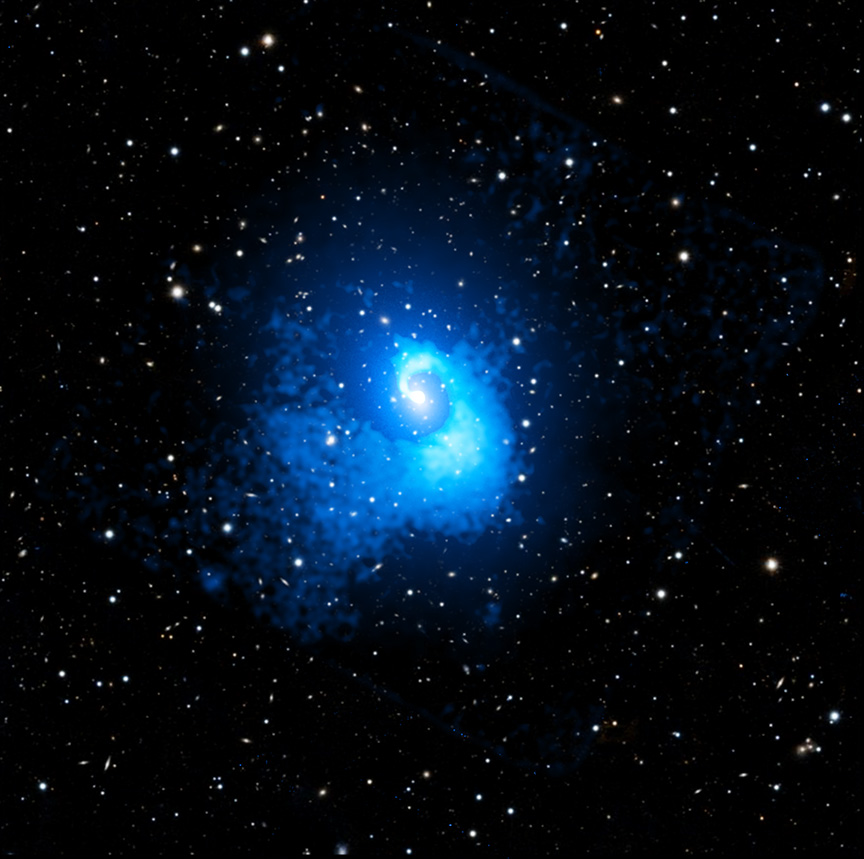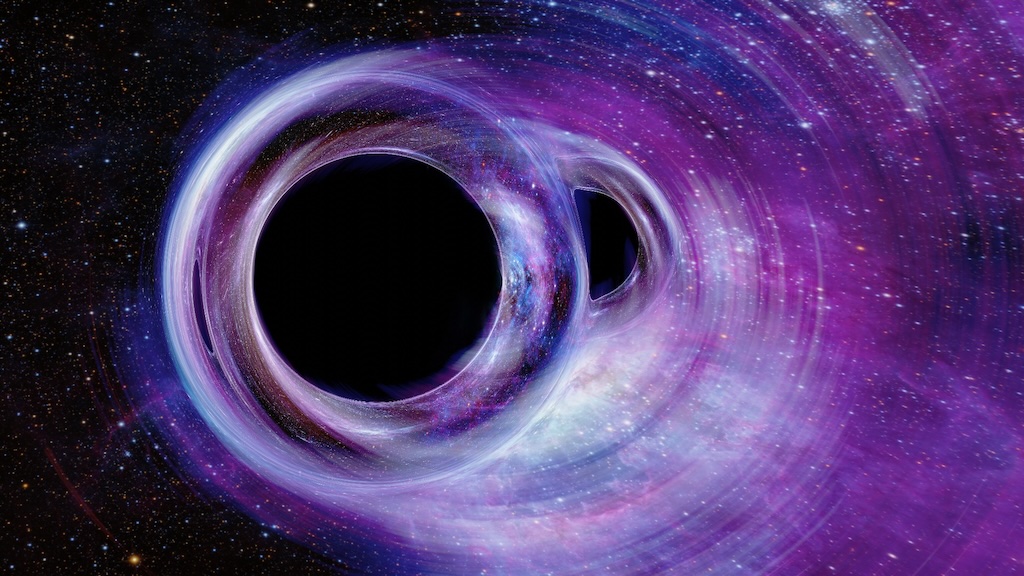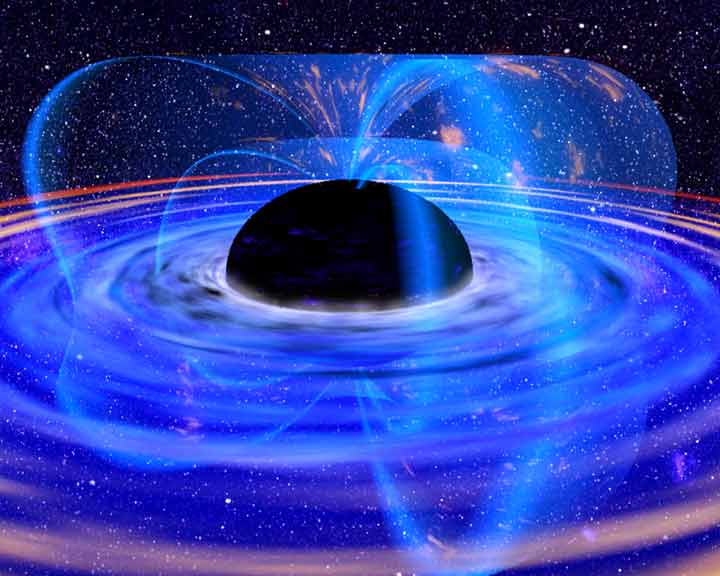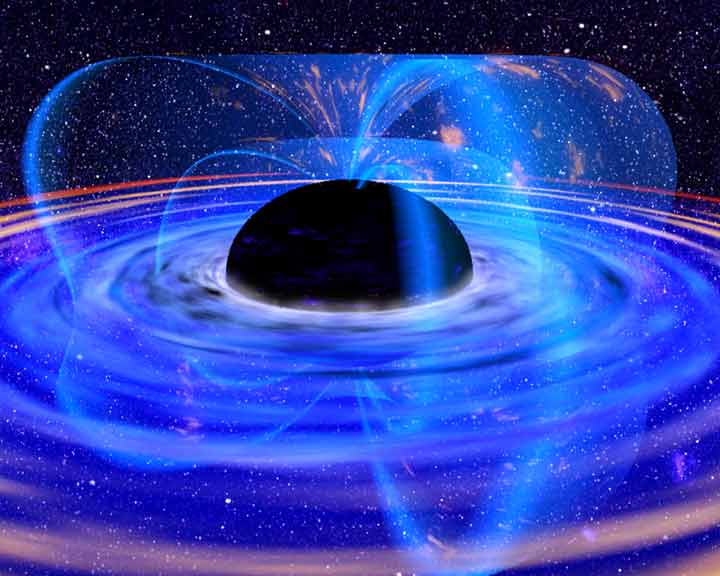
What makes the core of galaxy MCG-6-30-15 so bright? Some astronomers believe the answer is a massive spinning black hole. If so, this would be the first observational indication that it is possible to make a black hole act like a battery -- and tap into its rotational energy. MCG-6-30-15 is a distant galaxy that has recently been observed with the orbiting XMM-Newton satellite in X-ray light. These observations show the galaxy's nucleus not only to be very bright but also to show evidence that much of the light is climbing out of a deep gravitational well. A spinning black hole could explain both effects. A strong magnetic field could be the mediator transferring rotational energy from the black hole to the surrounding gas. Pictured above is an artist's illustration of a black hole surrounded by an accretion disk. For clarity, the illustration does not include distorting gravitational lens effects.
¿Qué hace tan brillante el núcleo de la galaxia MCG-6-30-15? Algunos astrónomos creen que la respuesta es un agujero negro masivo en rotación. Si es así, esto sería la primera indicación observacional de que es posible hacer que un agujero negro actúe como una batería y aprovechar su energía de rotación. MCG-6-30-15 es una galaxia distante que recientemente ha sido observada con el satélite XMM-Newton en luz de rayos X. Estas observaciones muestran que el núcleo de la galaxia no solo es muy brillante, sino que también muestra evidencia de que gran parte de la luz está ascendiendo desde un pozo gravitacional profundo. Un agujero negro en rotación podría explicar ambos efectos. Un fuerte campo magnético podría ser el mediador que transfiere la energía de rotación del agujero negro al gas circundante. En la imagen de arriba se muestra una ilustración artística de un agujero negro rodeado por un disco de acreción. Para mayor claridad, la ilustración no incluye efectos de lente gravitacional distorsionantes.