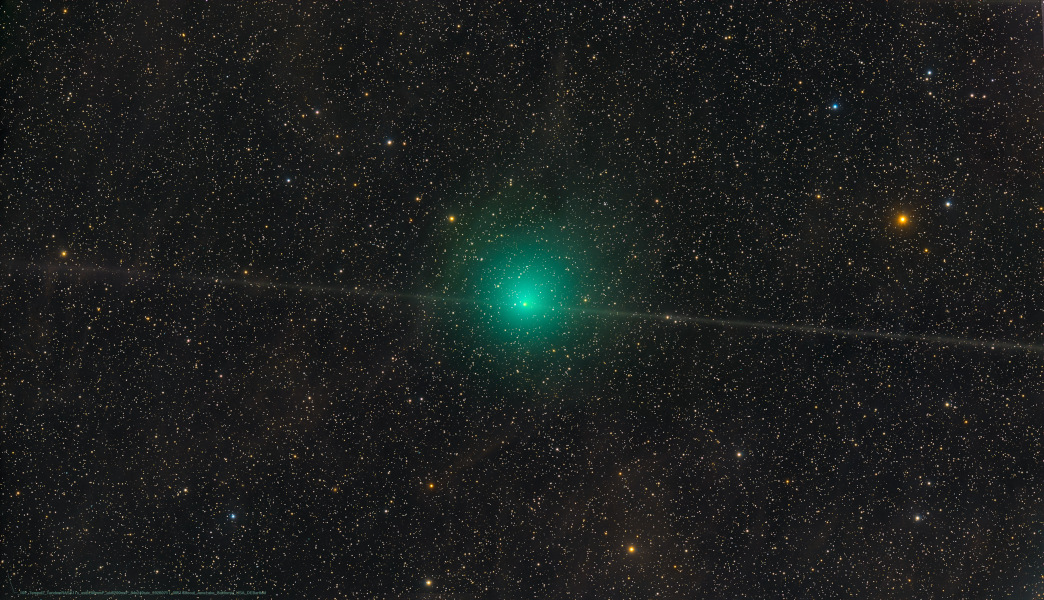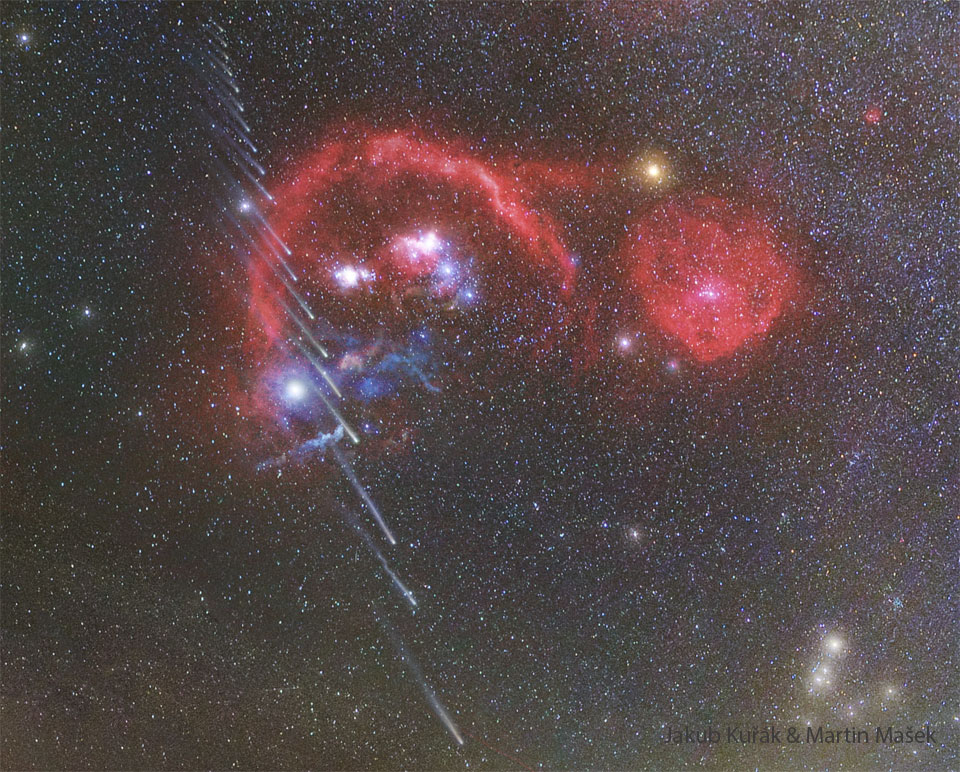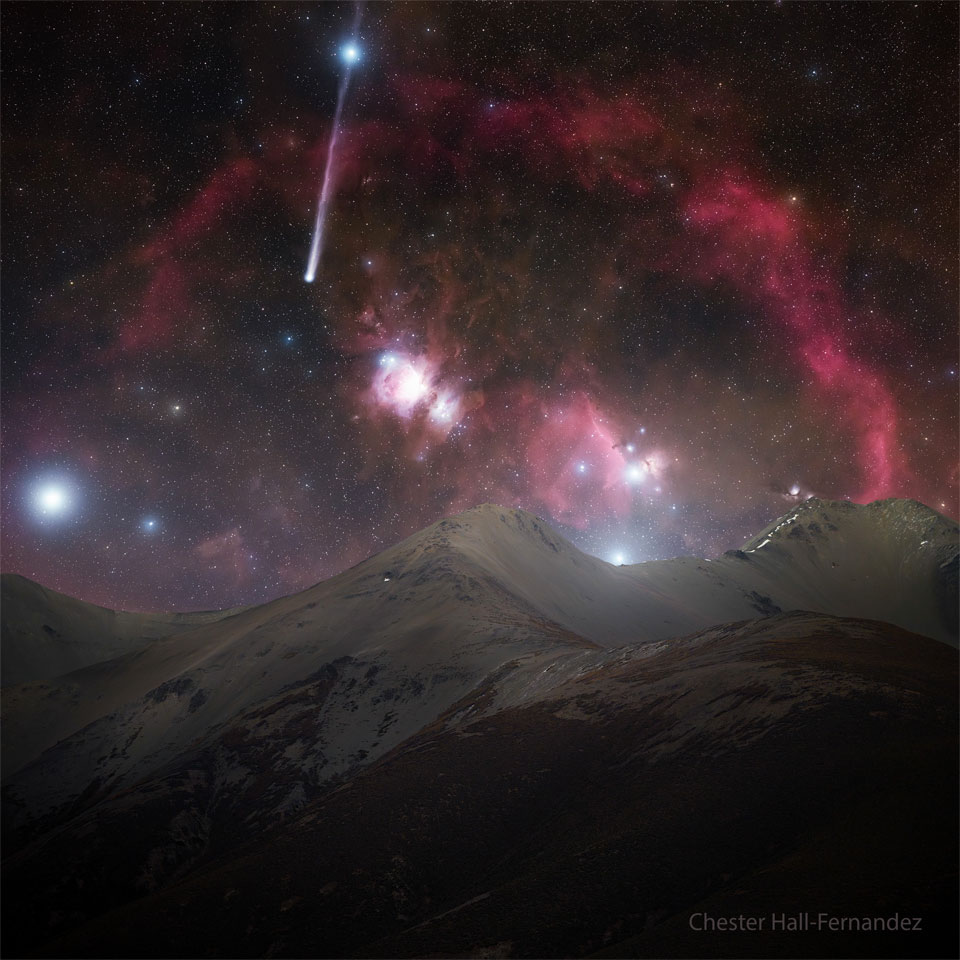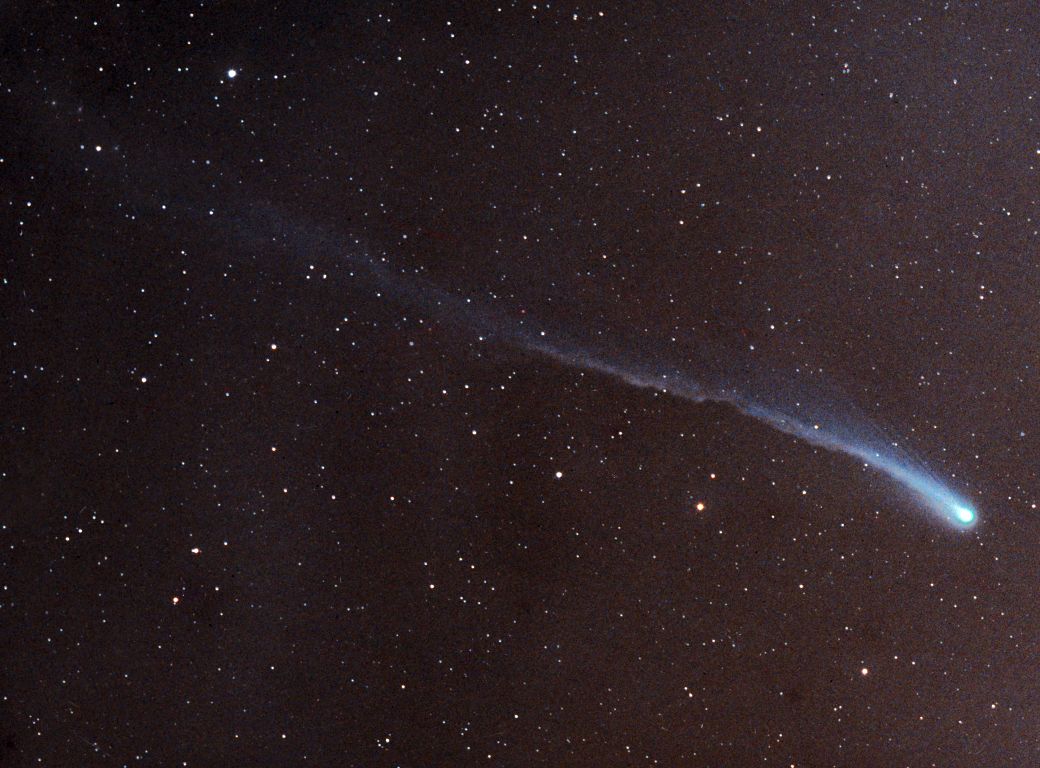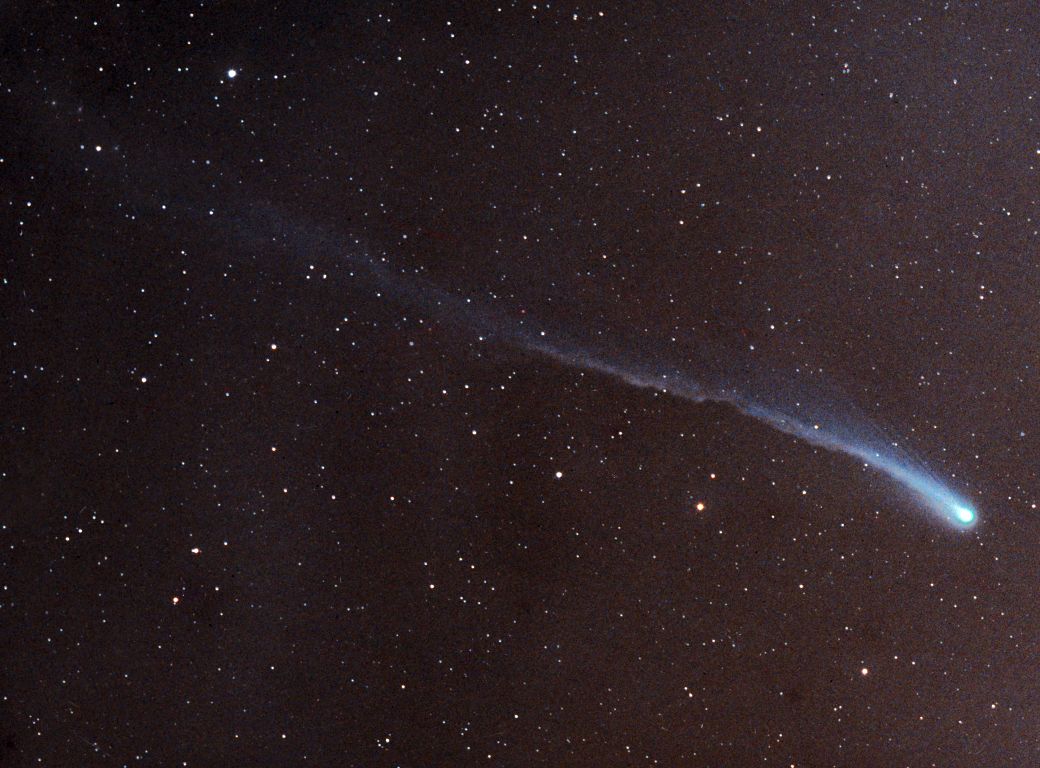
In the last week, Comet Ikeya-Zhang has become bright enough to be just visible to the unaided eye. Based on its present activity, observers are optimistic that Ikeya-Zhang will become substantially brighter. This composite color image from March 3rd, captured with a wide-field telescope, shows this active comet's bright, condensed coma and a delightful array of subtle structures in its developing tail. The bluish tail stretches for 5 degrees or so against a background of stars in the constellation Pisces. In the coming days look for the comet hanging low in the western evening sky (below a bright yellowish Mars), eventually becoming difficult to see in the March twilight. But after April begins, Ikeya-Zhang will become a predawn object climbing higher into the morning sky as the month progresses. Cataloged as comet C/2002 C1, improved orbit determinations now make it seem very likely that Comet Ikeya-Zhang has been around here before. Refined calculations indicate this comet's last trip through the inner Solar System was 341 years ago, in 1661, when it was recorded as a bright comet.
En la última semana, el Cometa Ikeya-Zhang se ha vuelto lo suficientemente brillante como para ser apenas visible a simple vista. Basándose en su actividad actual, los observadores son optimistas de que Ikeya-Zhang se volverá sustancialmente más brillante. Esta imagen compuesta a color del 3 de marzo, capturada con un telescopio de gran angular, muestra la coma brillante y condensada de este cometa activo y una deliciosa variedad de estructuras sutiles en su cola en desarrollo. La cola azulada se extiende unos 5 grados contra un fondo de estrellas en la constelación de Piscis. En los próximos días, busque el cometa colgando bajo en el cielo vespertino occidental (debajo de un Marte amarillento brillante), volviéndose eventualmente difícil de ver en el crepúsculo de marzo. Pero después de que comience abril, Ikeya-Zhang se convertirá en un objeto del amanecer ascendiendo más alto en el cielo matutino conforme avanza el mes. Catalogado como cometa C/2002 C1, las determinaciones mejoradas de la órbita ahora hacen que sea muy probable que el Cometa Ikeya-Zhang haya estado aquí antes. Los cálculos refinados indican que el último paso de este cometa a través del Sistema Solar interior fue hace 341 años, en 1661, cuando fue registrado como un cometa brillante.