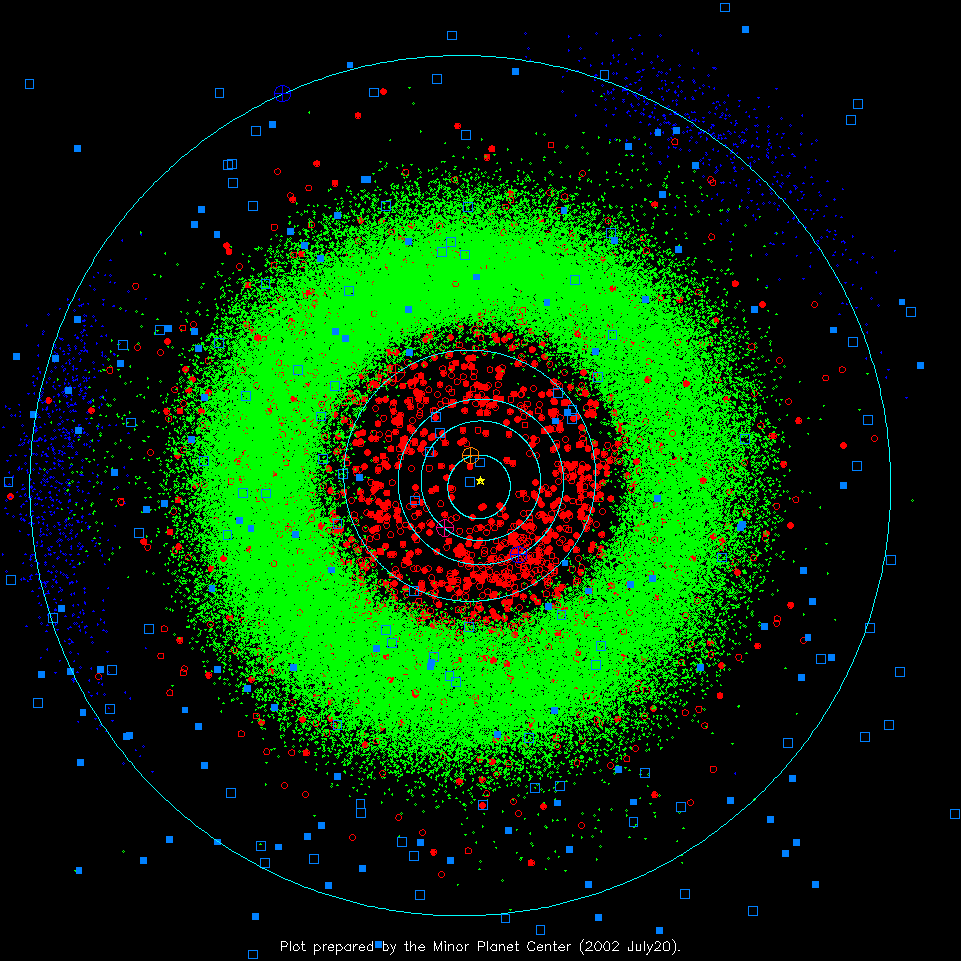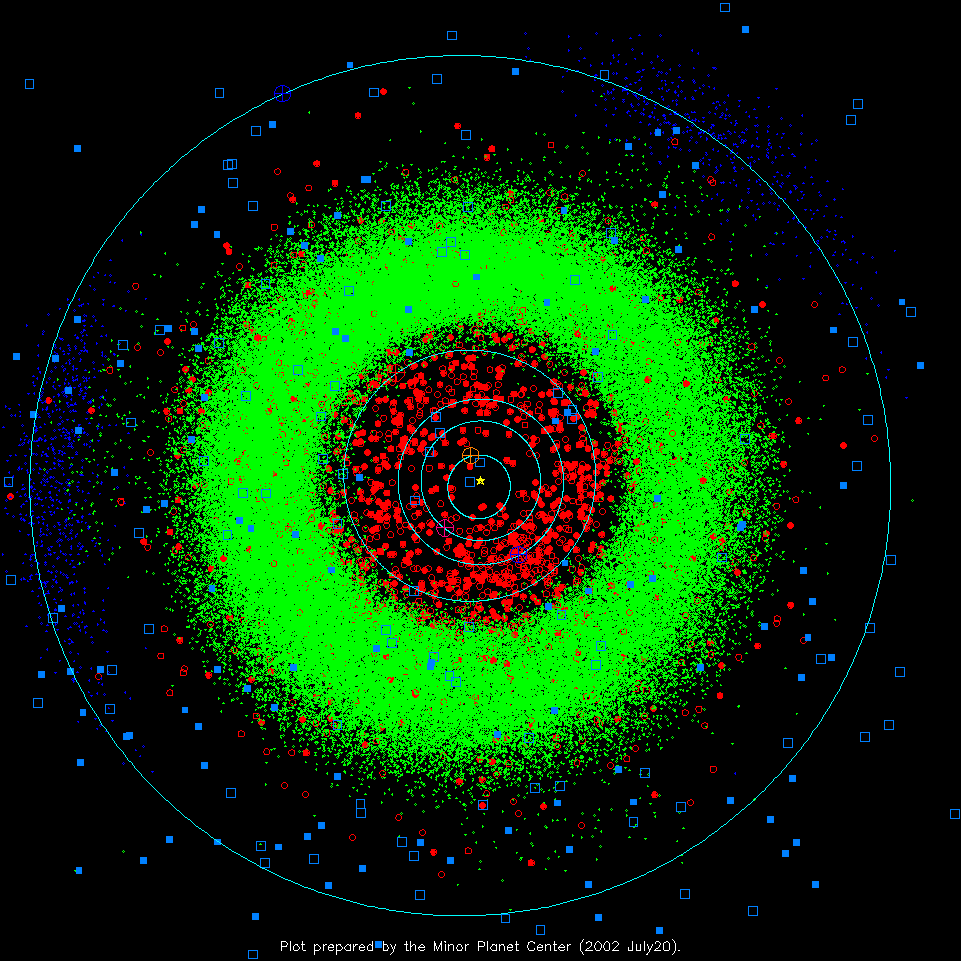
Our Solar System is a busy place. Although the major planets get the most press, a swarm of rocks, comets, and asteroids also exist. The above plot shows the placement of known inner Solar System objects on 2002 July 20. The light blue lines indicate the orbits of planets. The green dots indicate asteroids, officially known as minor planets. The red dots indicate asteroids that come within 1.3 Earth-Sun distances (AU) of the Sun and so pose an increased (although small) collision risk with the Earth. Comets appear as dark blue squares, while dark blue points are Jupiter Trojans, asteroids that orbit just ahead of, or just behind Jupiter. Note that most asteroids of the inner Solar System orbit between Mars and Jupiter in the main asteroid belt. Every day this plot shifts with objects nearer the Sun typically shifting the most. The current locations of these objects can be found here.
Nuestro Sistema Solar es un lugar activo. Aunque los planetas mayores reciben la mayor atención mediática, también existe un enjambre de rocas, cometas y asteroides. El gráfico anterior muestra la ubicación de los objetos conocidos del Sistema Solar interior al 20 de julio de 2002. Las líneas azul claro indican las órbitas de los planetas. Los puntos verdes indican asteroides, conocidos oficialmente como planetas menores. Los puntos rojos indican asteroides que se acercan a menos de 1,3 distancias Tierra-Sol (UA) del Sol y, por lo tanto, presentan un riesgo de colisión aumentado (aunque pequeño) con la Tierra. Los cometas aparecen como cuadrados azul oscuro, mientras que los puntos azul oscuro son Troyanos de Júpiter, asteroides que orbitan justo delante o justo detrás de Júpiter. Observe que la mayoría de los asteroides del Sistema Solar interior orbitan entre Marte y Júpiter en el cinturón de asteroides principal. Cada día este gráfico se desplaza, siendo los objetos más cercanos al Sol los que típicamente se desplazan más. Las ubicaciones actuales de estos objetos se pueden encontrar aquí.