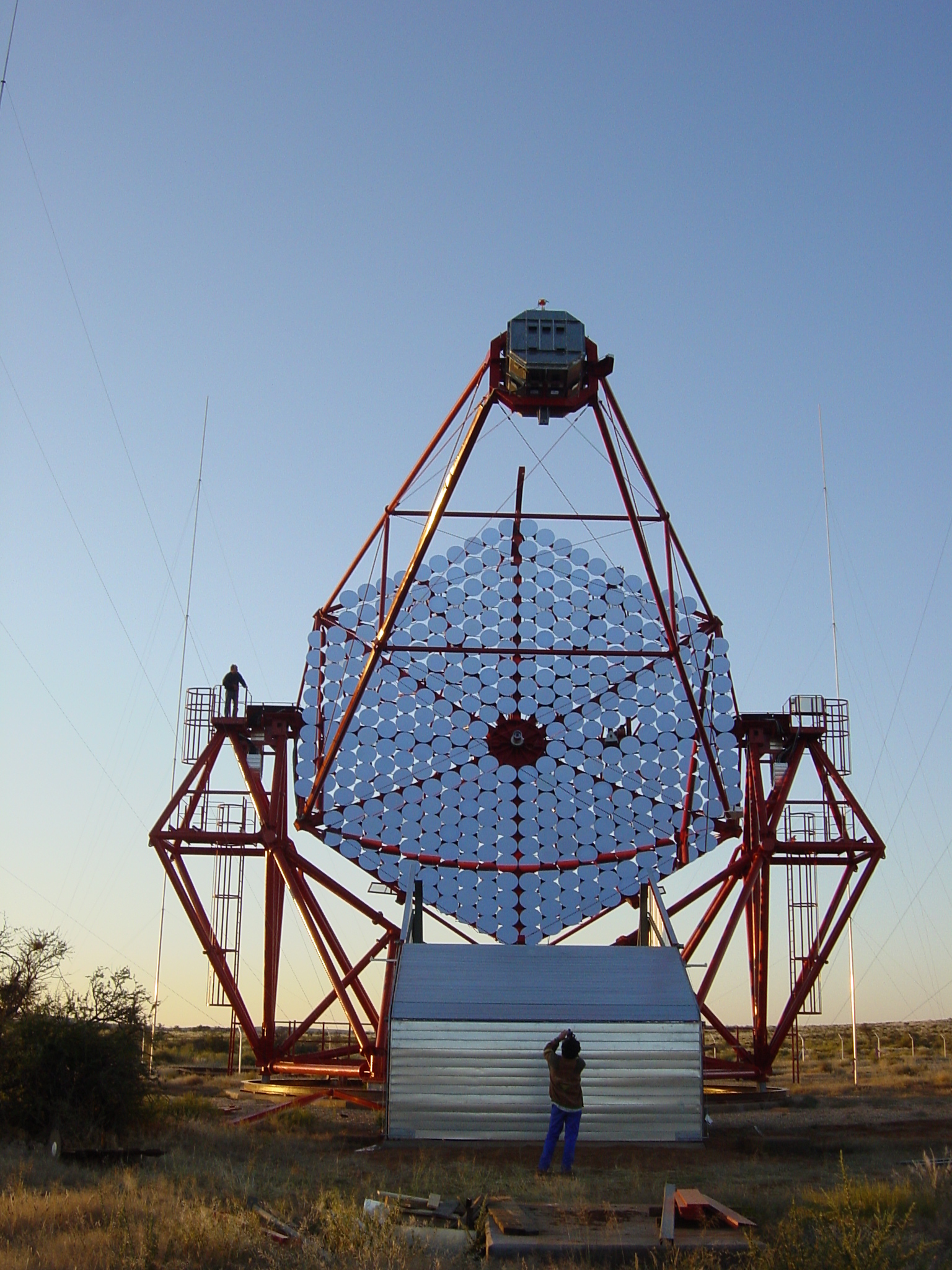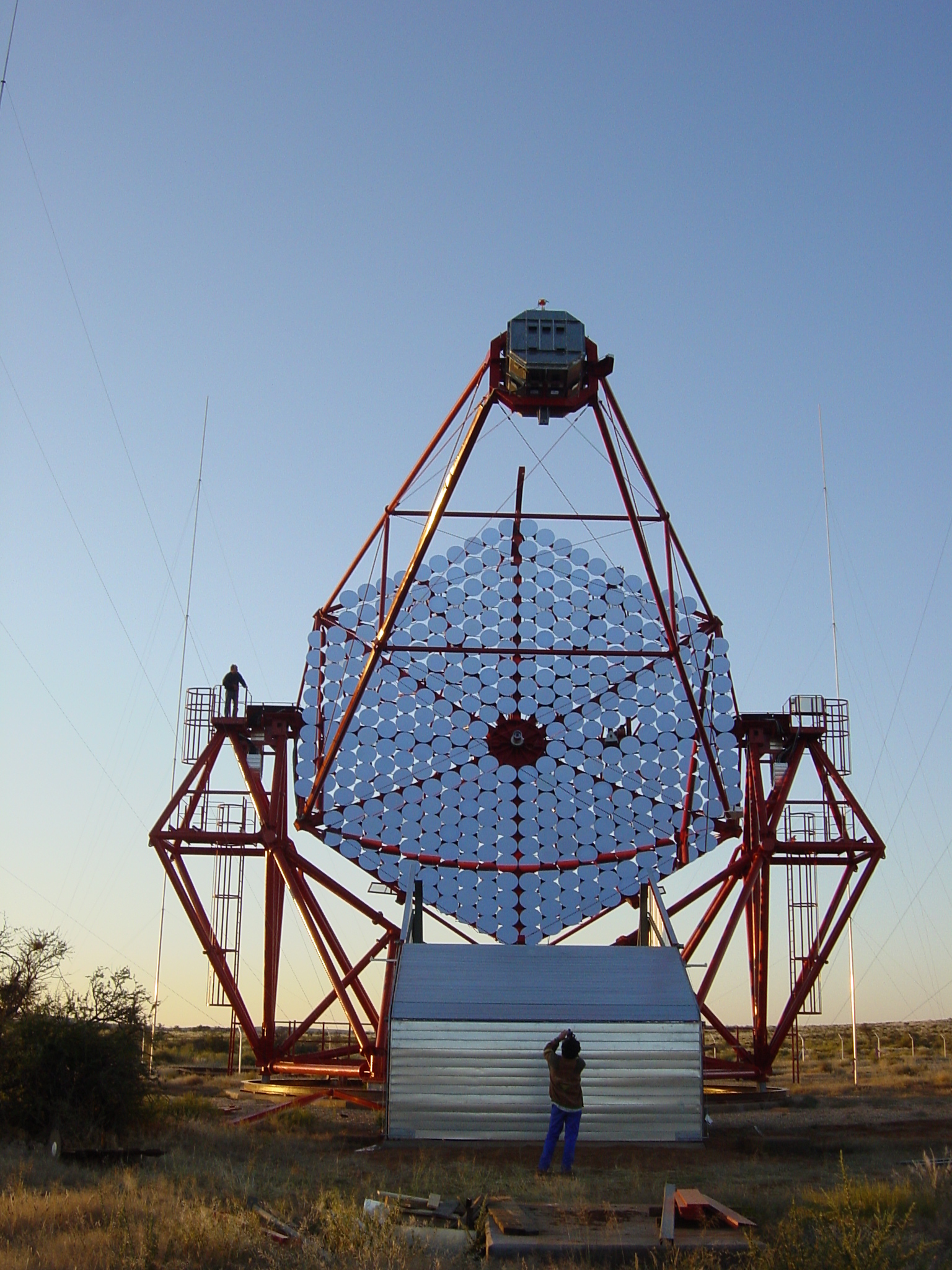
Most ground-based telescopes with lenses and mirrors are hindered by the Earth's nurturing, protective atmosphere that blurs images and scatters and absorbs light. But this telescope was designed to detect extreme gamma rays - photons with over 100 billion times the energy of visible light - and actually requires the atmosphere to operate. As the gamma rays impact the upper atmosphere they produce air showers of high-energy particles. Adorned with 382 separate mirrors each 60 centimeters in diameter and equipped with a fast camera, the telescope records in detail the brief flashes of optical light, called Cherenkov light, created by the air shower particles. The telescope pictured here was inaugurated this week and is intended to operate as part of the High Energy Stereoscopic System (HESS) array under construction in Namibia. The initial phase of HESS will consist of four telescopes working in concert to provide multiple stereoscopic views of the air showers, relating them to the energies and directions of the incoming cosmic gamma rays.
La mayoría de los telescopios terrestres con lentes y espejos se ven obstaculizados por la atmósfera terrestre protectora y nutritiva, que empaña las imágenes y dispersa y absorbe la luz. Sin embargo, este telescopio fue diseñado para detectar rayos gamma extremos —fotones con más de 100 mil millones de veces la energía de la luz visible— y de hecho requiere de la atmósfera para funcionar. Cuando los rayos gamma impactan la atmósfera superior, producen lluvia de aire de partículas de alta energía. Adornado con 382 espejos separados, cada uno de 60 centímetros de diámetro, y equipado con una cámara rápida, el telescopio registra en detalle los breves destellos de luz óptica, llamada luz Cherenkov, creados por las partículas de la lluvia de aire. El telescopio mostrado aquí fue inaugurado esta semana y está destinado a funcionar como parte del Sistema Estereoscópico de Alta Energía (HESS, por sus siglas en inglés) en construcción en Namibia. La fase inicial de HESS constará de cuatro telescopios trabajando en conjunto para proporcionar múltiples vistas estereoscópicas de las lluvias de aire, relacionándolas con las energías y direcciones de los rayos gamma cósmicos entrantes.