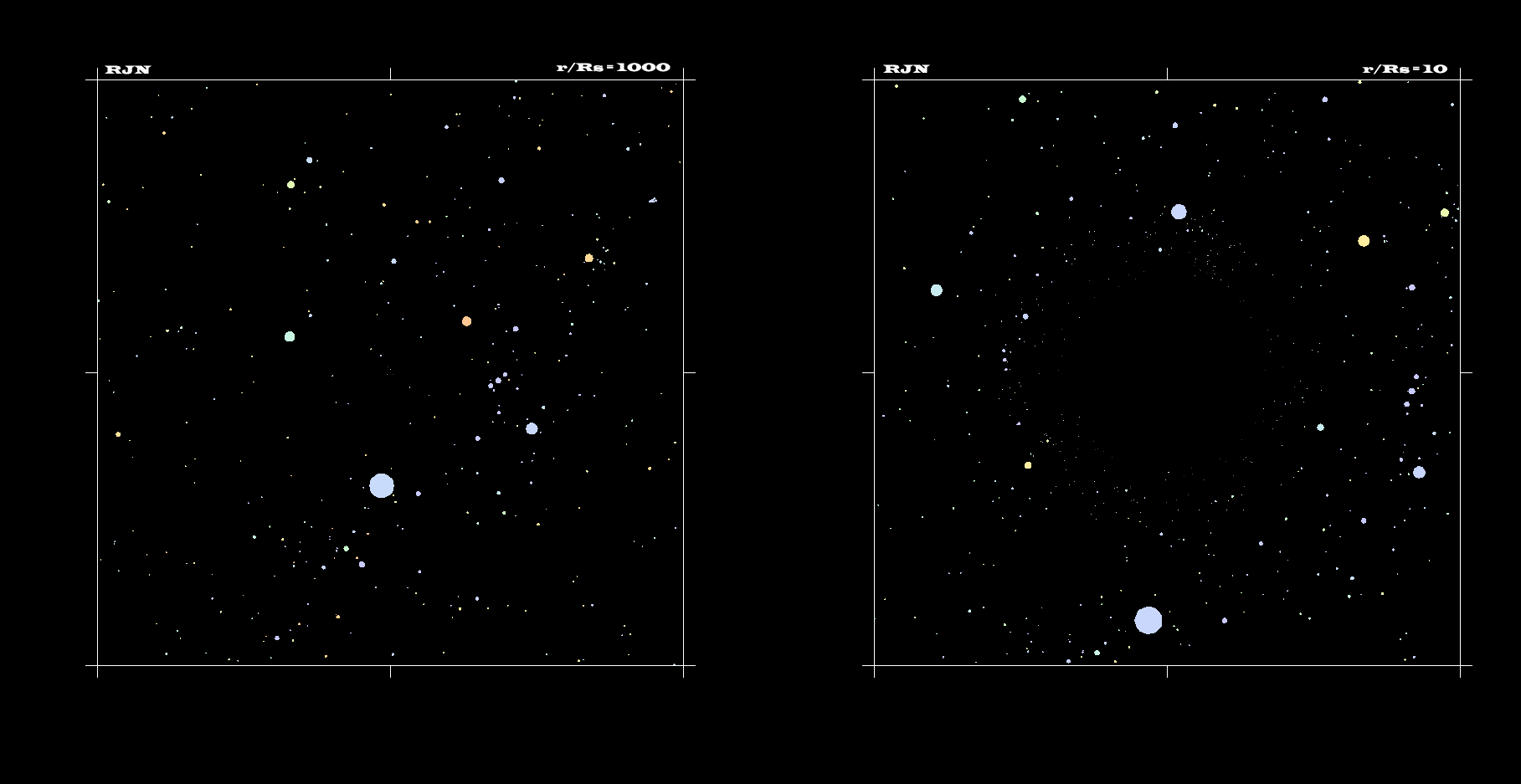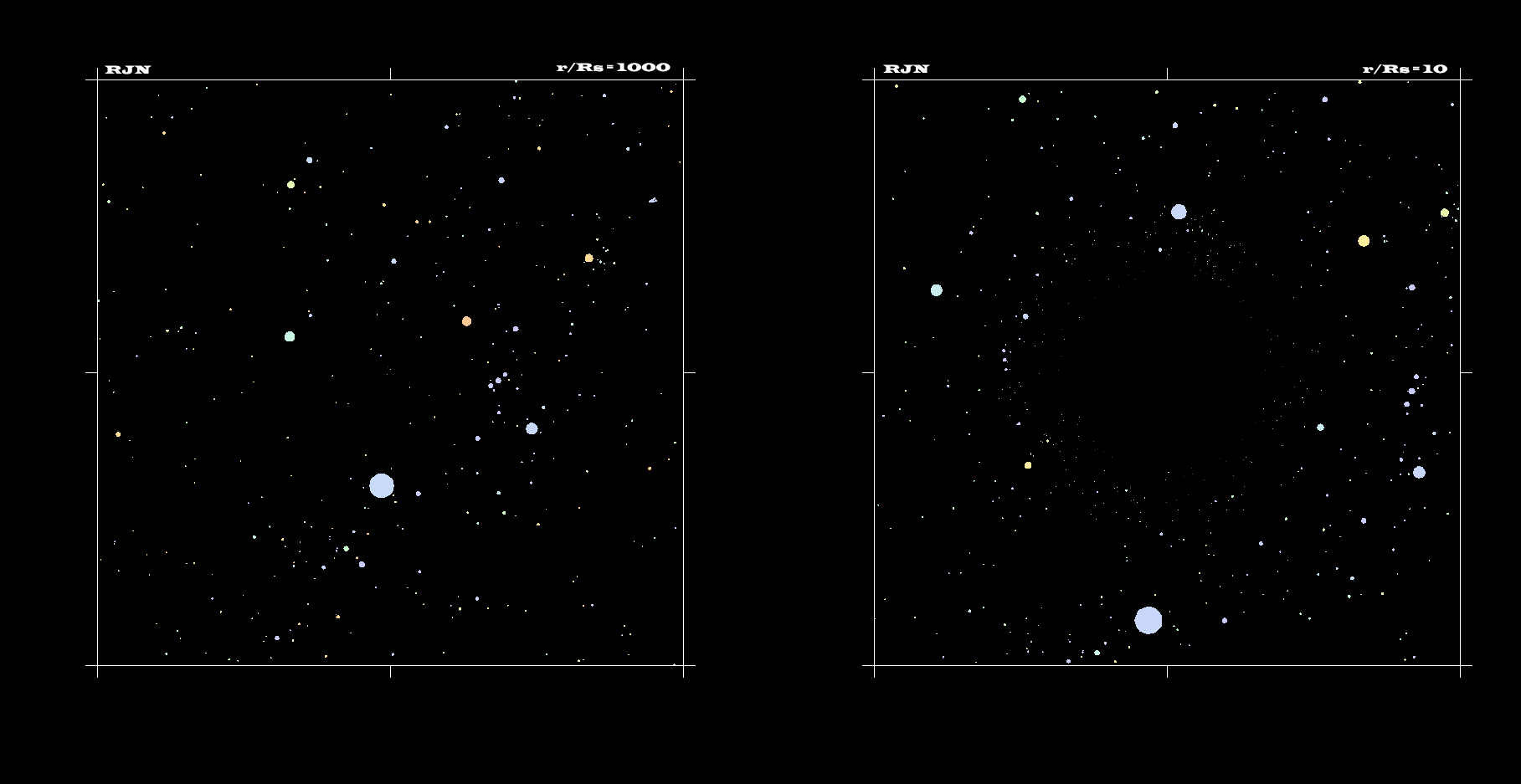
What would you see if you went right up to a black hole? Above are two computer generated images highlighting how strange things would look. On the left is a normal star field containing the constellation Orion. Notice the three stars of nearly equal brightness that make up Orion's Belt. On the right is the same star field but this time with a black hole superposed in the center of the frame. The black hole has such strong gravity that light is noticeably bent towards it - causing some very unusual visual distortions. In the distorted frame, every star in the normal frame has at least two bright images - one on each side of the black hole. In fact, near the black hole, you can see the whole sky - light from every direction is bent around and comes back to you. Black holes are thought to be the densest state of matter, and there is indirect evidence for their presence in stellar binary systems and the centers of globular clusters, galaxies, and quasars.
¿Qué verías si te acercaras directamente a un agujero negro? Arriba se presentan dos imágenes generadas por computadora que destacan cuán extraño se vería todo. A la izquierda hay un campo de estrellas normal que contiene la constelación de Orión. Observa las tres estrellas de brillo casi igual que forman el Cinturón de Orión. A la derecha se encuentra el mismo campo de estrellas, pero esta vez con un agujero negro superpuesto en el centro del marco. El agujero negro posee una gravedad tan fuerte que la luz se desvía notablemente hacia él, causando distorsiones visuales muy inusuales. En el marco distorsionado, cada estrella en el marco normal tiene al menos dos imágenes brillantes, una a cada lado del agujero negro. De hecho, cerca del agujero negro, puedes ver todo el cielo: la luz proveniente de todas direcciones se curva alrededor y regresa hacia ti. Se cree que los agujeros negros son el estado más denso de la materia, y existe evidencia indirecta de su presencia en sistemas binarios de estrellas, en los centros de cúmulos globulares, galaxias y cuásares.