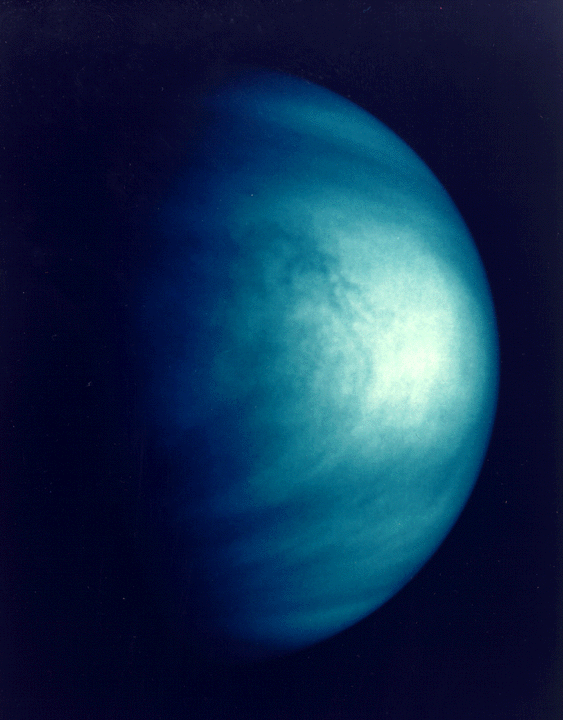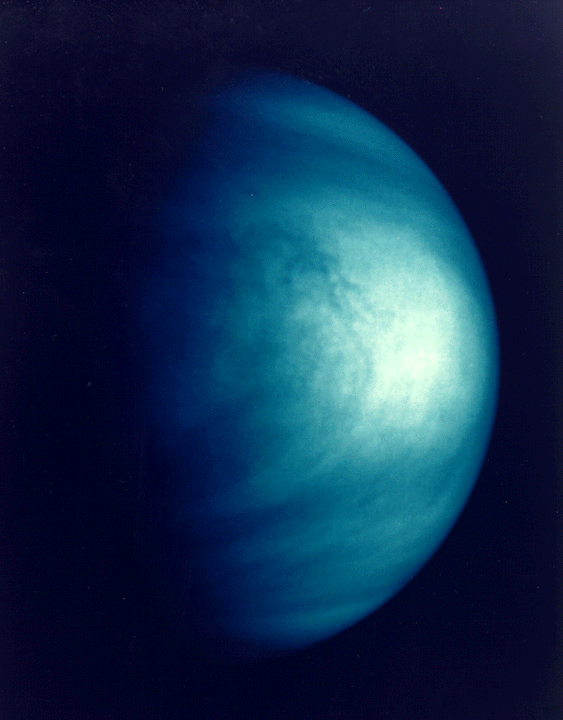
Venus, the second closest planet to the Sun, is a popular way-point for spacecraft headed for the gas giant planets in the outer reaches of the solar system. Why visit Venus first? Using a "gravity assist " maneuver, spacecraft can swing by planets and gain energy during their brief encounter saving fuel for use at the end of their long interplanetary voyage. This colorized image of Venus was recorded by the Jupiter-bound Galileo spacecraft shortly after its gravity assist flyby of Venus in February of 1990. Galileo's glimpse of the veiled planet shows structure in swirling sulfuric acid clouds. The bright area is sunlight glinting off the upper cloud deck. A recent intriguing but controversial hypothesis holds that living microbes might exist in the upper clouds of Venus.
Venus, el segundo planeta más cercano al Sol, es un destino frecuente para las naves espaciales que se dirigen hacia los gigantes gaseosos en los confines del sistema solar. ¿Por qué visitar Venus primero? Mediante una maniobra de "asistencia gravitatoria", las naves espaciales pueden pasar cerca de los planetas y ganar energía durante su breve encuentro, ahorrando combustible para usarlo al final de su largo viaje interplanetario. Esta imagen coloreada de Venus fue capturada por la nave espacial Galileo, destinada a Júpiter, poco después de su sobrevuelo de asistencia gravitatoria sobre Venus en febrero de 1990. La observación de Galileo del planeta envuelto muestra estructuras en las nubes de ácido sulfúrico que se arremolinan. El área brillante es la luz solar reflejándose en la cubierta nubosa superior. Una hipótesis reciente intrigante pero controvertida sostiene que microorganismos vivos podrían existir en las nubes superiores de Venus.