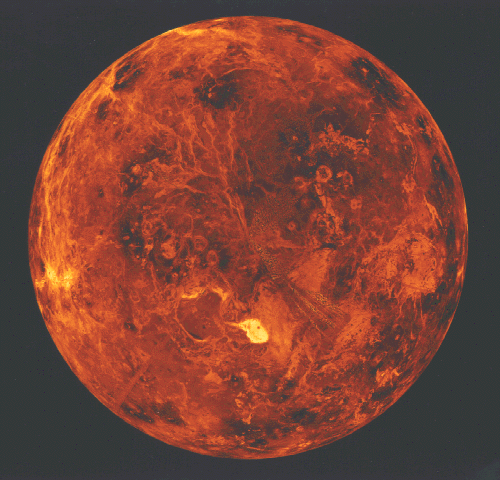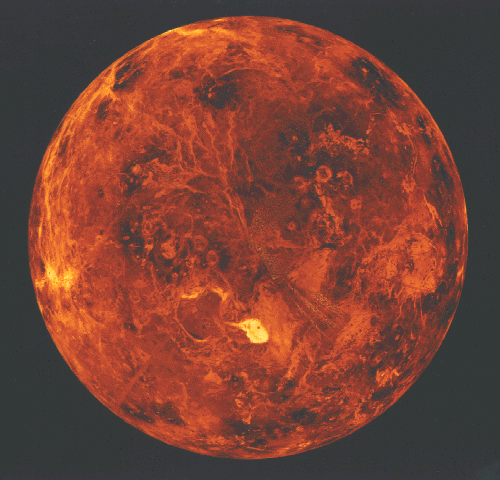
If you could look down on the North Pole of Venus what would you see? The Magellan probe that orbited Venus from 1990 to 1994 was able to peer through the thick Venusian clouds and build up the above image by emitting and re-detecting cloud-penetrating radar. Visible as the bright patch below central North is Venus' highest mountain Maxwell Montes. Other notable features include numerous mountains, coronas, impact craters, tessera, ridges, and lava flows. Although the size and mass of Venus are similar to the Earth, its thick carbon-dioxide atmosphere has trapped heat so efficiently that surface temperature usually exceeds 700 kelvins, hot enough to melt lead. News: Are you ready for tomorrow's lunar eclipse? Times | Webcast | Photo Tips
¿Qué verías si pudieras observar el Polo Norte de Venus desde arriba? La sonda Magallanes, que orbitó Venus desde 1990 hasta 1994, fue capaz de traspasar las densas nubes venusianas y construir la imagen anterior emitiendo y redetectando radar que penetra las nubes. Visible como el parche brillante debajo del norte central se encuentra la montaña más alta de Venus, Montes Maxwell. Otras características notables incluyen numerosas montañas, coronas, cráteres de impacto, teselas, crestas y flujos de lava. Aunque el tamaño y la masa de Venus son similares a los de la Tierra, su densa atmósfera de dióxido de carbono ha atrapado el calor tan eficientemente que la temperatura superficial generalmente supera los 700 kelvins, lo suficientemente caliente para fundir plomo.