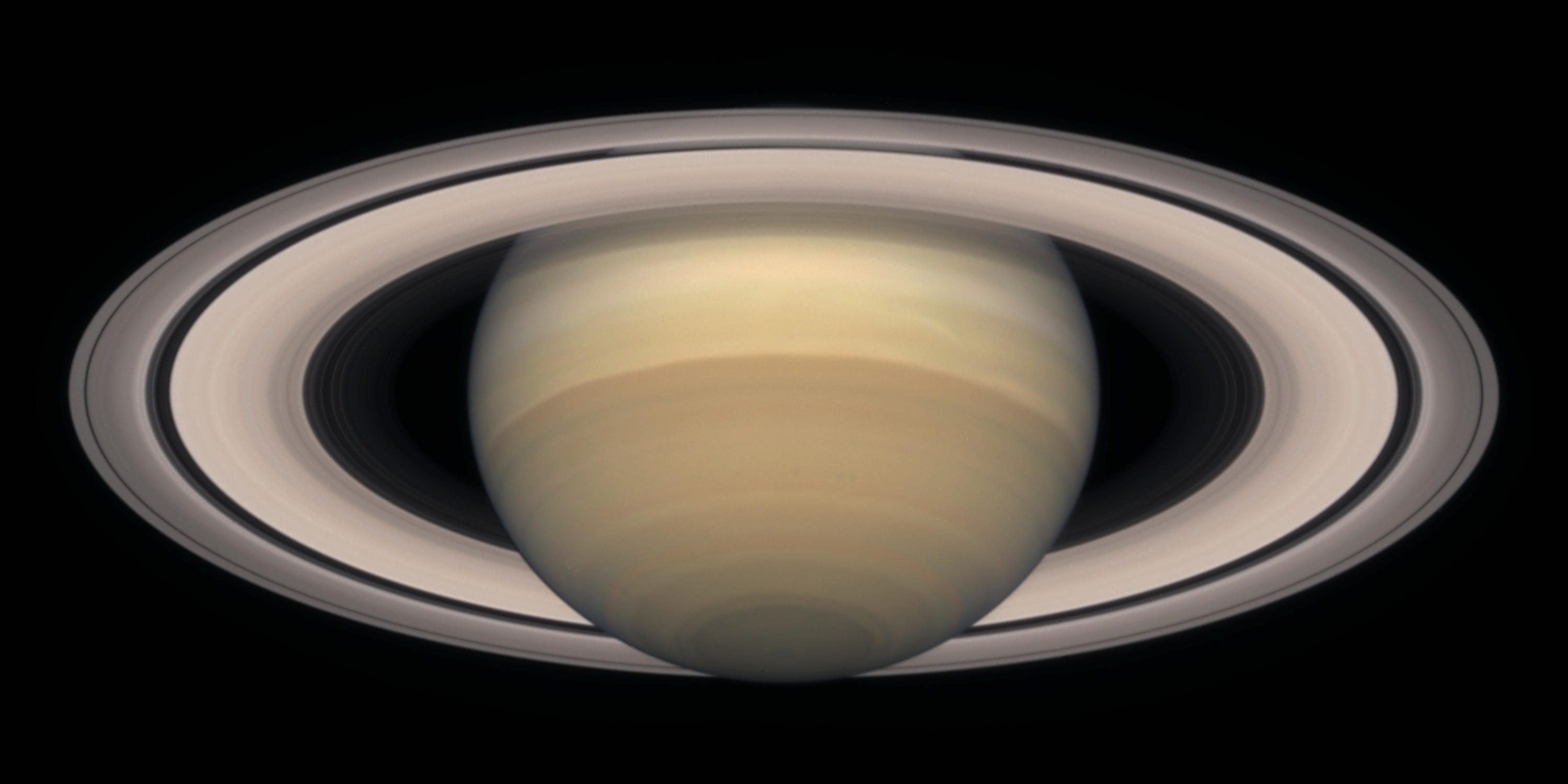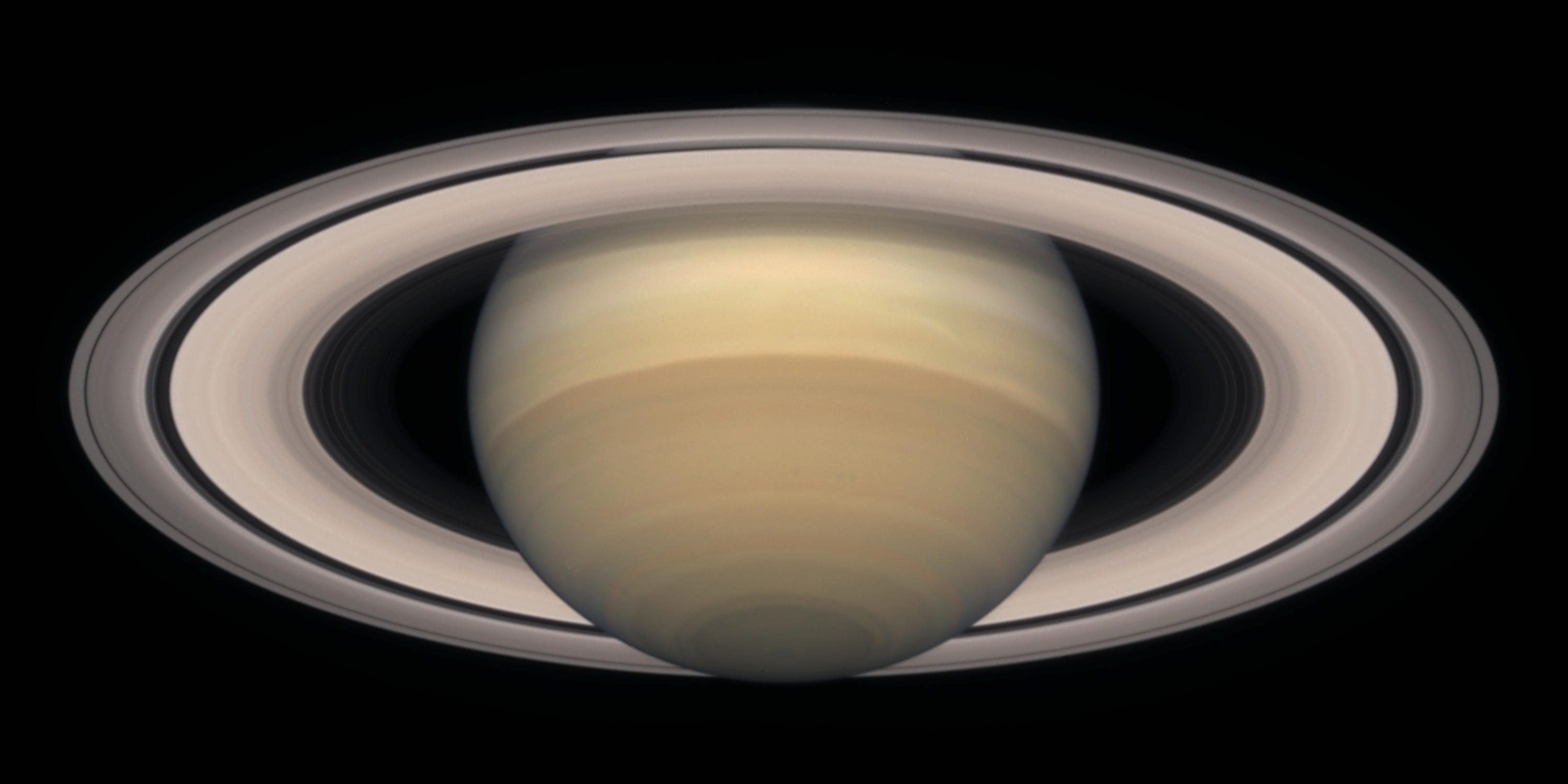
Born in 1564, Galileo used a telescope to explore the Solar System. In 1610, he became the first to be amazed by Saturn's rings, After nearly 400 years, Saturn's magnificent rings still offer one of the most stunning astronomical sights. Uniquely bright compared to the rings of the other gas giants, Saturn's ring system is around 250,000 kilometers wide but in places only a few tens of meters thick. Modern astronomers believe the rings are perhaps only a hundred million years young. Accumulating dust and dynamically interacting with Saturn's moons, the rings may eventually darken and sag toward the gas giant, losing their lustre over the next few hundred million years. Since Galileo, astronomers have subjected the entrancing rings to intense scrutiny to unlock their secrets. On December 31, 2003, Saturn made its closest approach to Earth for the next 29 years, a mere 1,200,000,000 kilometers. It will remain a tantalizing target for earthbound telescopes in the coming months.
Nacido en 1564, Galileo utilizó un telescopio para explorar el Sistema Solar. En 1610, se convirtió en el primero en quedar asombrado por los anillos de Saturno. Después de casi 400 años, los magníficos anillos de Saturno siguen ofreciendo uno de los paisajes astronómicos más asombrosos. Únicamente brillantes en comparación con los anillos de los otros gigantes gaseosos, el sistema de anillos de Saturno tiene alrededor de 250 000 kilómetros de ancho, pero en algunos lugares tiene solo unos pocos metros de espesor. Los astrónomos modernos creen que los anillos podrían tener quizás solo cien millones de años. Acumulando polvo y interactuando dinámicamente con las lunas de Saturno, los anillos eventualmente se oscurecerán y se hundirán hacia el gigante gaseoso, perdiendo su brillo en los próximos cientos de millones de años. Desde Galileo, los astrónomos han sometido los fascinantes anillos a un estudio intenso para desentrañar sus secretos. El 31 de diciembre de 2003, Saturno alcanzó su punto más cercano a la Tierra para los próximos 29 años, una distancia de solo 1 200 000 000 kilómetros. Será un objetivo tentador para los telescopios terrestres en los próximos meses.