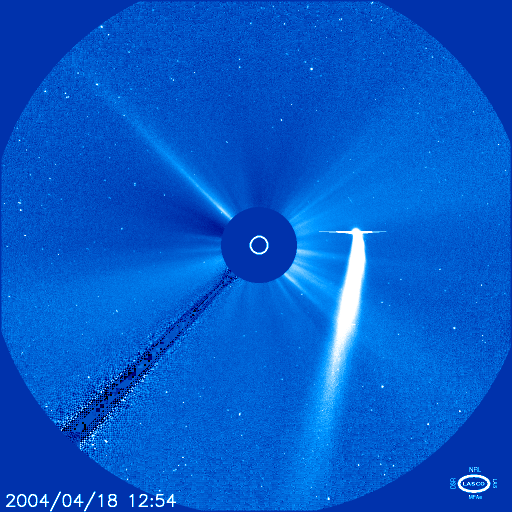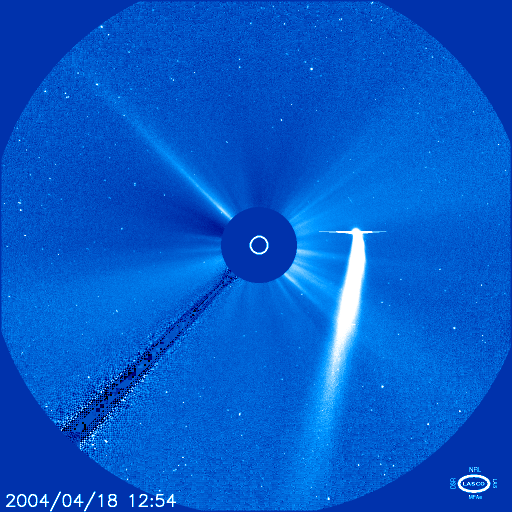
Today, Comet Bradfield is passing the Sun. The above image, taken yesterday in the direction of the Sun by the SOHO LASCO instrument, shows the comet and its dust tail as the elongated white streak. The Sun would normally be seen in the very center but has been blocked from view. Comet C/2004 F4 (Bradfield) was discovered just one month ago and has brightened dramatically as it neared the Sun. Careful sky gazers can see Comet Bradfield with the unaided eye near the Sun, although NASA's sun-orbiting SOHO satellite has the best view. During the day, Comet Bradfield will continually shift inside the LASCO frame as it rounds the Sun. There is even the possibility that the comet will break up. If not, the bright comet's trajectory will carry it outside the field of LASCO sometime tomorrow. Along with T7 and Q4, Comet Bradfield is now the third comet that is currently visible on the sky with the unaided eye, the most ever of which we are aware and quite possibly the most in recorded history.
Hoy, el Cometa Bradfield está pasando por el Sol. La imagen anterior, tomada ayer en dirección al Sol por el instrumento LASCO de SOHO, muestra el cometa y su cola de polvo como la raya blanca alargada. El Sol normalmente se vería en el centro mismo, pero ha sido bloqueado de la vista. El Cometa C/2004 F4 (Bradfield) fue descubierto hace apenas un mes y se ha iluminado dramáticamente al acercarse al Sol. Los observadores del cielo cuidadosos pueden ver el Cometa Bradfield a simple vista cerca del Sol, aunque el satélite SOHO que orbita el Sol de la NASA tiene la mejor vista. Durante el día, el Cometa Bradfield se desplazará continuamente dentro del marco de LASCO mientras rodea el Sol. Existe incluso la posibilidad de que el cometa se desintegre. Si no, la trayectoria del cometa brillante lo llevará fuera del campo de LASCO en algún momento mañana. Junto con T7 y Q4, el Cometa Bradfield es ahora el tercer cometa que actualmente es visible en el cielo a simple vista, lo más que hemos conocido y posiblemente lo más en la historia registrada.