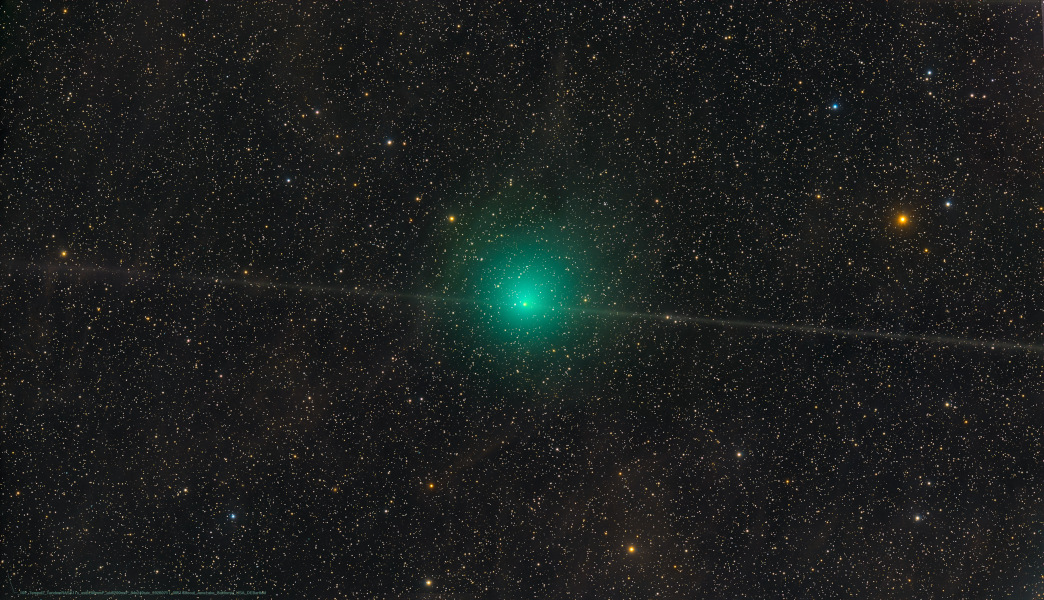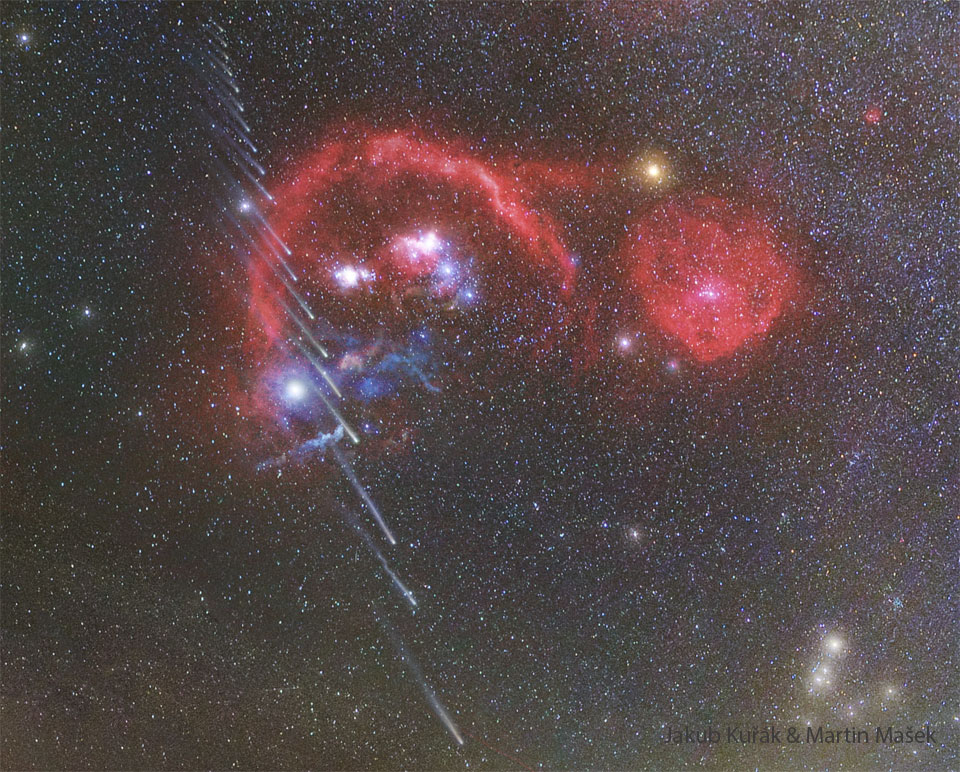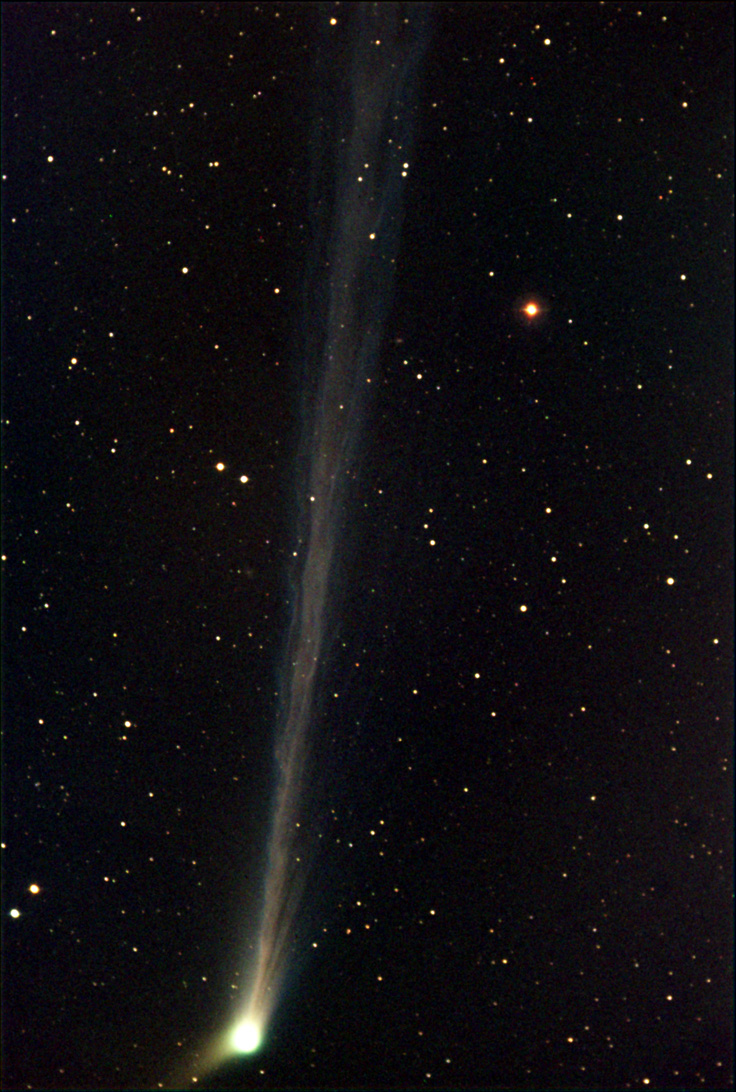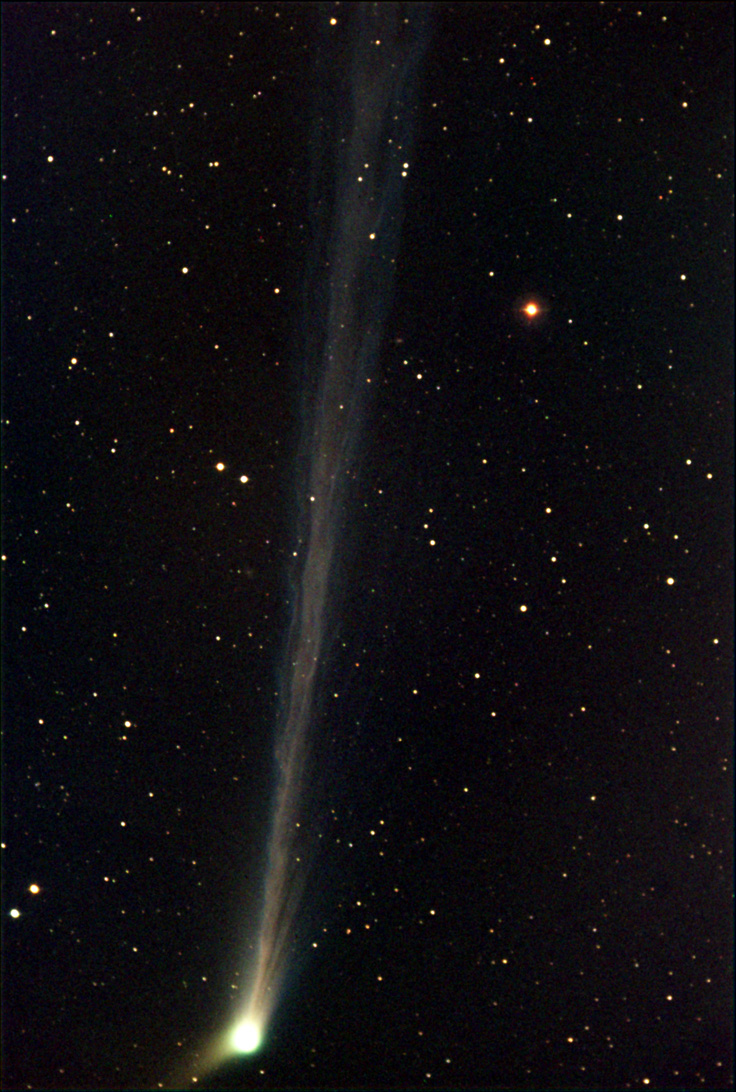
Discovered by the the Lincoln Near Earth Asteroid Research (LINEAR) project in October of 2002, comet C/2002 T7 is now visiting the inner solar system, making its closest approach (see animation by L. Koehn) to the Sun tomorrow, April 23rd. Emerging from the solar glare, the comet is now just visible to the unaided eye in the constellation Pisces, near the eastern horizon in morning twilight. In this gorgeous telescopic view recorded before dawn yesterday, the clearly active comet has developed an extensive, complex tail extending over 2 degrees in the anti-sunward direction, and a pronounced anti-tail or anomalous tail. Later next month this comet should appear brighter, making its closest approach to planet Earth on May 19th. In fact, it could share southern skies with another naked-eye comet, also anticipated to brighten in May, designated C/2001 Q4 (NEAT).
Descubierto por el proyecto Lincoln Near Earth Asteroid Research (LINEAR) en octubre de 2002, el cometa C/2002 T7 está visitando actualmente el sistema solar interior, realizando su máxima aproximación al Sol mañana, 23 de abril. Emergiendo del resplandor solar, el cometa es ahora apenas visible al ojo desnudo en la constelación de Piscis, cerca del horizonte oriental en el crepúsculo matutino. En esta magnífica imagen telescópica grabada antes del amanecer ayer, el cometa claramente activo ha desarrollado una cola extensa y compleja que se extiende más de 2 grados en la dirección antisolar, así como una pronunciada anticola o cola anómala. Durante el próximo mes, este cometa debería parecer más brillante, realizando su máxima aproximación al planeta Tierra el 19 de mayo. De hecho, podría compartir los cielos del sur con otro cometa visible al ojo desnudo, también se espera que brille en mayo, designado C/2001 Q4 (NEAT).