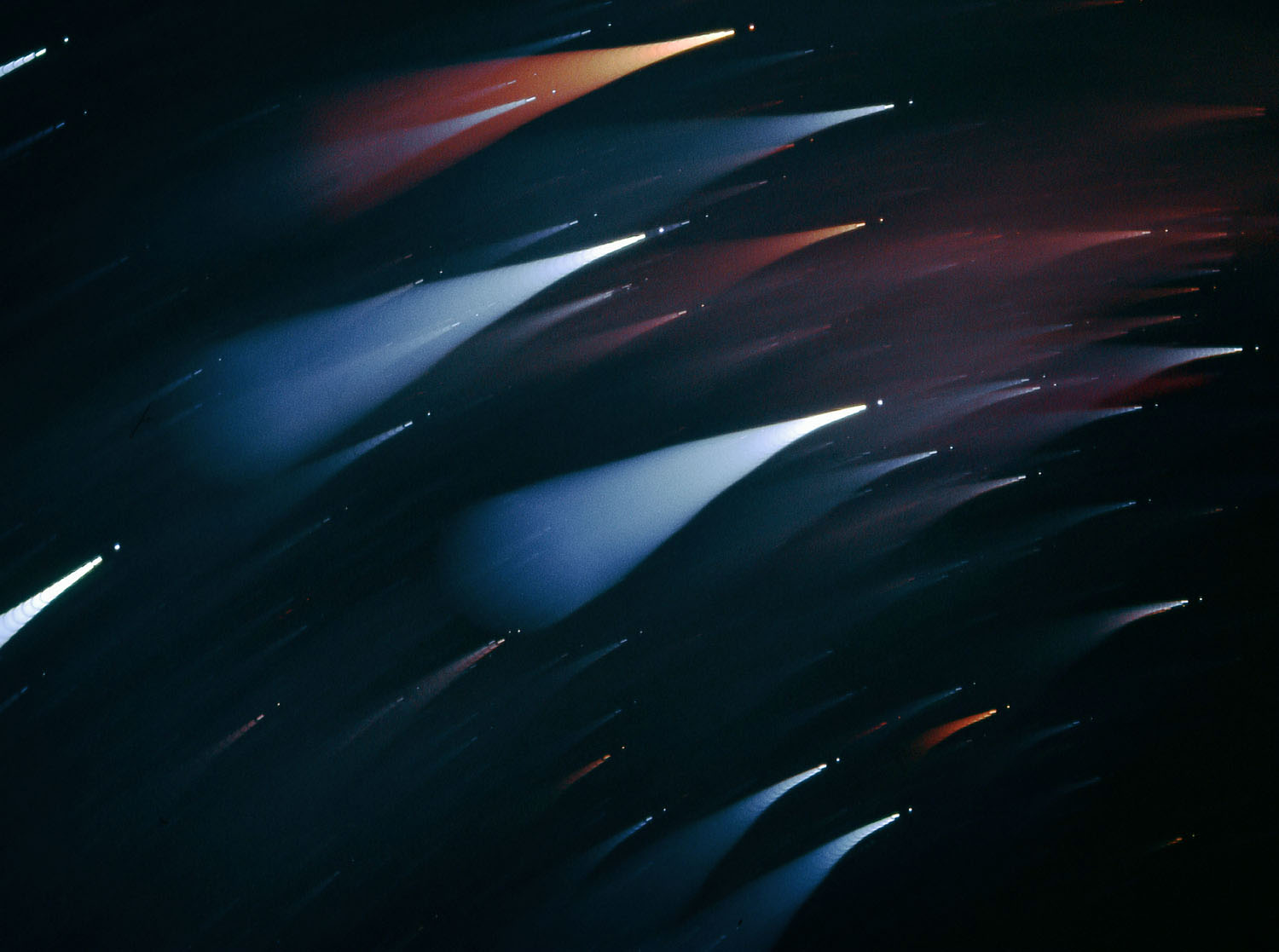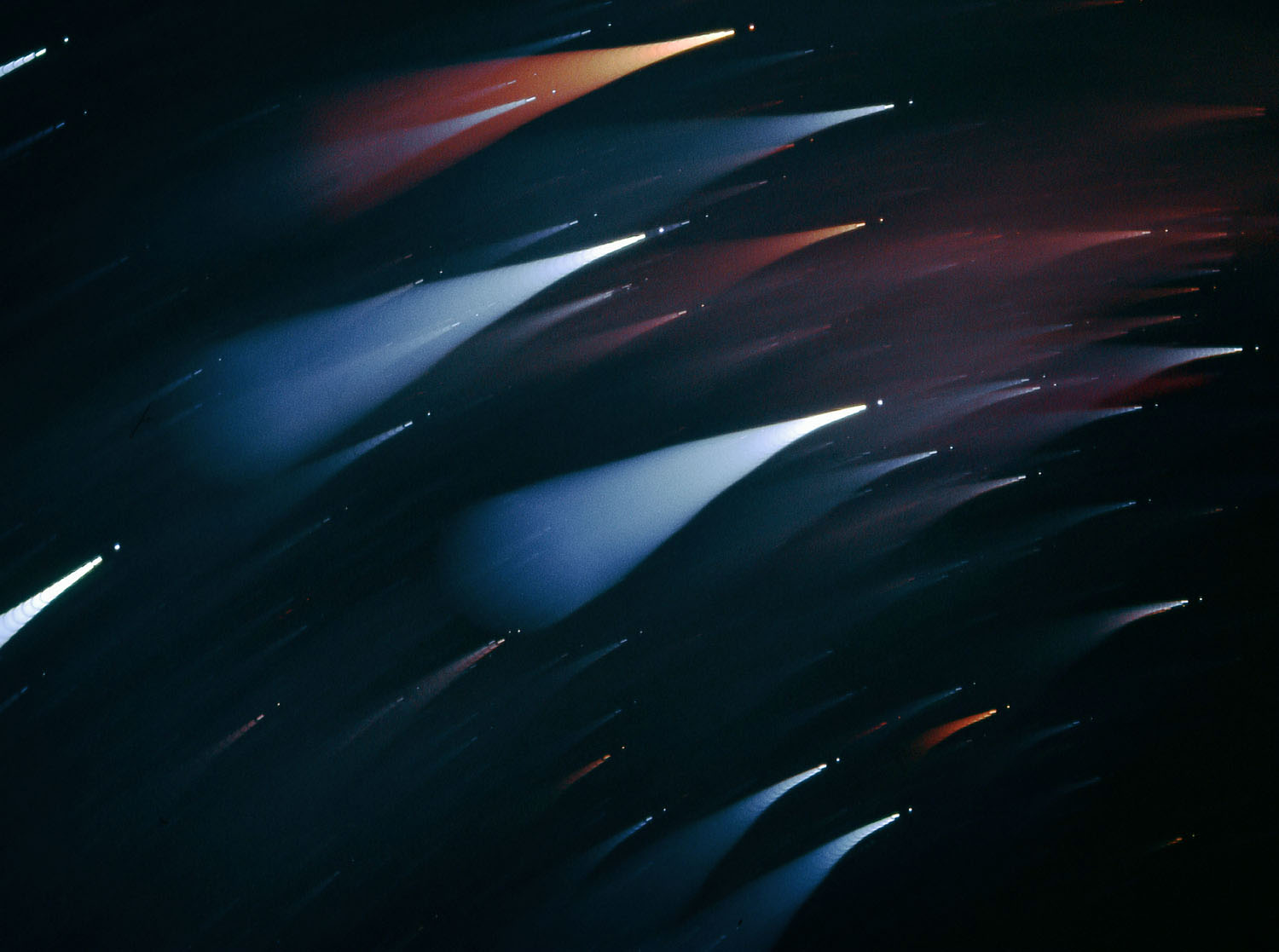
Fix your camera to a tripod, lock the shutter open, and you can easily record an image of star trails, the graceful concentric arcs traced by the stars as planet Earth rotates on its axis. Gradually change the focus of the camera lens during the exposure, and you could end up with a dramatic picture like this one where the out-of-focus portion of the trail shows off the star's color. In this case, the subject is one of the most famous constellations in the night sky, Crux, the Southern Cross. Gacrux or gamma Crucis is the bright red giant star only 88 light-years distant that forms the top of the Cross seen here near top center. Acrux, the hot blue star at the bottom of the Cross is about 320 light-years distant. Actually a binary star system, Acrux is the alpha star of the compact Southern Cross and lies along a line pointing from Gacrux to the South Celestial Pole, off the lower right edge of the picture. Adding a separate short exposure to the end of the step-focussed trails to better show the positions of the stars themselves, astronomer Stefan Seip recorded this remarkable image last May in the dark night skies above Namibia.
Si fija su cámara a un trípode, mantiene el obturador abierto, puede registrar fácilmente una imagen de senderos estelares, los arcos concéntricos y elegantes trazados por las estrellas conforme la Tierra gira sobre su eje. Si cambia gradualmente el enfoque del objetivo de la cámara durante la exposición, podría obtener una imagen espectacular como esta, donde la porción desenfocada del sendero muestra el color de la estrella. En este caso, el objeto es una de las constelaciones más famosas del cielo nocturno, Crux, la Cruz del Sur. Gacrux o gamma Crucis es la brillante estrella gigante roja a solo 88 años luz de distancia que forma la parte superior de la Cruz visible aquí cerca del centro superior. Acrux, la estrella azul caliente en la base de la Cruz, se encuentra a aproximadamente 320 años luz de distancia. Sistema binario en realidad, Acrux es la estrella alfa de la compacta Cruz del Sur y se sitúa a lo largo de una línea que apunta desde Gacrux hacia el Polo Celestial Sur, fuera del borde inferior derecho de la imagen. Añadiendo una exposición corta separada al final de los senderos de enfoque gradual para mostrar mejor las posiciones de las propias estrellas, el astrónomo Stefan Seip registró esta imagen notable en mayo pasado en los cielos nocturnos oscuros sobre Namibia.