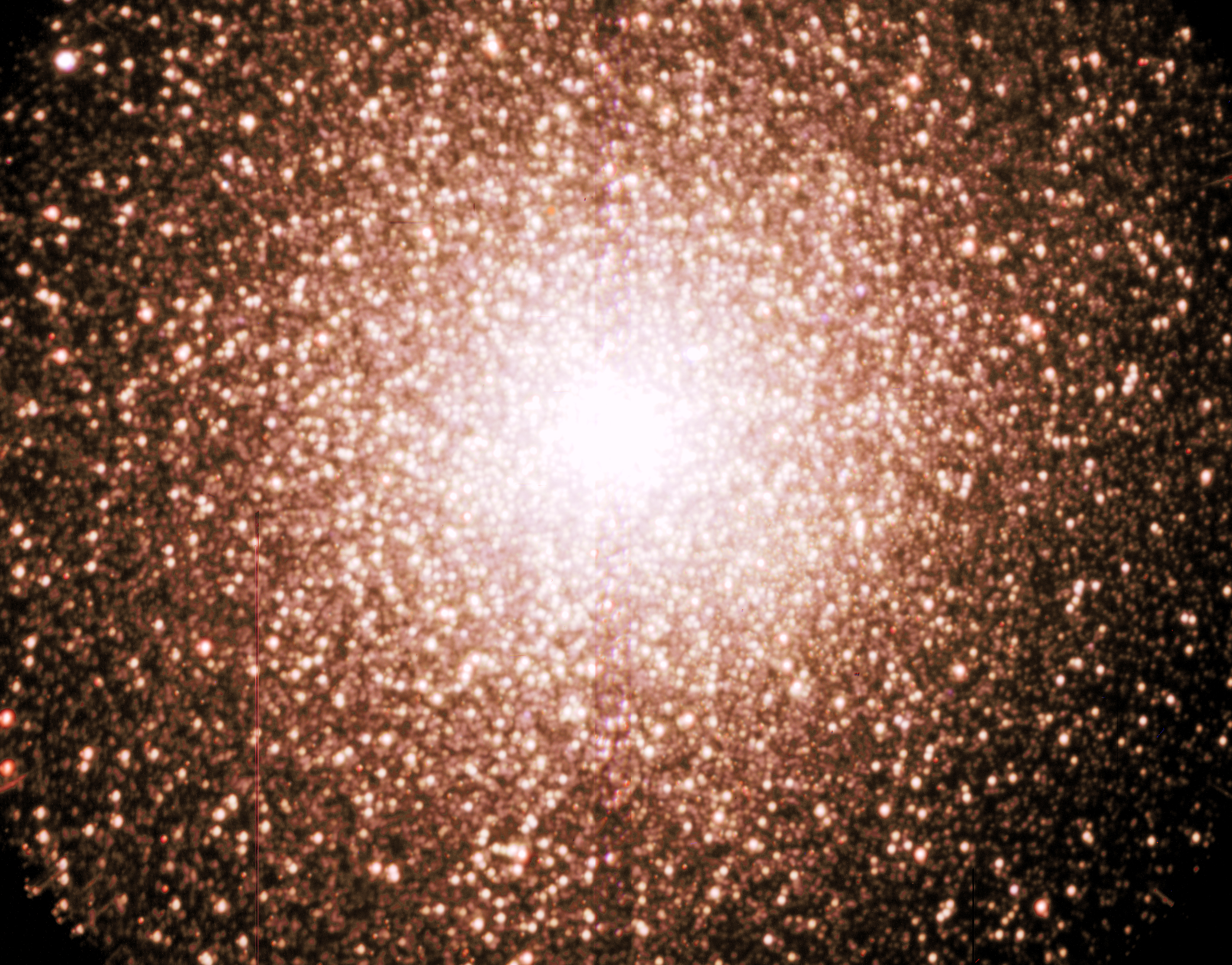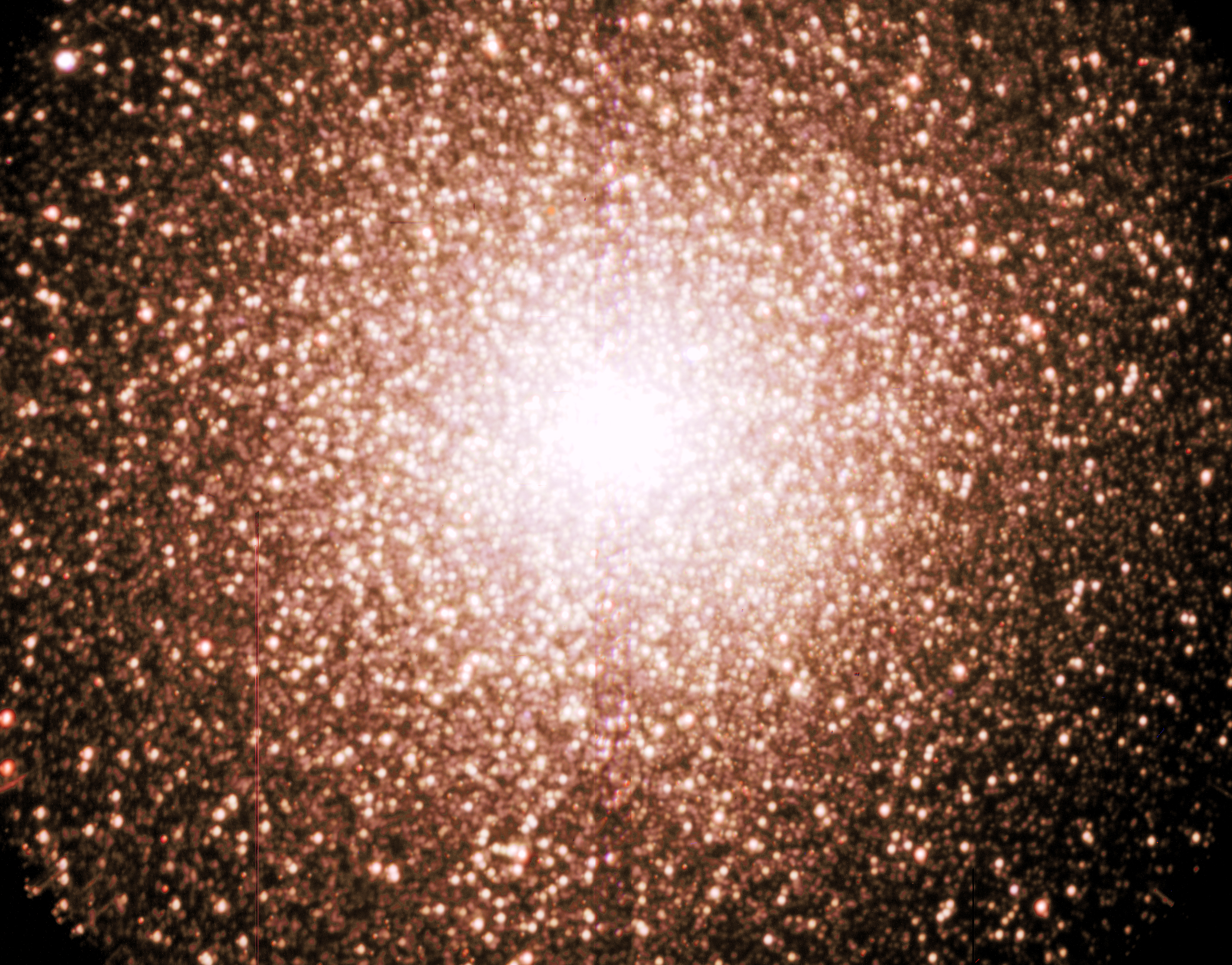
Stars come in bunches. Of the over 200 globular star clusters that orbit the center of our Milky Way Galaxy, 47 Tucanae is the second brightest globular cluster, behind Omega Centauri. Known to some affectionately as 47 Tuc or NGC 104, it is only visible from Earth's Southern Hemisphere. It was therefore a fitting target for first light observations of the gigantic new 10-meter diameter Southern African Large Telescope (SALT) this past week. The resulting image is shown above. Light takes about 20,000 years to reach us from 47 Tuc which can be seen near the Small Magellanic Cloud toward the constellation of Tucana. The dynamics of stars near the center of 47 Tuc are not well understood, particularly why there are so few binary systems there.
Las estrellas vienen en grupos. De los más de 200 cúmulos estelares globulares que orbitan alrededor del centro de nuestra Galaxia Vía Láctea, 47 Tucanae es el segundo cúmulo globular más brillante, solo superado por Omega Centauri. Conocido por algunos cariñosamente como 47 Tuc o NGC 104, solo es visible desde el Hemisferio Sur de la Tierra. Por lo tanto, fue un objetivo apropiado para las observaciones de primera luz del gigantesco nuevo Telescopio de Gran Apertura del Sur Africano (SALT) de 10 metros de diámetro la semana pasada. La imagen resultante se muestra arriba. La luz tarda aproximadamente 20.000 años en llegarnos desde 47 Tuc, que se puede ver cerca de la Pequeña Nube de Magallanes hacia la constelación de Tucana. La dinámica de las estrellas cerca del centro de 47 Tuc no se comprende bien, en particular por qué hay tan pocos sistemas binarios allí.