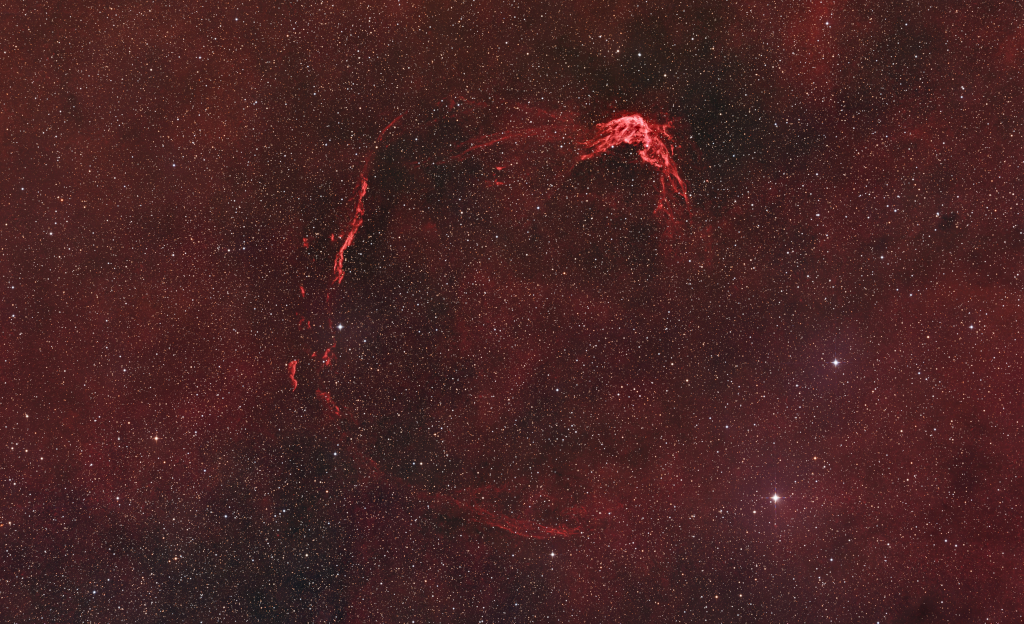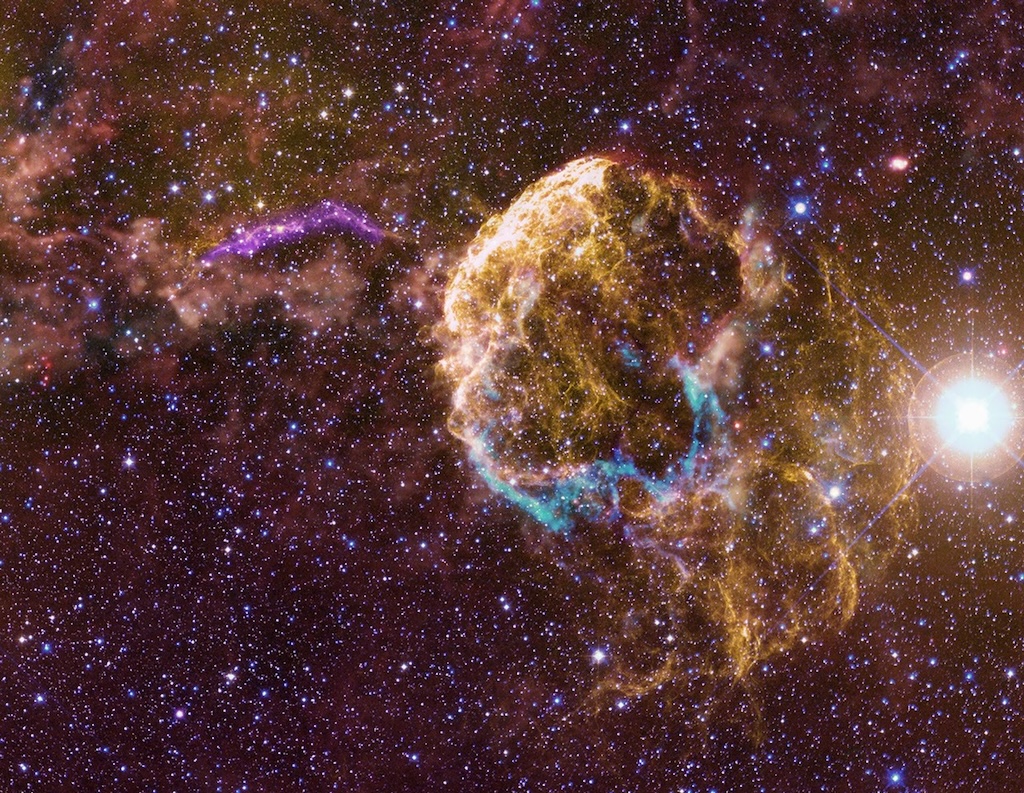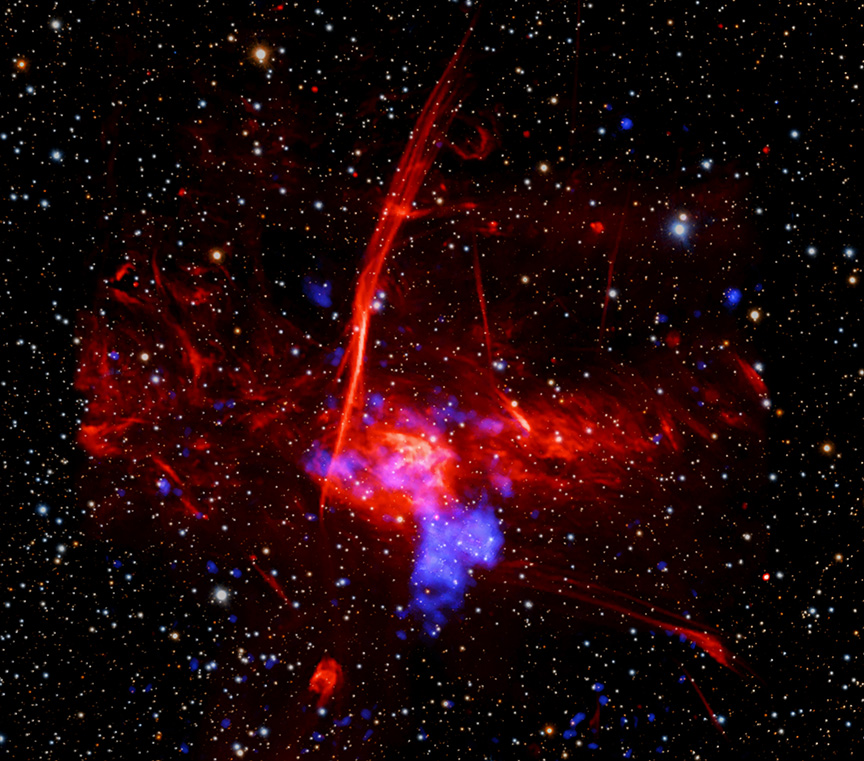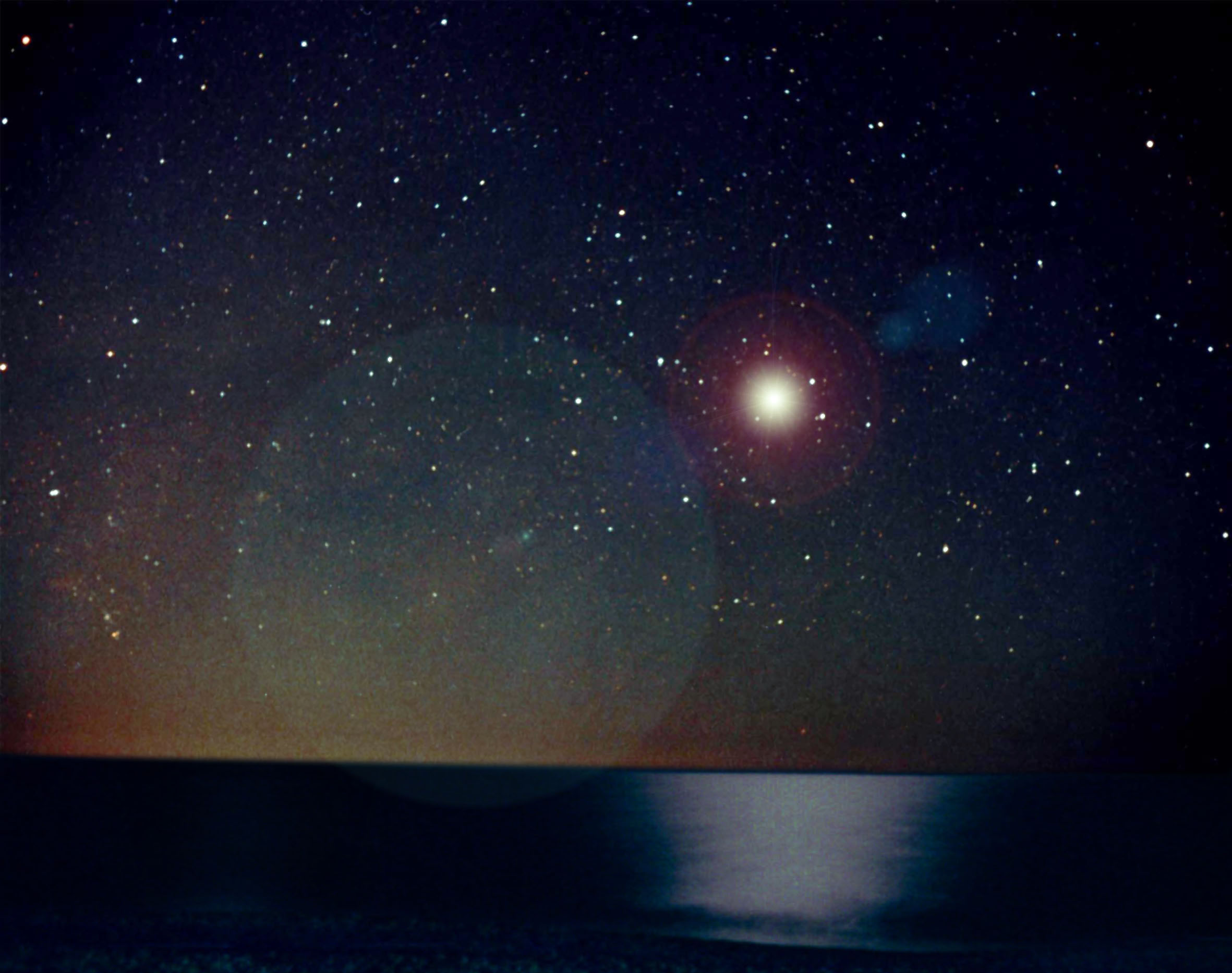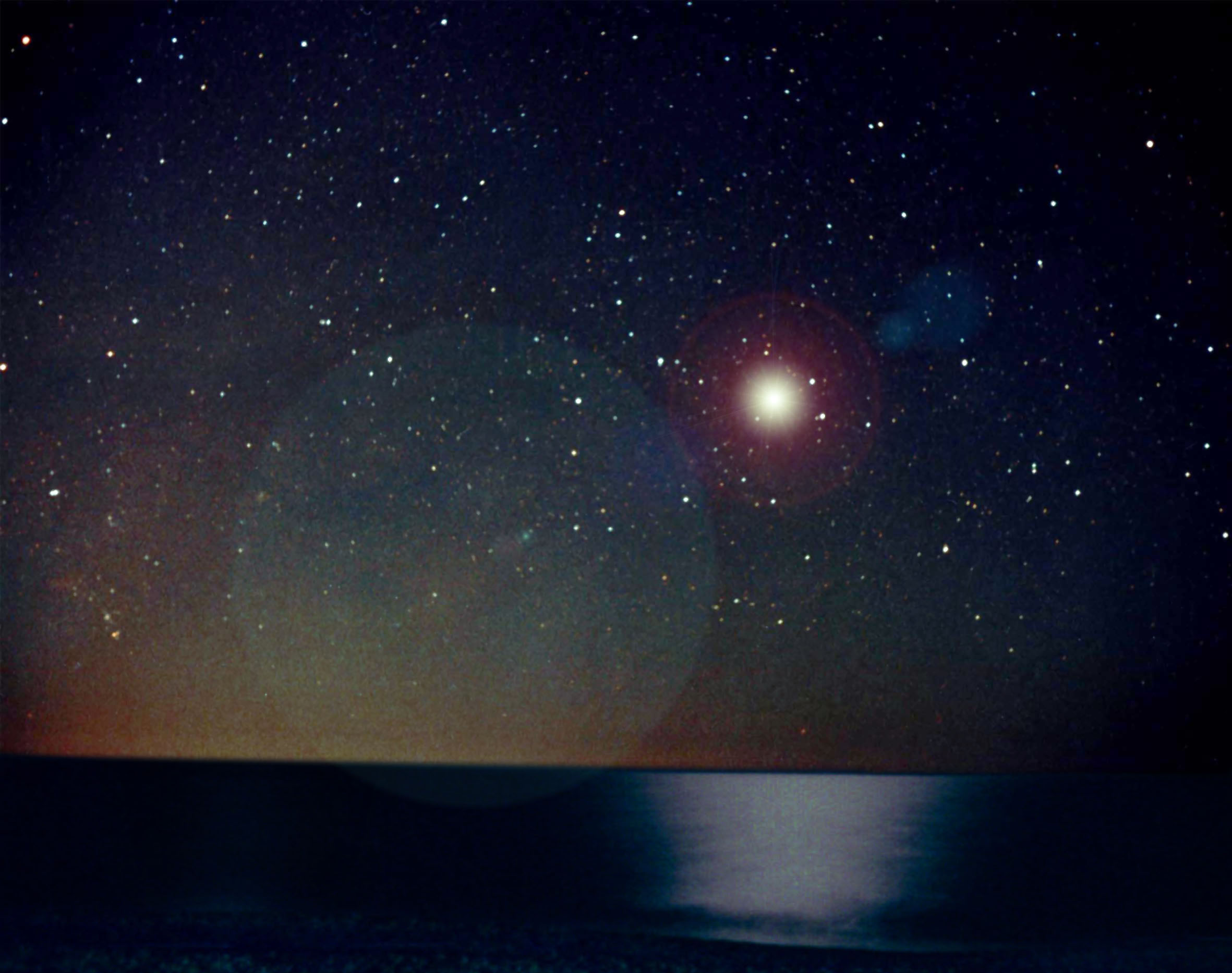
A new star, likely the brightest supernova in recorded human history, appeared in planet Earth's sky about 1,000 years ago today, in 1006 AD. The expanding debris cloud from the stellar explosion is still visible to modern astronomers, but what did the supernova look like in 1006? In celebration of the millennial anniversary of SN1006, astronomer Tunc Tezel offers this intriguing suggestion, based on a photograph he took on February 22, 1998 from a site overlooking the Mediterranean south of Antalya, Turkey. On that date, bright Venus and a waning crescent Moon shone in the early morning sky. Adopting calculations which put the supernova's apparent brightness between Venus and the crescent Moon, he digitally superposed an appropriate new star in the picture. He placed the star at the supernova's position in the southerly constellation of Lupus and used the water's reflection of moonlight in the final image.
Una estrella nueva, probablemente la supernova más brillante en la historia humana registrada, apareció en el cielo del planeta Tierra hace aproximadamente 1.000 años, en el año 1006 d.C. La nube de escombros en expansión proveniente de la explosión estelar aún es visible para los astrónomos modernos, pero ¿cómo se veía la supernova en 1006? En celebración del aniversario milenial de SN1006, el astrónomo Tunc Tezel ofrece esta sugerencia intrigante, basada en una fotografía que tomó el 22 de febrero de 1998 desde un sitio con vistas al Mediterráneo al sur de Antalya, Turquía. En esa fecha, Venus brillante y una Luna en cuarto menguante brillaban en el cielo de la madrugada. Adoptando cálculos que sitúan el brillo aparente de la supernova entre Venus y la Luna en cuarto menguante, superpuso digitalmente una estrella nueva apropiada en la imagen. Colocó la estrella en la posición de la supernova en la constelación sureña de Lupus e utilizó el reflejo del agua de la luz lunar en la imagen final.