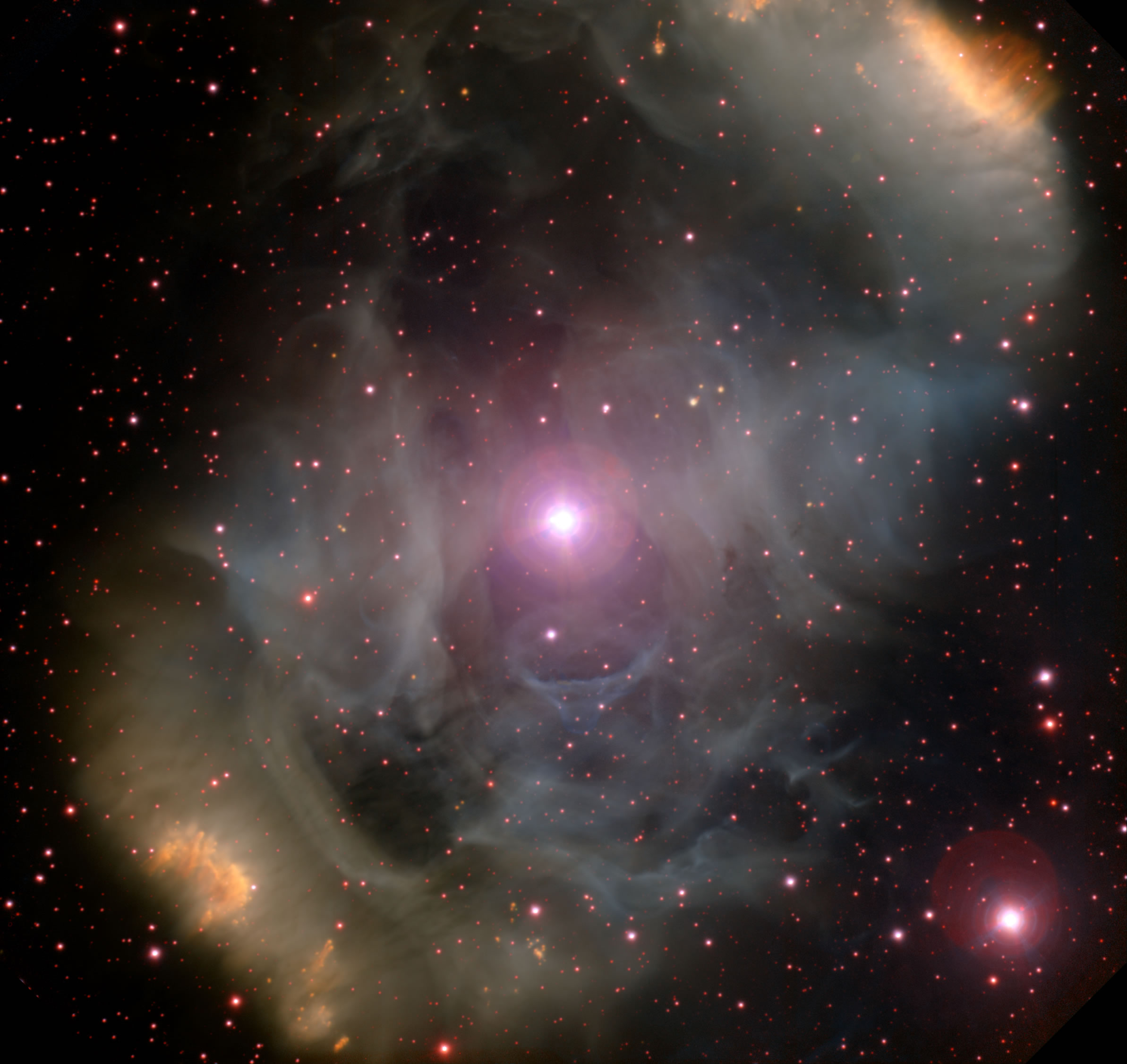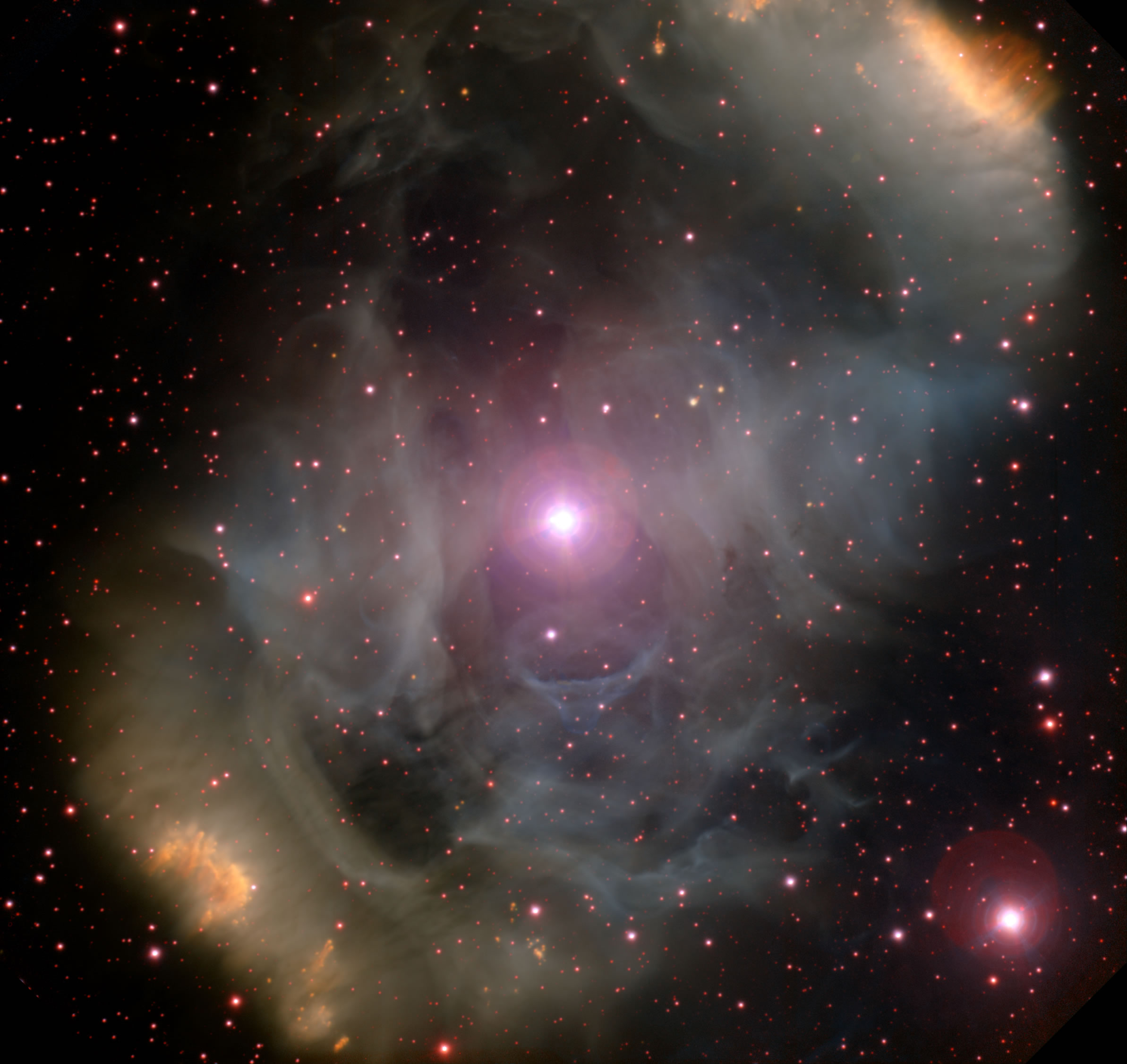
How did a star form this beautiful nebula? In the middle of emission nebula NGC 6164-5 is an unusually massive star nearing the end of its life. The star, visible in the center of the above image and catalogued as HD 148937, is so hot that the ultraviolet light it emits heats up gas that surrounds it. That gas was likely thrown off from the star, possibly by its fast rotation, like a rotating lawn sprinkler. Expelled material might have been further channeled by the magnetic field of the star, creating the symmetric shape of the bipolar nebula. Several cometary knots of gas are also visible on the lower left. NGC 6164-5 spans about four light years and is located about 4,000 light years away toward the southern constellation Norma.
¿Cómo formó una estrella esta hermosa nebulosa? En el centro de la nebulosa de emisión NGC 6164-5 se encuentra una estrella inusualmente masiva que se aproxima al final de su vida. La estrella, visible en el centro de la imagen anterior y catalogada como HD 148937, es tan caliente que la luz ultravioleta que emite calienta el gas que la rodea. Ese gas probablemente fue expulsado de la estrella, posiblemente por su rápida rotación, como un aspersor giratorio de jardín. El material expulsado podría haber sido canalizado posteriormente por el campo magnético de la estrella, creando la forma simétrica de la nebulosa bipolar. También son visibles varios nudos cometarios de gas en la parte inferior izquierda. NGC 6164-5 abarca aproximadamente cuatro años luz y se encuentra a unos 4.000 años luz de distancia hacia la constelación austral de Norma.